
Mutant of pore protein monomer, protein pore and application thereof
A porin and mutant technology, applied in the field of characterization of target analyte characteristics, can solve the problem of single nanoporin
Patent Information
- Authority / Receiving Office
- CN · China
- Current Assignee / Owner
- Publication Date
- 2021-11-16
Smart Images
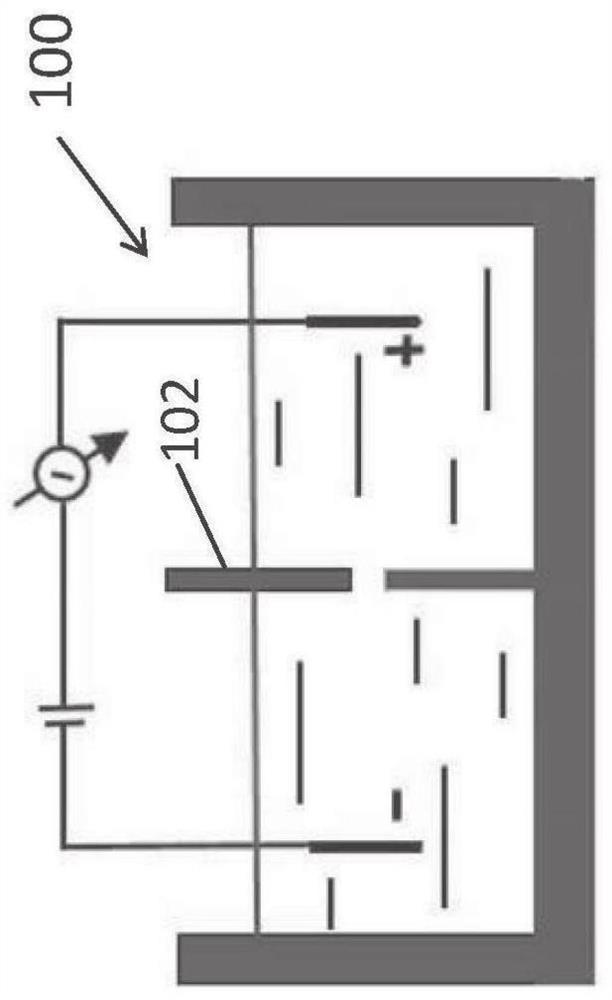
Figure 1 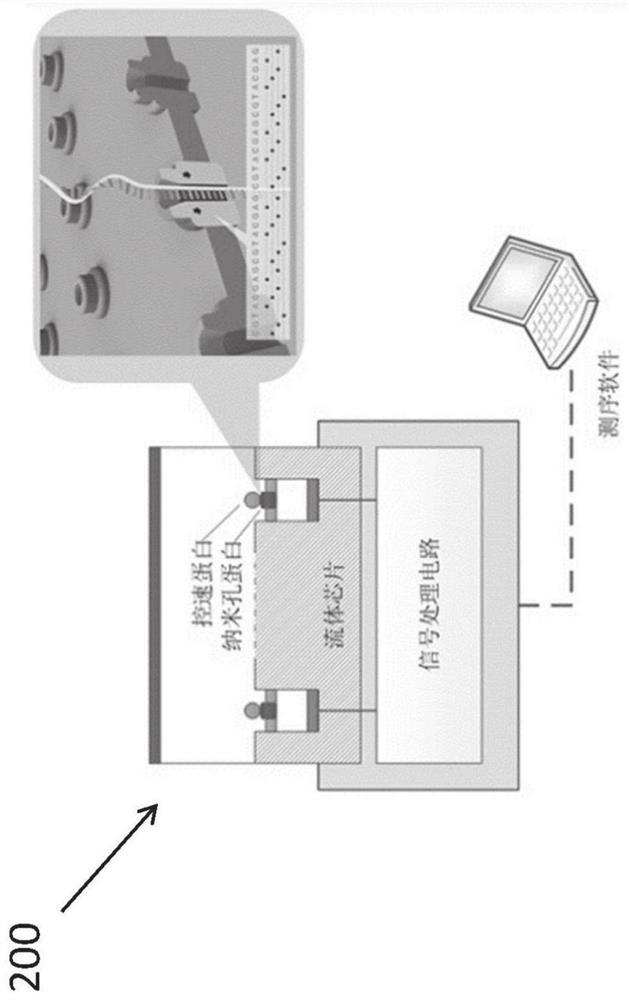
Figure 2 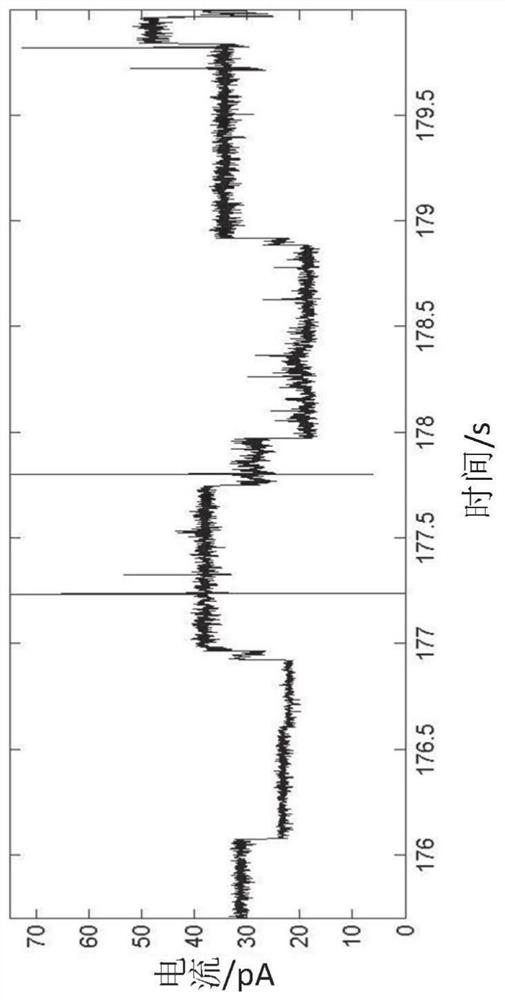
Figure 3
Abstract
Description
technical field
[0001] The invention belongs to the technical field of characterization of target analyte characteristics, and particularly relates to a mutant of a porin monomer, a protein pore containing the same and its application for detecting target analytes. Background technique
[0002] With the research on the structure and sequence of nucleic acid, nucleic acid sequencing technology continues to develop, becoming the core field of life science research, and playing a huge role in promoting the development of technology in the fields of biology, chemistry, electricity, life science, and medicine. Using nanopores to develop a new type of rapid, accurate, low-cost, high-precision and high-throughput nucleic acid sequencing technology is one of the hot spots of the post-human genome project.
[0003] Nanopore sequencing technology, also known as the fourth-generation sequencing technology, is a single-stranded nucleic acid molecule as a sequencing unit, using a nanopor...
Examples
Embodiment 1
[0183] In an embodiment, the wild-type porin is from Desulfovibrio thermophiles, and the amino acid sequence of the wild-type porin is SEQ ID NO:1, and the nucleotide sequence encoding the amino acid sequence is shown in SEQ ID NO:2. Mutant 1 of the porin monomer is that the wild-type porin has mutations corresponding to positions 74-81 of SEQ ID NO: 1, specifically APGNATNF at positions 74-81 is replaced by PYPANA. The protein pore of mutant 1 that includes a porin monomer is mutant pore 1. The amino acid sequence of mutant 1 of the protein monomer is shown in SEQ ID NO:24, and the nucleic acid sequence is shown in SEQ ID NO:25.
Embodiment 2
[0185] In an embodiment, the wild-type porin is from Desulfovibrio thermophiles, and the amino acid sequence of the wild-type porin is SEQ ID NO: 1, and the nucleotide sequence of the sequence encoding this amino acid is shown in SEQ ID NO: 2 . Mutant 2 of the porin monomer is that the wild-type porin has mutations corresponding to positions 74-83 of SEQ ID NO: 1, specifically APGNATNFST at positions 74-83 is replaced by AHPAATSP. The protein pore of mutant 2 that includes a porin monomer is mutant pore 2. The amino acid sequence of mutant 2 of the protein monomer is shown in SEQ ID NO:26.
Embodiment 3
[0187] In an embodiment, the wild-type porin is from Desulfovibrio thermophiles, and the amino acid sequence of the wild-type porin is SEQ ID NO: 1, and the nucleotide sequence of the sequence encoding this amino acid is shown in SEQ ID NO: 2 . Mutant 3 of the porin monomer is that the wild-type porin has mutations corresponding to positions 74-83 of SEQ ID NO: 1, specifically, APGNATNFST at positions 74-83 is replaced by PAASSSLSP. The protein pore of mutant 3 that includes a porin monomer is mutant pore 3. The amino acid sequence of mutant 3 of the protein monomer is shown in SEQ ID NO:27.