
SARS virus S protein and N protein fusion protein, and preparation and use thereof
A SARS virus, fusion protein technology, applied in antiviral immunoglobulins, DNA/RNA fragments, antiviral agents, etc., can solve problems such as difficulty in mass production, false positives, and no vaccine to prevent SARS.
- Summary
- Abstract
- Description
- Claims
- Application Information
AI Technical Summary
Problems solved by technology
Method used
Image

Examples
Embodiment Construction
[0049] Detailed description of the embodiments of the present invention:
[0050] Analysis, gene synthesis and expression of S protein and N protein epitopes of SARS virus
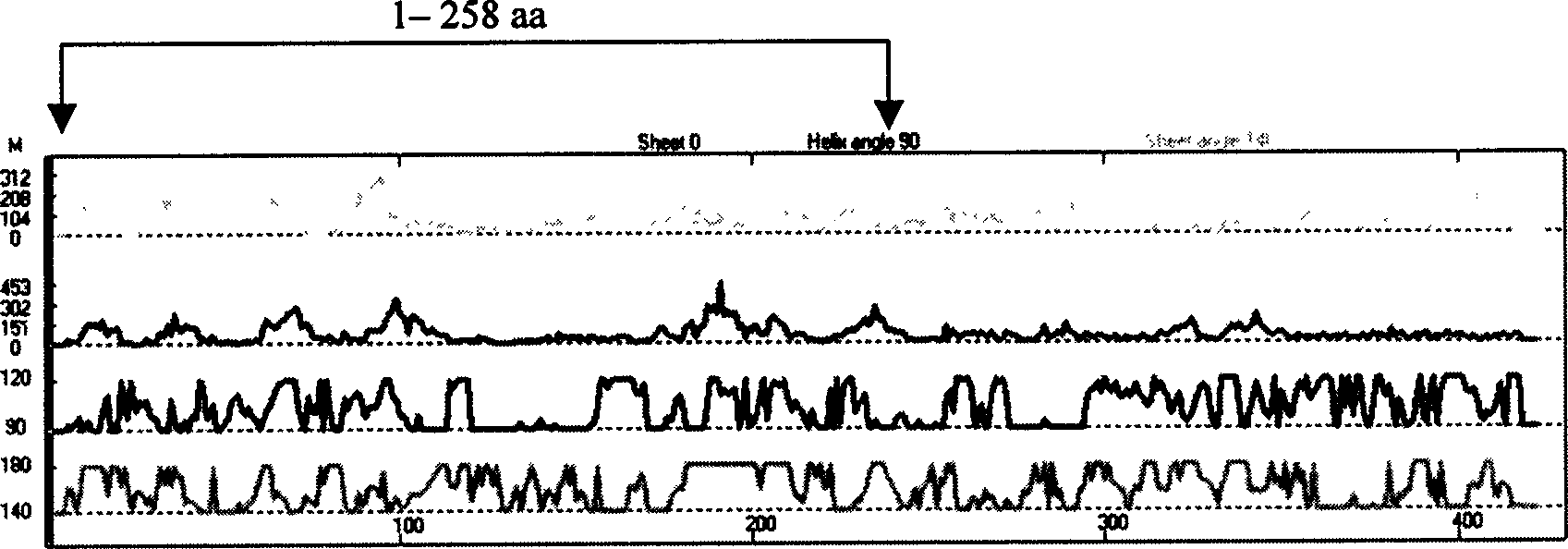
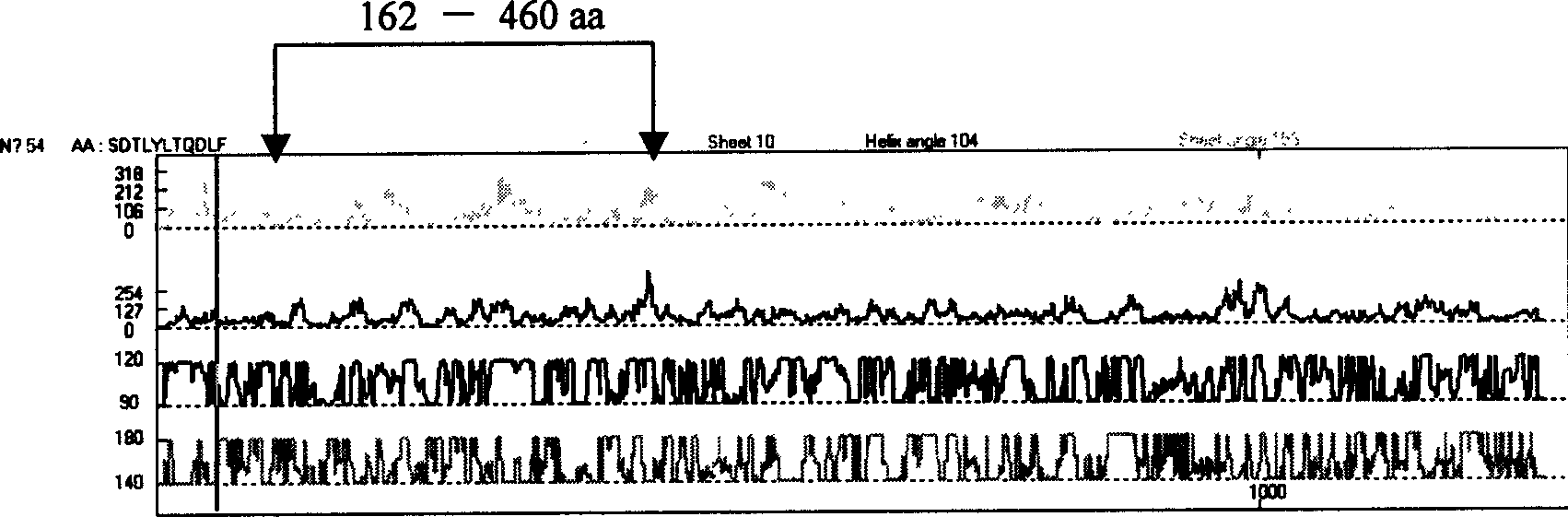
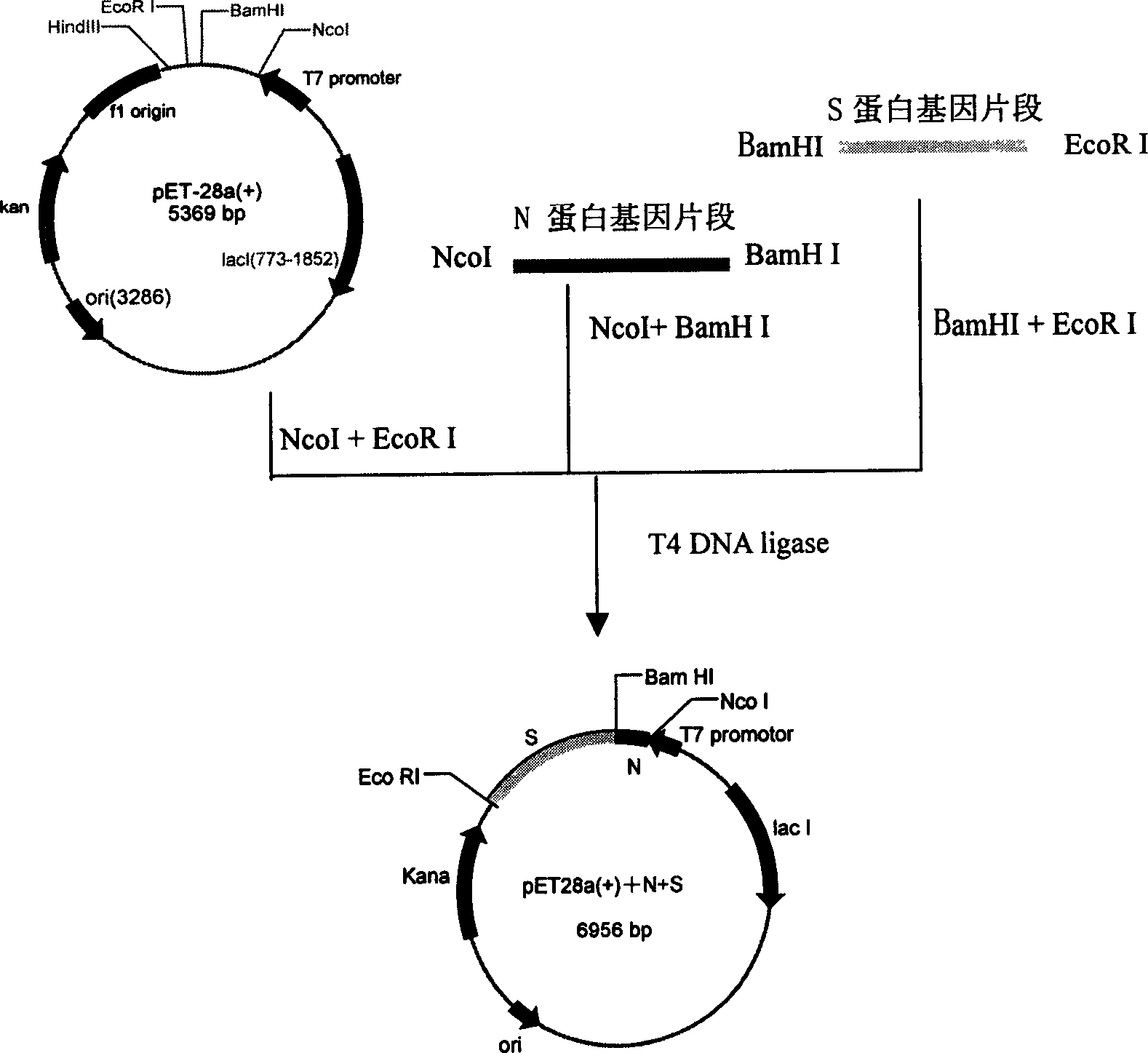
[0051] Through computer analysis of the amino acid sequence of SARS virus N protein and S protein, the N protein fragments of SARS virus with strong epitopes were screened, namely the first amino acid to 258 amino acids, and the S protein of SARS virus with strong epitopes Fragment, namely the 162nd amino acid to the 460th amino acid, a total of 299 amino acids. Choose codons favored by both eukaryotes and prokaryotes, chemically synthesize brand-new gene sequences of SARS virus N protein fragment and S protein fragment, and use genetic engineering technology to connect the two gene fragments in series and clone into the NcoI in plasmid pET28a(+) / EcoRI site, expresses the fusion protein of S protein fragment and N protein fragment. The recombinant plasmid was transformed into Escherichia coli BL21 (DE3), and ...
PUM
| Property | Measurement | Unit |
|---|---|---|
| molecular weight | aaaaa | aaaaa |
Abstract
Description
Claims
Application Information
 Login to View More