
Automated mapping of product adjacency groups with subgroup mapping mass updating
- Summary
- Abstract
- Description
- Claims
- Application Information
AI Technical Summary
Benefits of technology
Problems solved by technology
Method used
Image

Examples
Embodiment Construction
[0047]As used throughout this disclosure, headings are included to improve the clarity of the disclosure and are not necessarily used to define separate embodiments. In some examples, features of various embodiments may be combined and / or used from among contents discussed under multiple headings in accordance with aspects of the present disclosure.
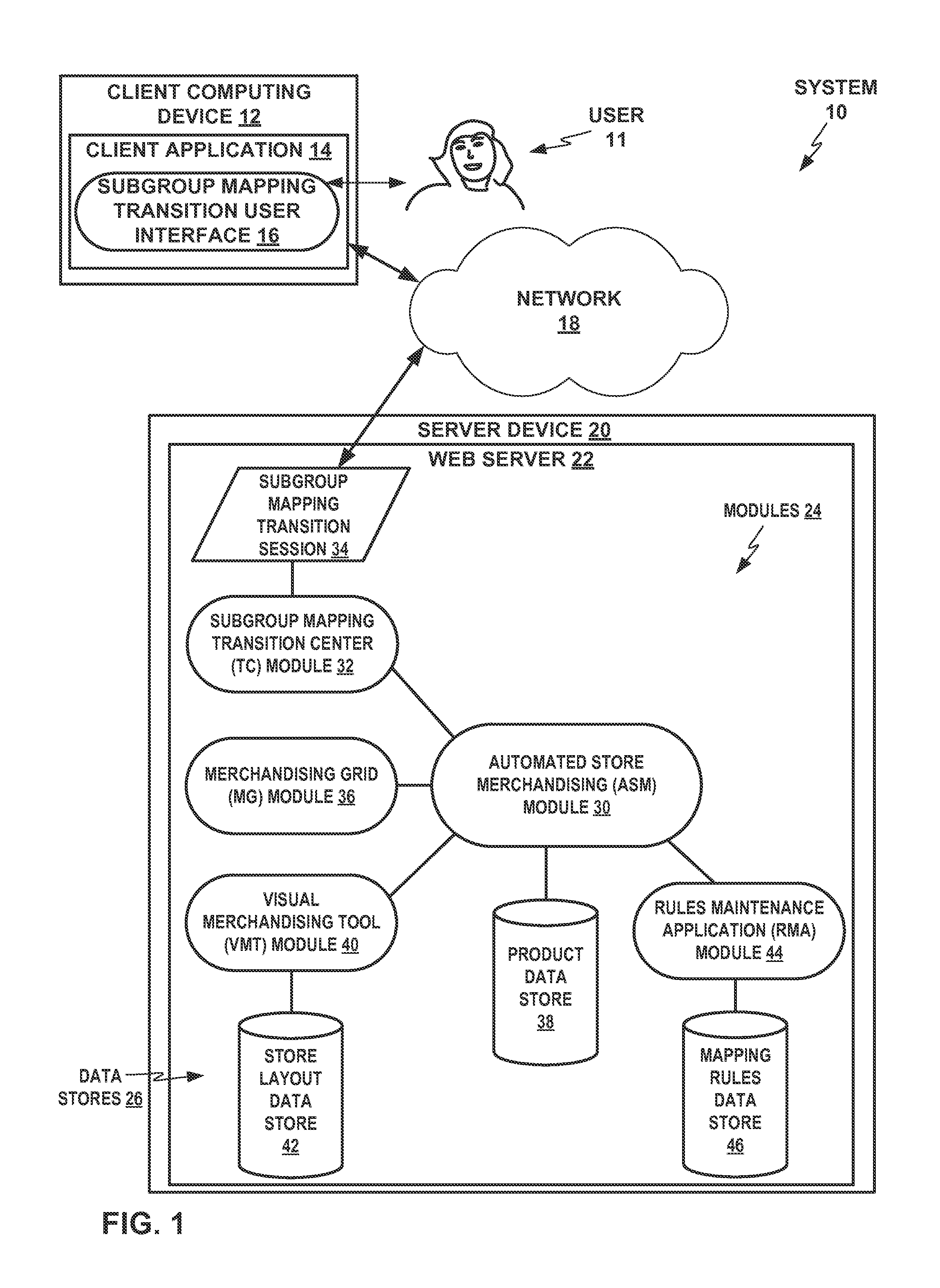
[0048]FIG. 1: System Overview
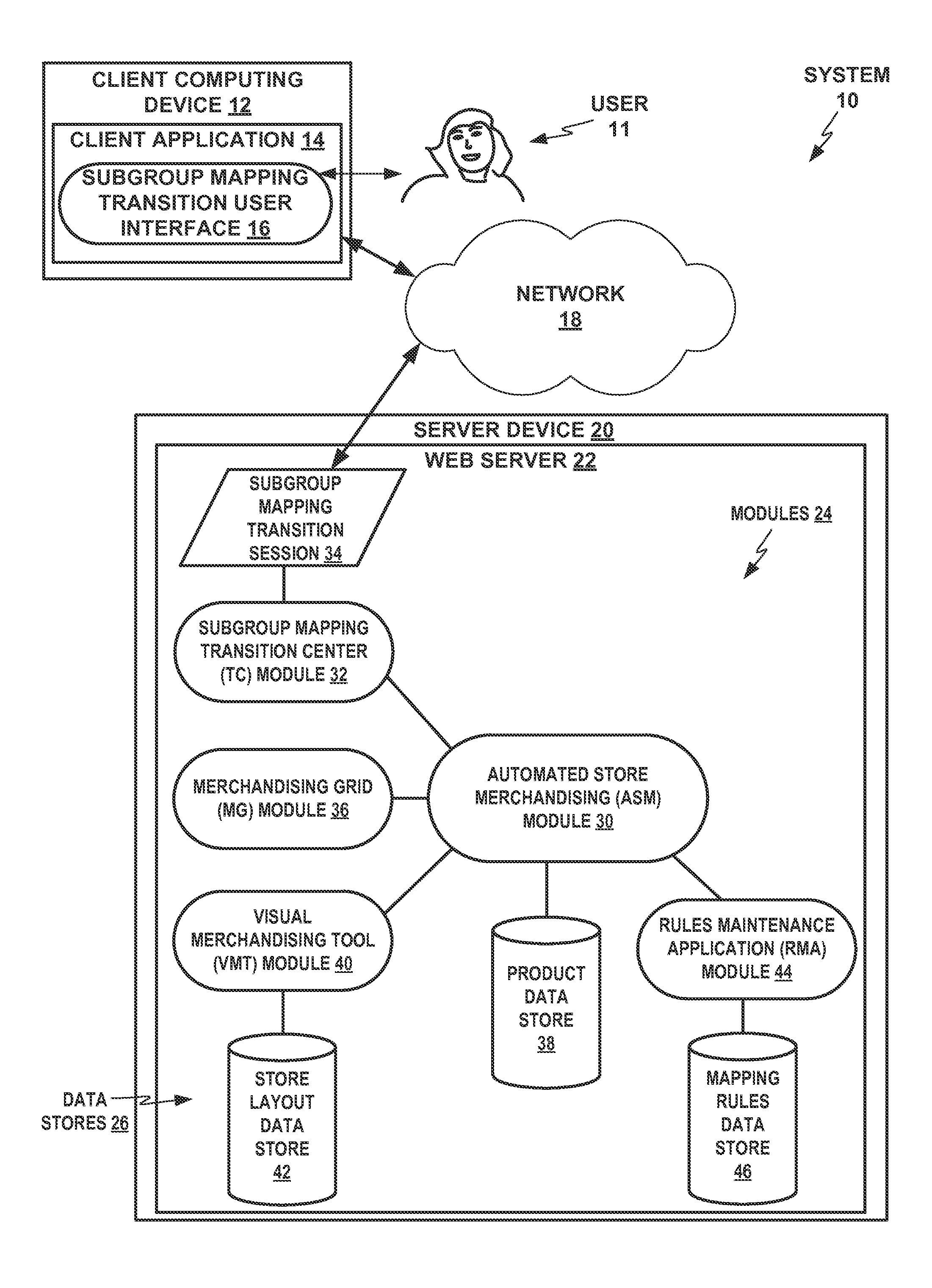
[0049]FIG. 1 is a block diagram illustrating an example of an adjacency mapping system 10 that implements various techniques of this disclosure, including for automated mapping of product subgroups in adjacency groups. As shown in FIG. 1, adjacency mapping system 10 includes client computing device 12 and server device 20 connected through network 18, so that a user 11 is enabled to use client computing device 12 to interact with services provided by server device 20, such as from a web application. Client application 14 runs on client running computing device 12 and provides a subgroup mapping transition user...
PUM
 Login to View More
 Abstract
Description
Claims
Application Information
 Login to View More