
Comprehensive Cardiovascular Analysis with Volumetric Phase-Contrast MRI
a phase-contrast and cardiovascular analysis technology, applied in the field of cardiovascular analysis, can solve the problems of large field size, large unrecognized limitations in prior works, and mri data is subject to spatial aliasing errors, etc., to achieve efficient modeling of eddy-current phase-offsets, less computational intensive, and better fit
Patent Information
- Authority / Receiving Office
- US · United States
- Current Assignee / Owner
- Publication Date
- 2014-04-24
Smart Images
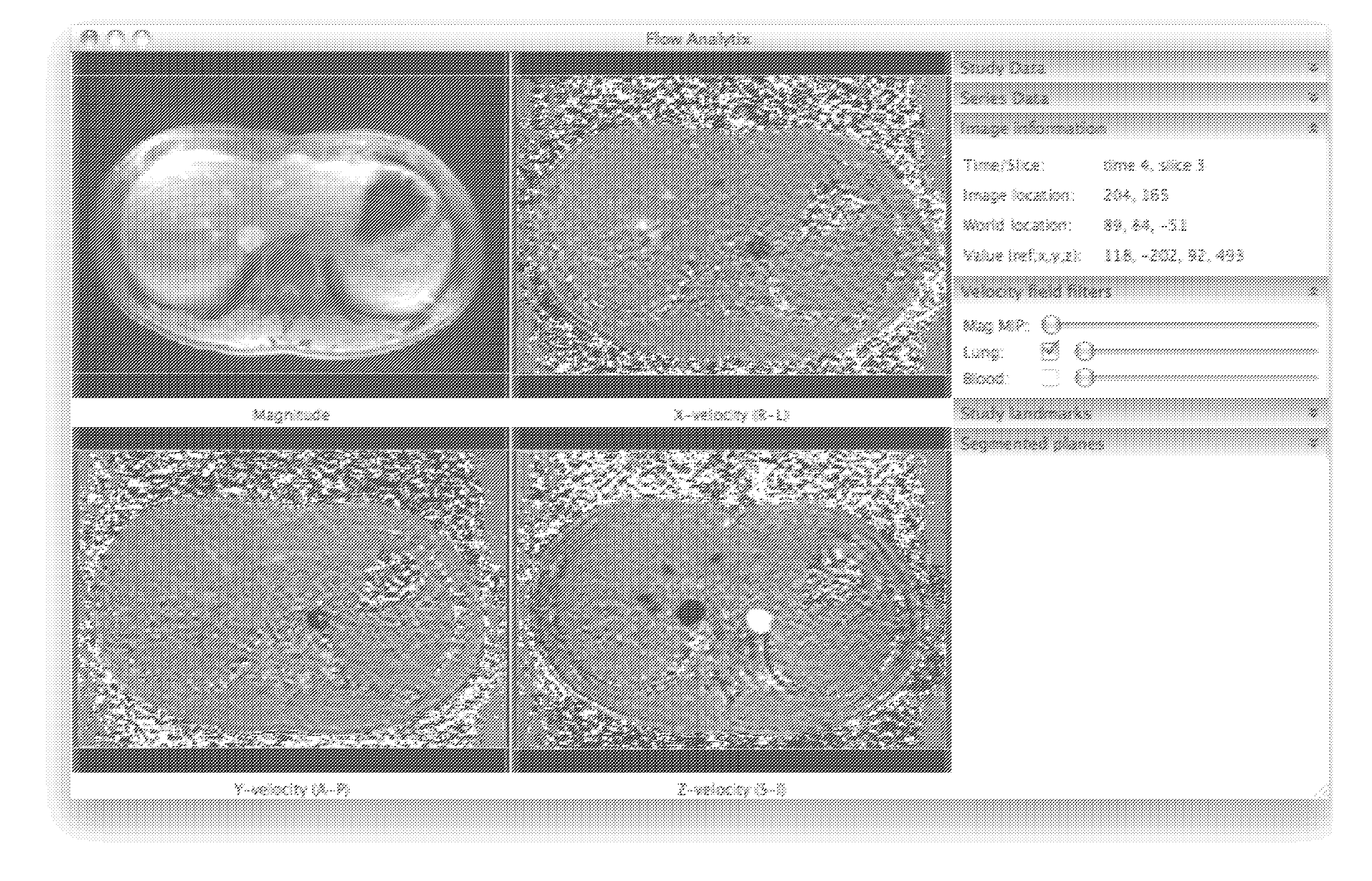
Figure 1 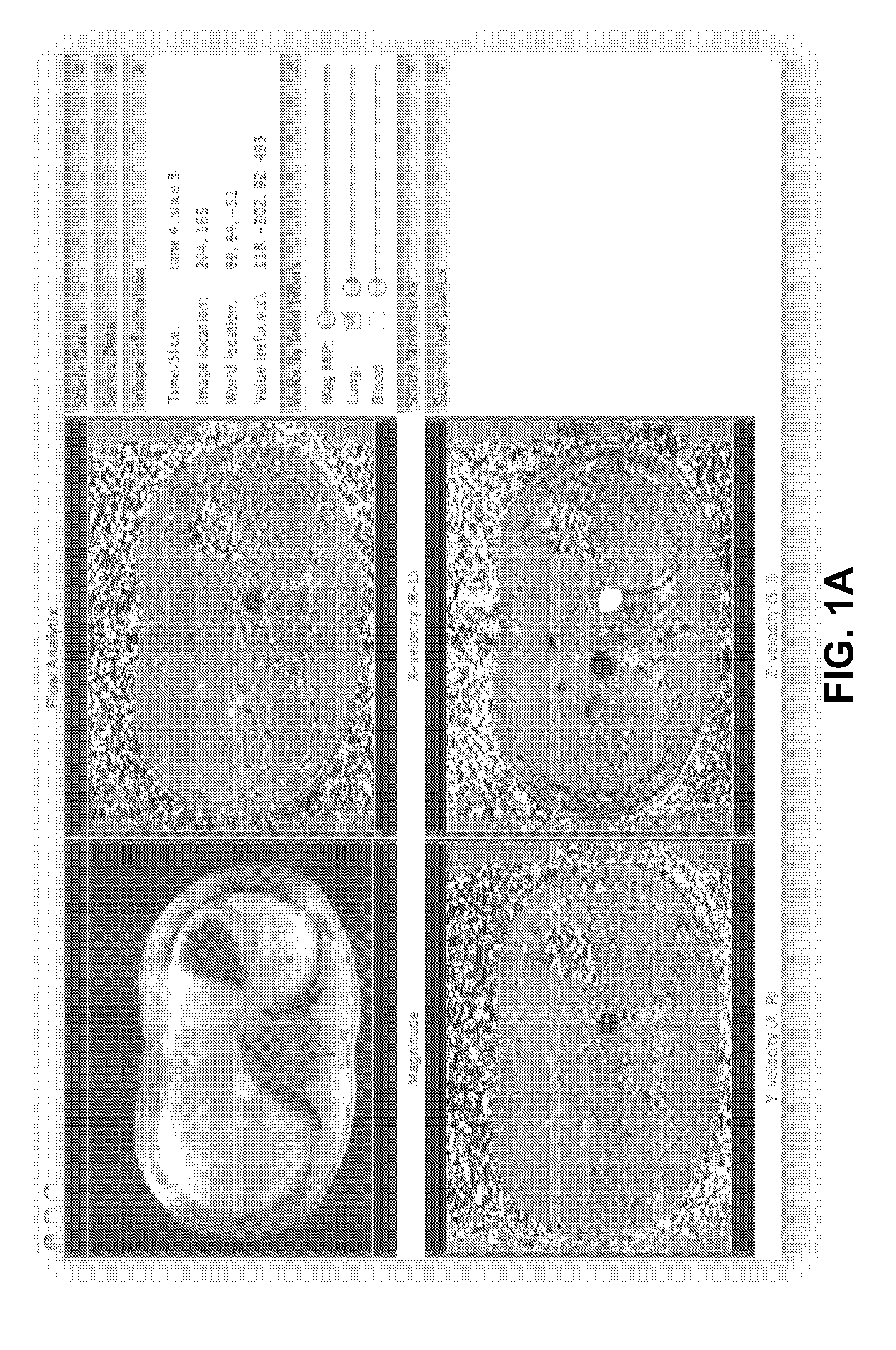
Figure 2 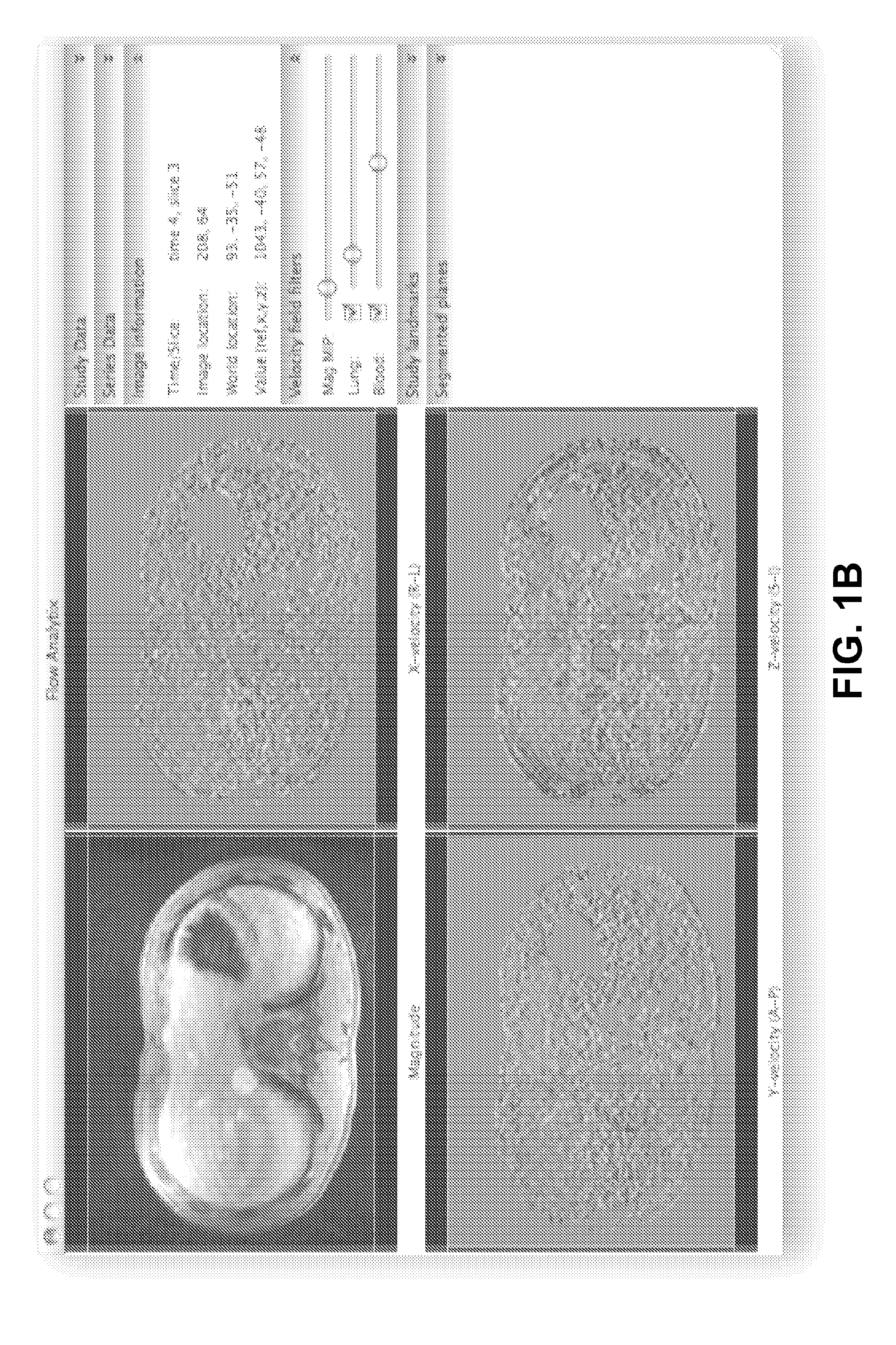
Figure 3
Abstract
Description
FIELD OF THE INVENTION
[0001] This invention relates to methods and systems to perform measurements of the heart and vessels, including measurements of blood flow and motion, using volumetric data obtained from an MRI that includes anatomic (magnitude) and vector field (phase) data from a volumetric phase-contrast MRI pulse sequence.BACKGROUND OF THE INVENTIONPhase-Contrast MRI Phase-Error Correction
[0002] Volumetric phase-contrast magnetic resonance imaging (4DPC MRI) is a promising technique for obtaining data of periodic motion and blood flow. The usefulness of the technique has been limited, however, by the lack of methods for addressing phase-offset errors, presumed to be related to uncompensated eddy-currents during the MRI acquisition. Techniques for addressing phase-offset errors in volumetric data have relied on techniques directly adapted from planar, two-dimensional PC-MRI.
[0003] Two-dimensional phase-contrast MRI is a commonly-employed imaging method to obtain data for quant...
Examples
Embodiment Construction
Phase-Contrast MRI Phase-Error Correction
[0029]To compute an accurate model of background phase-error in phase-contrast MRI data, it is essential to accurately identify image voxels that are representative of static soft tissue. We enable accurate identification of a static soft tissue by using a combination of image filters:[0030]1. Filter based on the signal intensity of anatomic (magnitude) images.[0031]2. Filter based on a score that reflects the likelihood that a voxel represents “air or lung”.[0032]3. Filter based on a score that reflects the likelihood that a voxel represents “blood or moving tissue”.
[0033]Since there is a certain amount of noise inherent in the acquired image data, it is often valuable to take advantage of the persistence of high signal in static tissues. Rather than filter each image at each temporal phase by the signal in that same temporal phase, we apply a filter based on the maximum signal intensity across all temporal time points. The user can then sel...