
Method of producing jam
A technology of jam and strawberry jam, applied in food preparation, application, food science, etc., can solve problems such as inability to prepare, and achieve the effect of good flavor and no green taste
Patent Information
- Authority / Receiving Office
- CN · China
- Patent Type
- Applications(China)
- Current Assignee / Owner
- Publication Date
- 2007-12-12
Smart Images
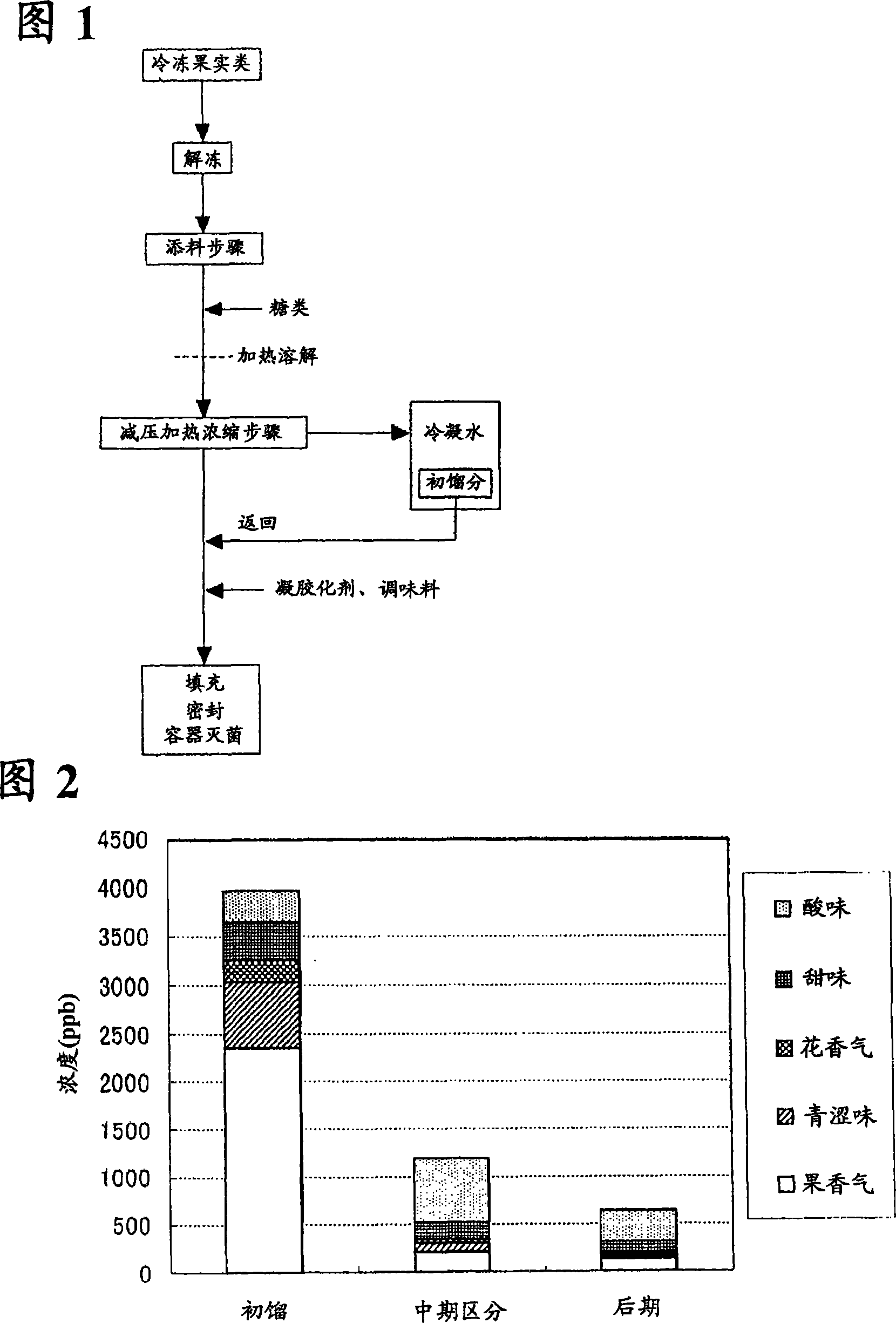
Figure 1 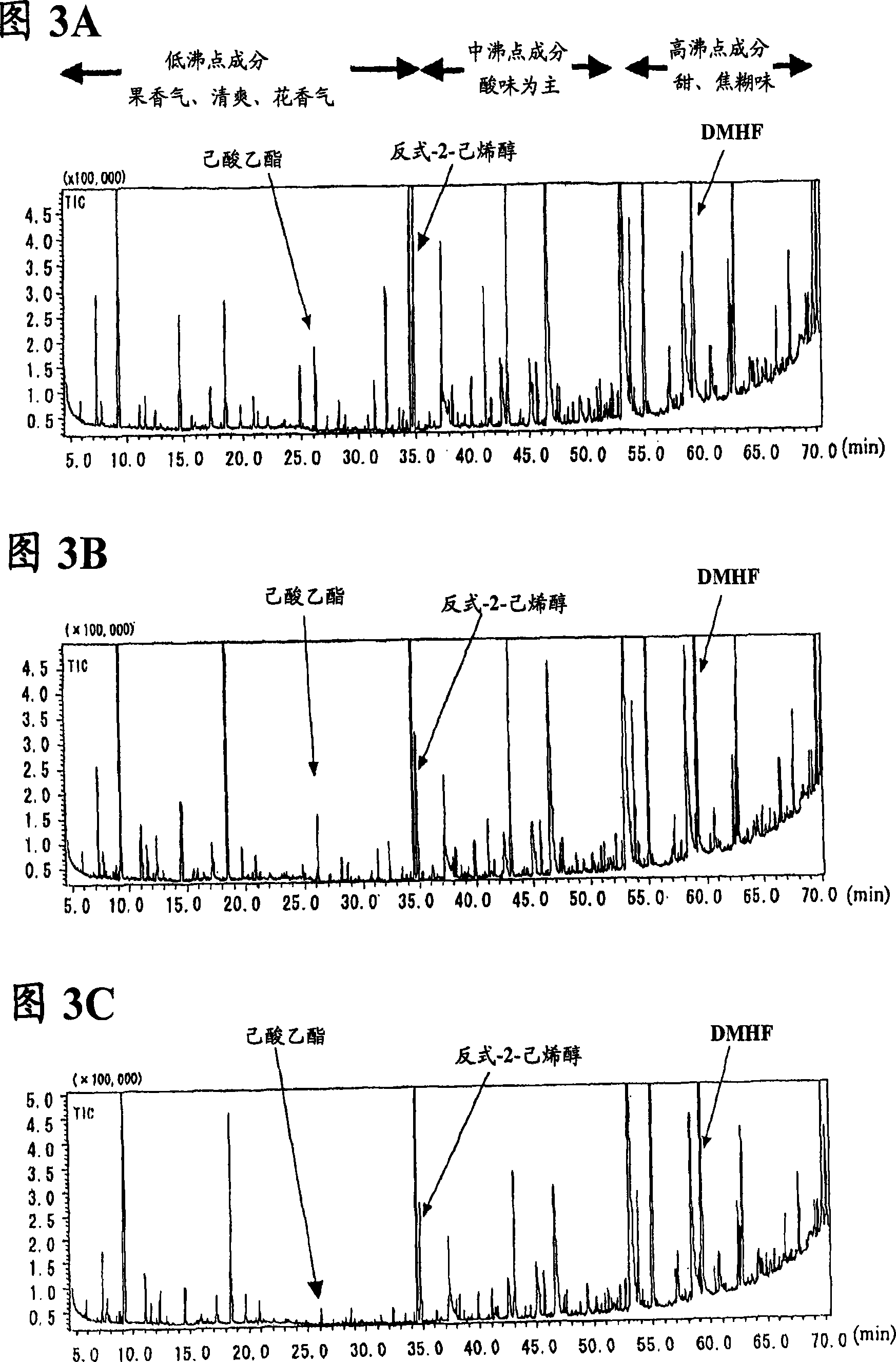
Figure 2
Abstract
Description
technical field
[0001] The present invention relates to a method for preparing jams with fresh fruity aroma. Background technique
[0002] As a conventional preparation method for jam or fruit juice, firstly, the fruit to be used is cut, crushed or squeezed according to its type or size, and then sweeteners and other auxiliary materials are added as needed, and heated in a heating kettle. In this case, the heating method may be heating while stirring until the food material reaches a boiling temperature (for example, about 100° C.), and the boiling is maintained for a predetermined time, thereby reducing the moisture contained in the food material and concentrating the food material. Concentrate at normal pressure, and then maintain the temperature by heating to obtain the sterilization effect.
[0003] However, in this method, aroma components are volatilized together with water vapor during heating, and the aroma is lacking compared with fresh fruits, and a heated smell i...
Examples
Embodiment 1
[0103] Embodiment 1, Comparative Examples 1-11
[0104] Strawberry jam (embodiment 1, comparative example 1, comparative example 2) was prepared according to the method of (1), (2), (3) of above-mentioned test example 1. The return amount of condensed water is 3.8% relative to the feed amount. In Comparative Examples 3-11, the following nine kinds of commercially available strawberry jams were prepared.
Embodiment 2
[0148] Embodiment 2 (figs)
[0149] The fig jam of the proportions in Table 6 was prepared as follows. First, figs and sugar were heated to 40° C. in a container for heating and concentrating under reduced pressure to dissolve the sugar. Next, the absolute pressure of the vacuum kneader was 7.4 kPa, and the product temperature was 40° C. and concentrated under reduced pressure, and 1870 mL (18.3% of the weight of the feed) was distilled off in about 8 minutes for concentration. At this time, the distilled steam is condensed through a multi-tube heat exchanger (refrigerant 1 ° C), and 100 mL (about 1% of the weight of the feed) of condensed water (the temperature when it is just discharged from the heat exchange part) is taken from the initial fraction. : 4°C) into 19 fractions No.1 to No.19.
[0150] Next, add sour (citric acid) aqueous solution and pectin aqueous solution to the concentrate, return 500mL of No.1-No.5 condensed water (4.9% of the weight of the addition) to t...