
Method for predicting chlorophyll a concentration in water based on BP nerval net
A BP neural network, concentration prediction technology, applied in the direction of testing water, general water supply saving, instruments, etc., to achieve the effect of reducing materials, improving prediction quality, and reducing quantity
Patent Information
- Authority / Receiving Office
- CN · China
- Patent Type
- Patents(China)
- Current Assignee / Owner
- Publication Date
- 2011-09-21
Smart Images
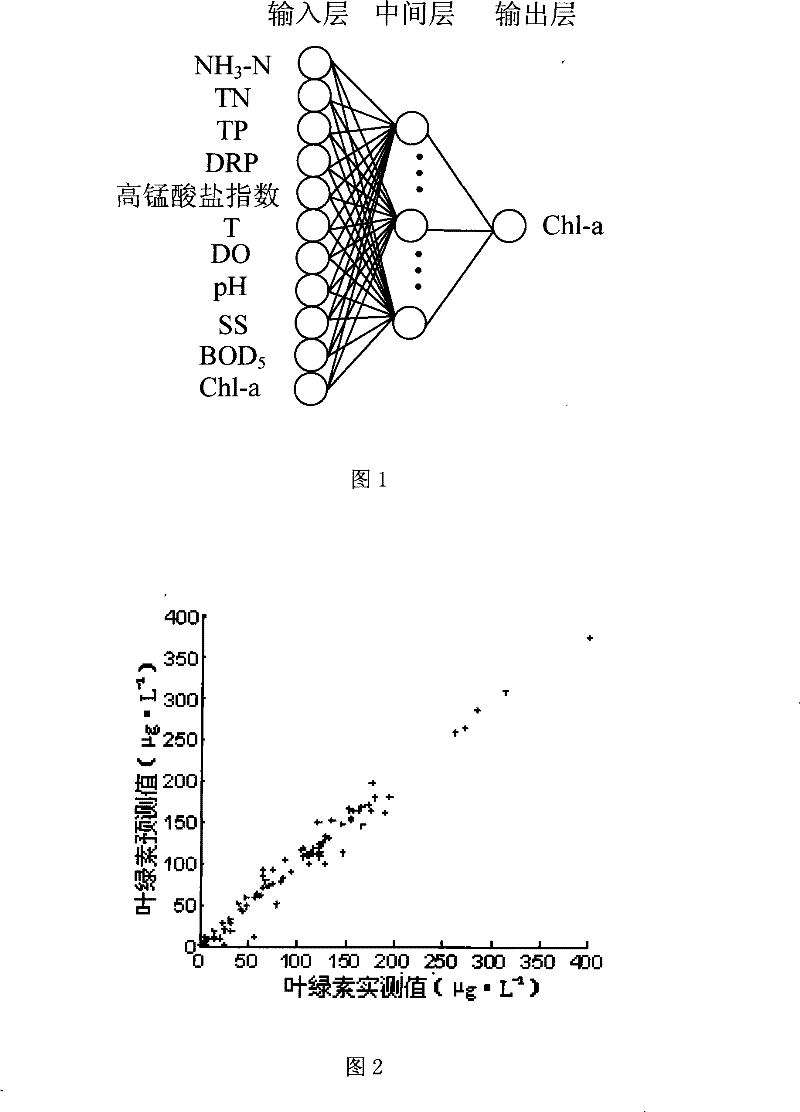
Figure 1 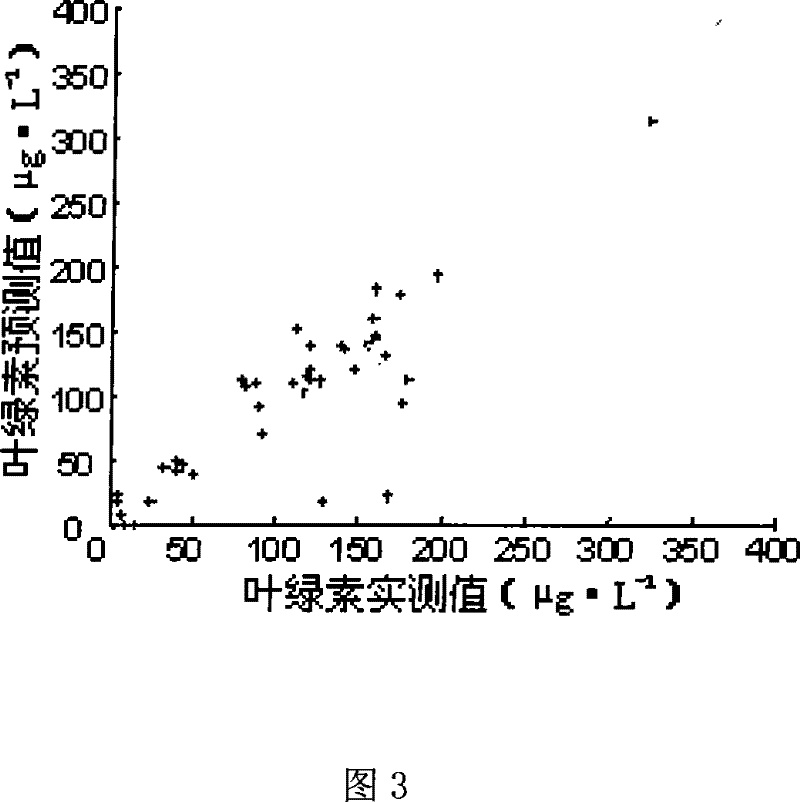
Figure 2 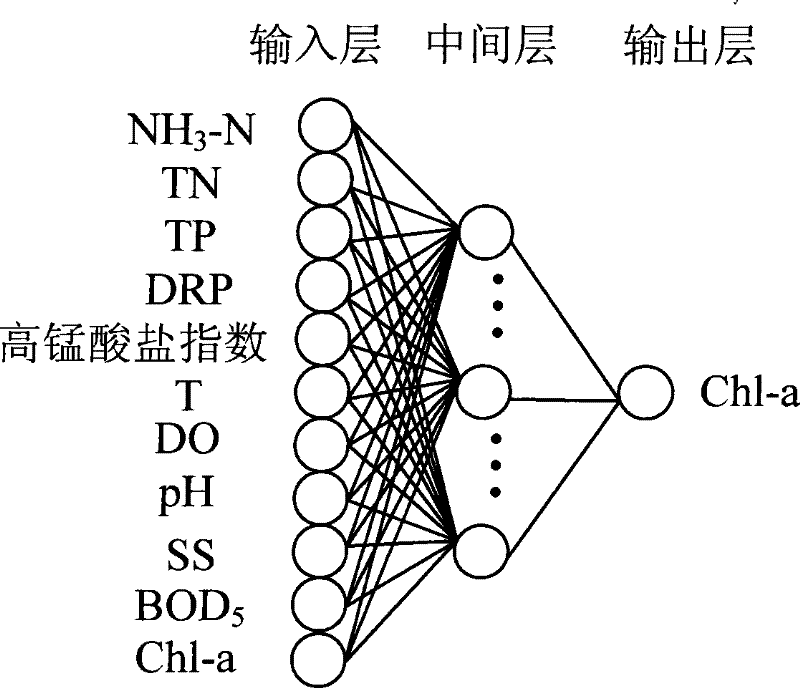
Figure 3
Abstract
Description
technical field
[0001] The invention relates to a method for predicting chlorophyll in rivers, in particular to a method for predicting chlorophyll a concentration in water bodies based on BP neural network which can accurately and quickly predict chlorophyll in rivers. Background technique
[0002] There are complex physical, chemical and biological processes in water bodies, and it is very difficult to predict the change of chlorophyll-a concentration after the nutrient level increases. Although traditional forecasting methods (including deterministic models and empirical models) can predict the concentration of chlorophyll a, they are difficult to be directly applied due to the long data correction process, especially the determination of some parameters. In addition, traditional prediction models tend to ignore important factors that affect water eutrophication, such as ecological factors, and these factors will limit the complexity of the model. A neural network is a m...
Examples
Embodiment Construction
[0018] The method for predicting the concentration of chlorophyll a in water based on the BP neural network of the present invention will be described in detail below in conjunction with the embodiments.
[0019] Chlorophyll a concentration prediction method in water body based on BP neural network of the present invention, comprises the steps:
[0020] (1) Obtain the value of chlorophyll a in the measured water body and other related water quality indicators that affect it as the detection data.
[0021] Obtaining other water qualities that have an impact on chlorophyll a in the embodiments of the present invention is to take a water sample every three days at 9 monitoring points of Jinhe and Weijinhe, monitor continuously for 14 times, and measure ammonia nitrogen (NH 3 -N), total nitrogen (TN), total phosphorus (TP), orthophosphate (DRP), permanganate index (COD Mn ), temperature (T), dissolved oxygen (DO), pH, suspended solids (SS), five-day biochemical oxygen demand (BOD...