
Design method for FIR filter based on learning rate changing neural net
A technology of neural network and design method, applied in the field of electronic science and communication, which can solve problems such as slow convergence speed
Patent Information
- Authority / Receiving Office
- CN · China
- Patent Type
- Patents(China)
- Current Assignee / Owner
- Publication Date
- 2011-09-28
- Estimated Expiration
- Not applicable · inactive patent
Smart Images
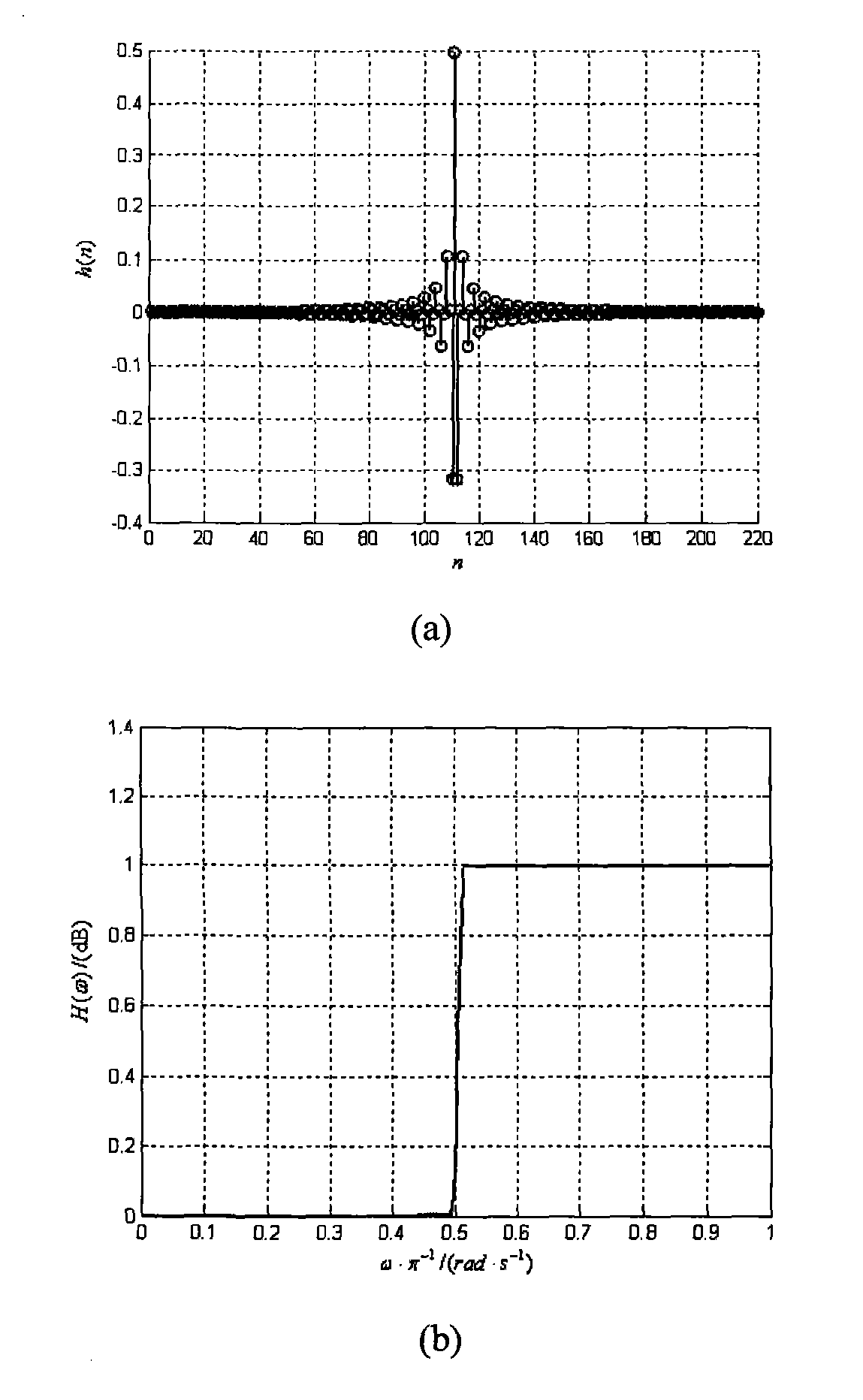
Figure 1 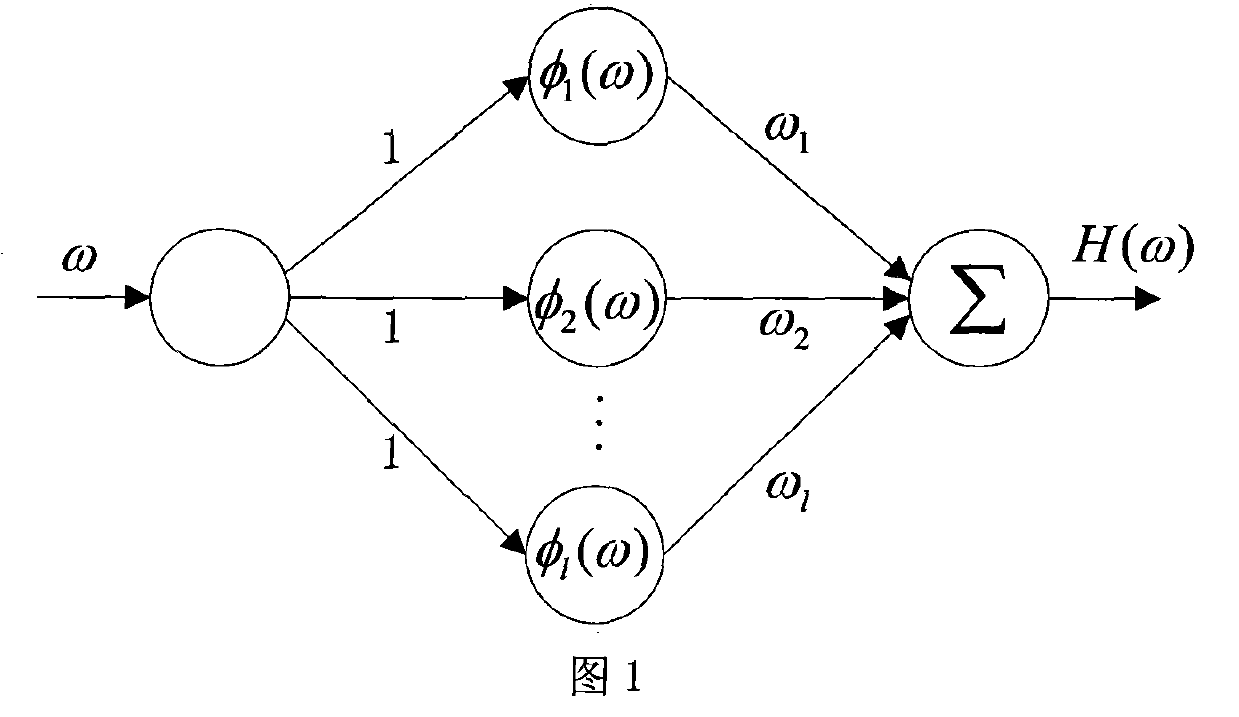
Figure 2 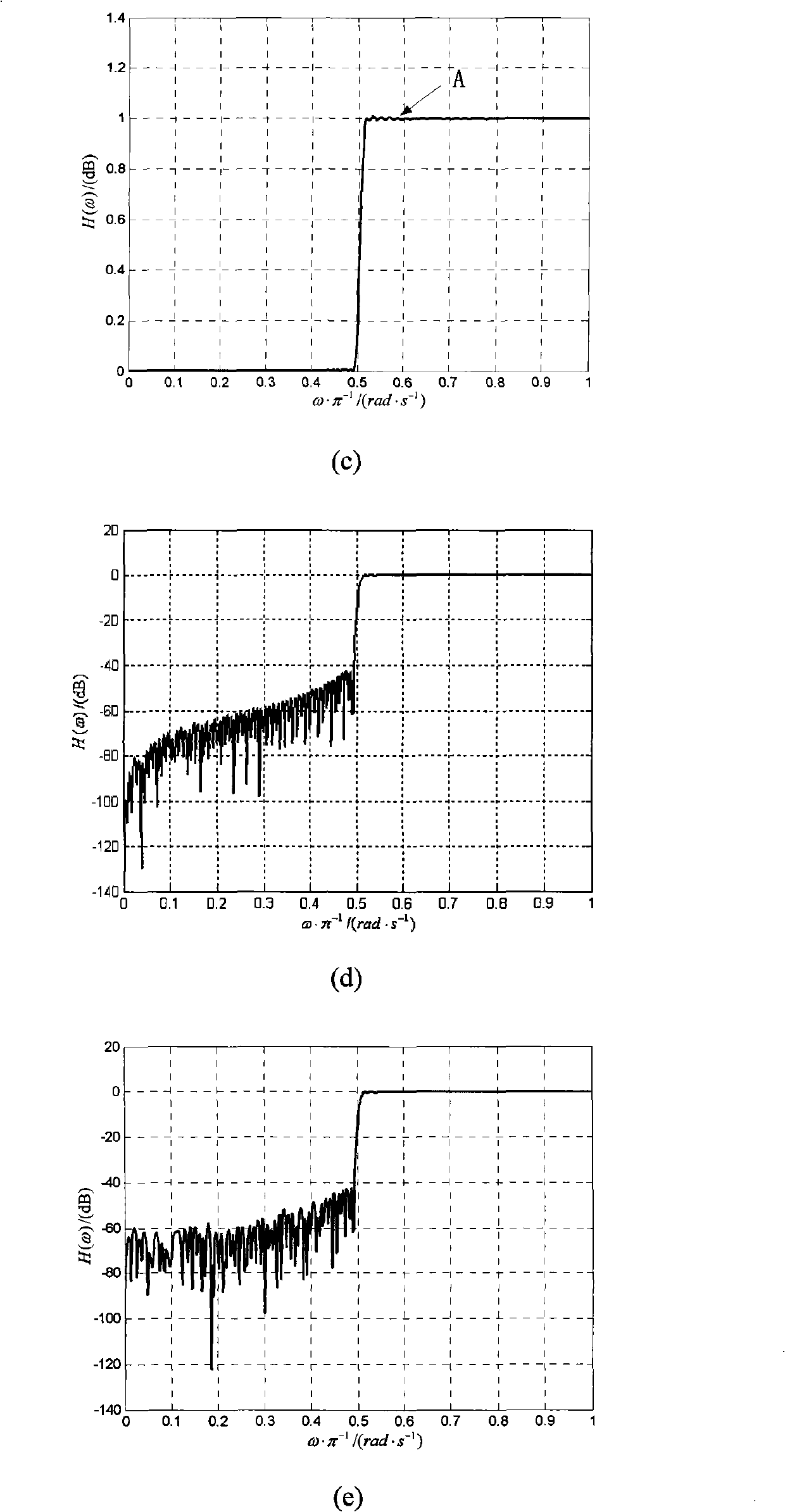
Figure 3
Abstract
Description
technical field
[0001] The invention belongs to the technical field of electronic science and communication, and relates to a design method of a finite impulse response (FIR) filter, in particular to a design method of an FIR filter based on a variable learning rate neural network. Background technique
[0002] The finite impulse response (FIR) filter has strict linear phase characteristics, while the phase of the infinite impulse response (IIR) filter is nonlinear, so when designing a linear phase IIR filter, an all-pass network is required for phase correction. Therefore, in the In areas such as image processing and data transmission that require strict signal phase, FIR filters have wider engineering practical applications than IIR filters, and their design and implementation methods have also attracted extensive attention from the academic community. Commonly used methods for FIR filter design are window function weighting method and frequency sampling method, but these ...
Examples
Embodiment 1
[0084] Embodiment 1 assumes that the amplitude-frequency characteristic of a certain ideal high-pass filter is:
[0085]
[0086] The method of designing a 220-order high-pass filter is: uniformly take 111 sample values for ω in [0, π], that is ω = π 110 n , n = 0,1,2 , · · · , 110 . In order to make the passband and stopband of the filter have no overshoot and ripple, two sample points 0.2 and 0.8 are taken in each transition band respectively. Therefore, the actual amplitude-frequency sampling sequence is: H o (n) = [zeros (1, 55), 0.2, 0.8, ones (1, 54)]. Take the network structure of the neural network as 1×111×1, and the global error performance index in the passband and stopband range is J=4.62×10 -6 , the initial value of the α learning rate is 0.001, and the sampling sequence is input into the neural ...
Embodiment 2
[0090] Embodiment 2 assumes that the amplitude-frequency characteristic of a certain ideal bandpass filter is:
[0091]
[0092] The method of designing a 180-order band-pass filter is: take 91 sample values evenly in [0, π] for ω, that is ω = π 90 n , n = 0,1,2 , · · · , 90 . In order to make the passband and stopband of the filter have no overshoot and ripple, two sample points 0.2 and 0.8 are taken in each transition band respectively. Therefore, the actual amplitude-frequency sampling sequence is: H o (n)=[zeros(1, 28), 0.2, 0.8, ones(1, 31), 0.8, 0.2, zeros(1, 28)]. Take the network structure of the neural network as 1×91×1, and the global error performance index in the passband and stopband range is J=5.64×10 -7 , the initial value of the α learning rate is 0.001, and the sampling sequence is input into...