
Food material for promoting the differentiation of osteoblast and inhibiting the differentiation of osteoclast
A technology for osteoblast differentiation and cell differentiation, which is applied in the field of milk protein fraction or milk protein fraction decomposition product, can solve problems such as the use of raw materials that cannot be used for food, and achieve the effect of promoting osteoblast differentiation and inhibiting differentiation and maturation.
Patent Information
- Authority / Receiving Office
- CN · China
- Patent Type
- Applications(China)
- Current Assignee / Owner
- Publication Date
- 2010-10-13
Smart Images
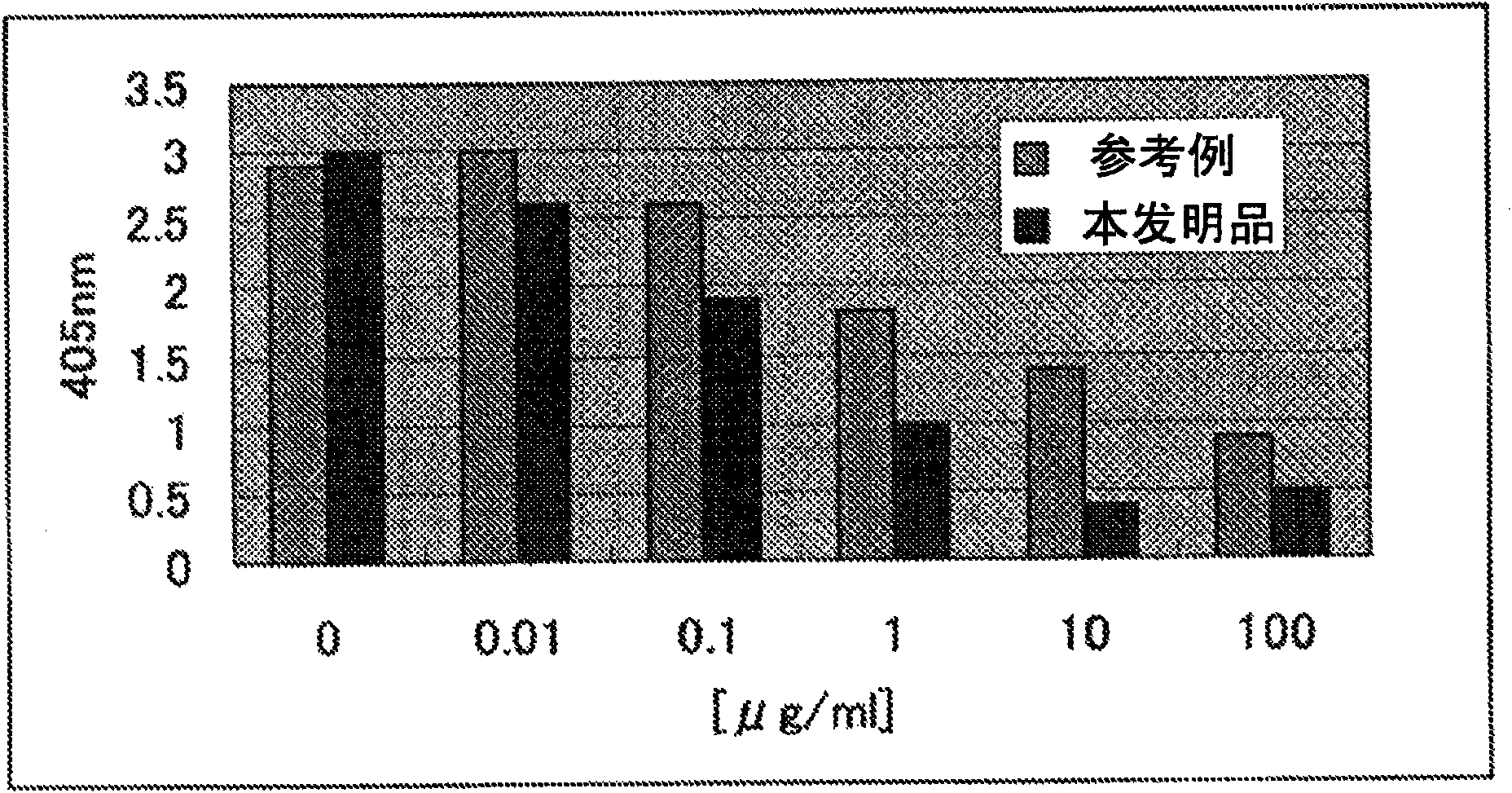
Figure 1 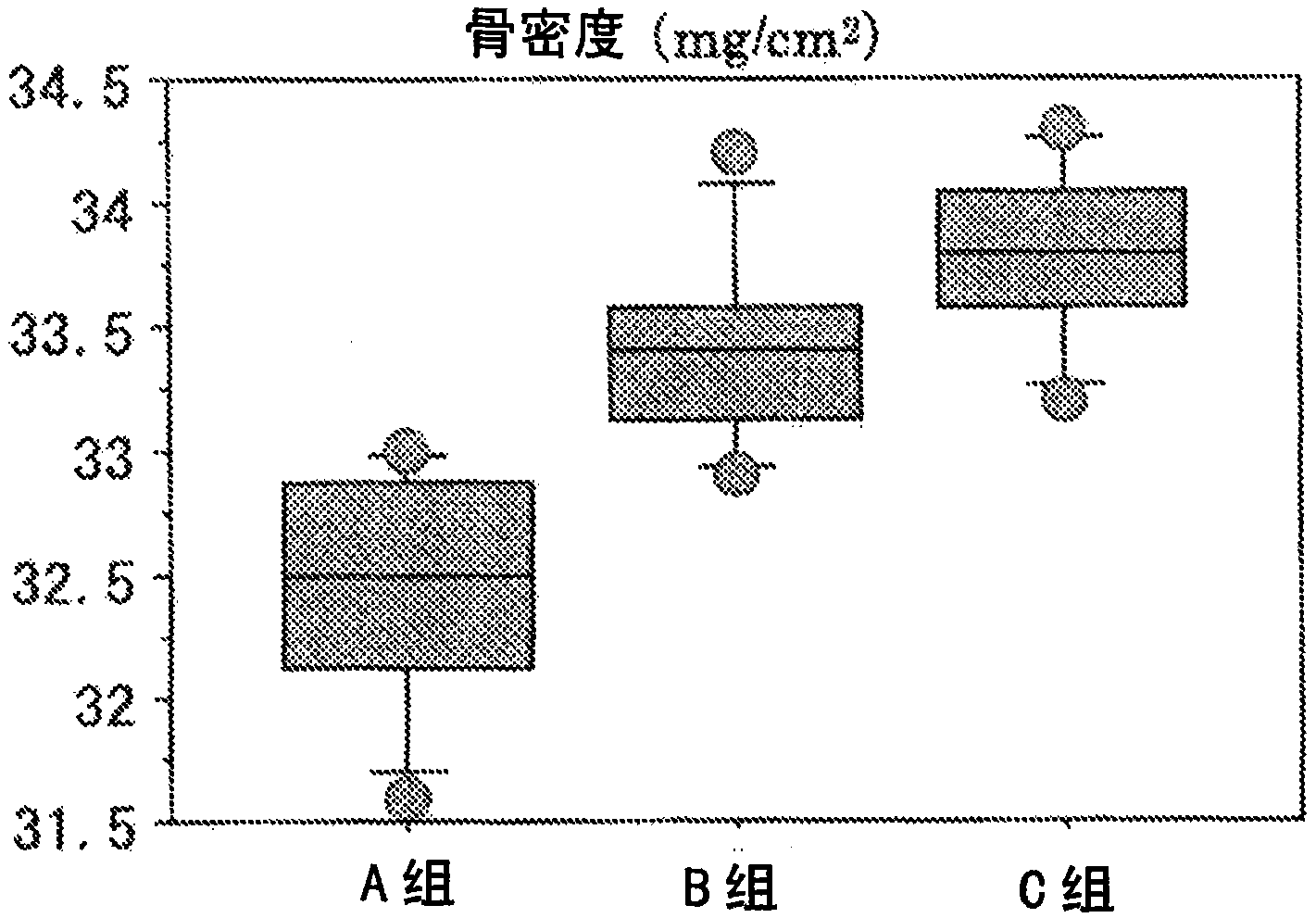
Figure 2 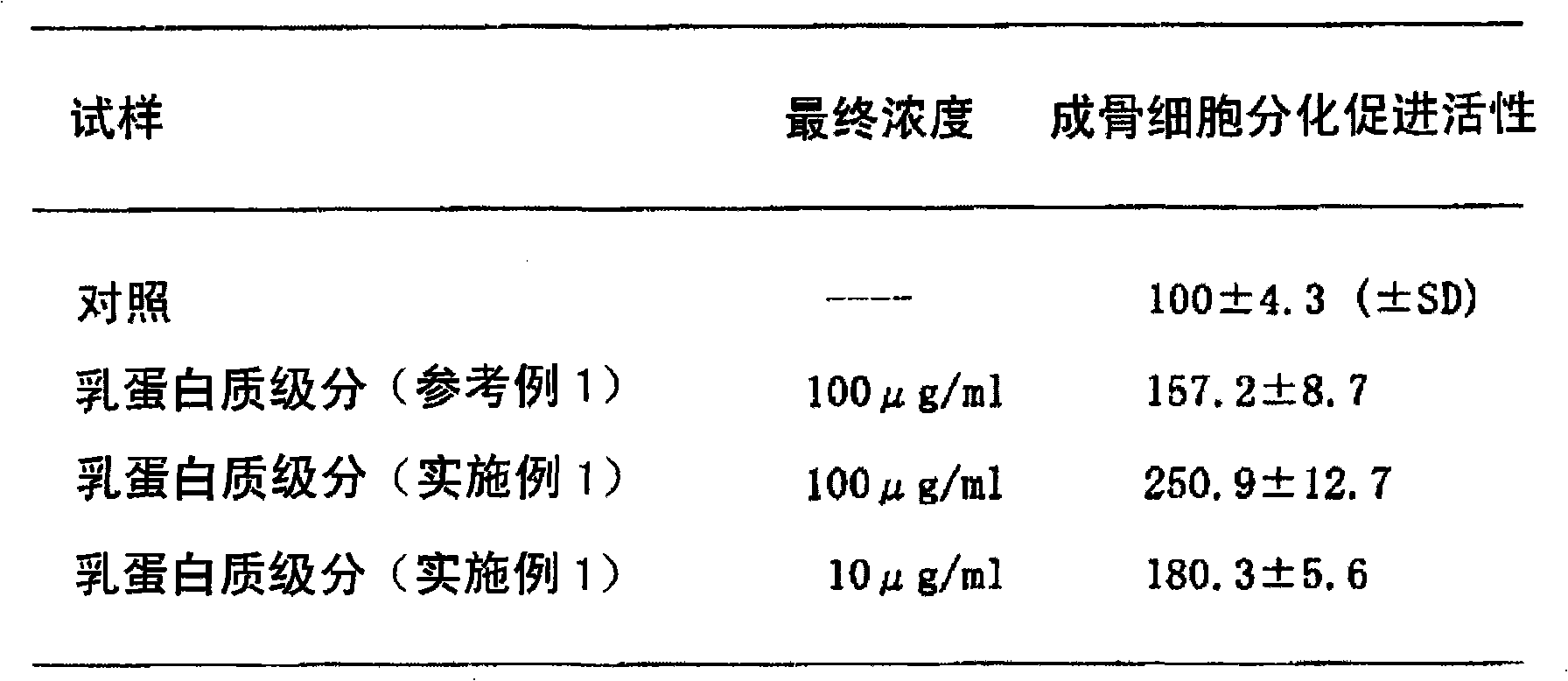
Figure 3
Abstract
Description
technical field
[0001] The present invention relates to a milk protein fraction or a milk protein fraction degradation product having an action of promoting osteoblast differentiation and inhibiting osteoclast differentiation.
[0002] The milk protein fraction or the milk protein fraction decomposition product of the present invention has the effect of promoting osteoblast differentiation and inhibiting osteoclast differentiation, so it is used as an osteoblast differentiation-promoting agent for the purpose of prevention or treatment of bone diseases, bone strengthening, etc. It is very useful as a preparation for inhibiting osteoclast differentiation and as an active ingredient of medicines, foods and feeds for preventing or treating bone diseases or for promoting osteoblast differentiation and inhibiting osteoclast differentiation. Background technique
[0003] In recent years, various bone diseases such as osteoporosis, bone fractures, and low back pain tend to increase...
Examples
reference example 1
[0041] According to the following method (see Japanese Patent No. 3112637), a commercially available milk protein fraction whose bone strengthening effect was confirmed was prepared.
[0042] A column with a diameter of 10 cm filled with 0.5 liter of sulfonated Chitopearl (manufactured by Fuji Industries) as a cation exchange resin was sufficiently washed with deionized water. After making 50 liters of non-sterilized skim milk pass through the column with a flow rate of 100ml / min, the column is fully washed with deionized water, and 2.5 liters of 0.05M phosphate buffer solution (pH7.0) containing 0.95M sodium chloride is passed through the column so that Proteins adsorbed to the resin are eluted. Then, the eluate was desalted and concentrated by reverse osmosis (RO) membrane treatment, and then freeze-dried to obtain a powdery milk protein fraction. This operation was repeated twice to obtain 104 g of protein fractions. The isoelectric point of this protein fraction is 7.0-8...
Embodiment 1
[0044] A column with a diameter of 10 cm filled with 0.5 liter of sulfonated Chitopearl (manufactured by Fuji Industries) as a cation exchange resin was sufficiently washed with deionized water. After making 50 liters of non-sterilized skim milk pass through the column with a flow rate of 100ml / min, the column was fully washed with 0.05M phosphate buffer (pH7.0) containing 0.15M sodium chloride, and then the column was washed with 0.3M sodium chloride 2.5 liters of 0.05M phosphate buffer (pH 7.0) was passed through the column to elute the protein adsorbed on the resin. Then, the eluate was desalted and concentrated by reverse osmosis (RO) membrane treatment, and then freeze-dried to obtain a powdery milk protein fraction. This operation was performed three times to obtain 55.4 g of milk protein fractions. This fraction contains proteins with a molecular weight of 75,000 to 80,000 Daltons and an isoelectric point of 7.5 to 8.5. Among the constituent amino acids contained in th...
Embodiment 2
[0046] A column with a diameter of 10 cm filled with 0.5 liter of sulfonated Chitopearl (manufactured by Fuji Industries) as a cation exchange resin was sufficiently washed with deionized water. After making 50 liters of non-sterilized skim milk pass through the column with a flow rate of 100ml / min, the column was fully washed with 0.05M phosphate buffer (pH7.0) containing 0.25M sodium chloride to make the 0.05M solution containing 0.4M sodium chloride 2.5 liters of phosphate buffer (pH 7.0) was passed through the column to elute the protein adsorbed on the resin. Then, the eluate was desalted and concentrated by reverse osmosis (RO) membrane treatment, and then freeze-dried to obtain a powdery milk protein fraction. This operation was performed twice to obtain 37.3 g of milk protein fractions. This fraction contains proteins with a molecular weight of 75,000 to 80,000 Daltons and an isoelectric point of 7.5 to 8.5. Among the constituent amino acids contained in this milk pro...