
Antenna
An antenna and wireless signal technology, which is applied to antennas, devices that enable antennas to work in different bands at the same time, and the structural form of radiating elements, etc., can solve the problems that the antenna volume is not easy to shrink, the radiator is prone to interference, and the antenna structure is complex.
Patent Information
- Authority / Receiving Office
- CN · China
- Patent Type
- Applications(China)
- Current Assignee / Owner
- Publication Date
- 2012-05-16
- Estimated Expiration
- Not applicable · inactive patent
Smart Images
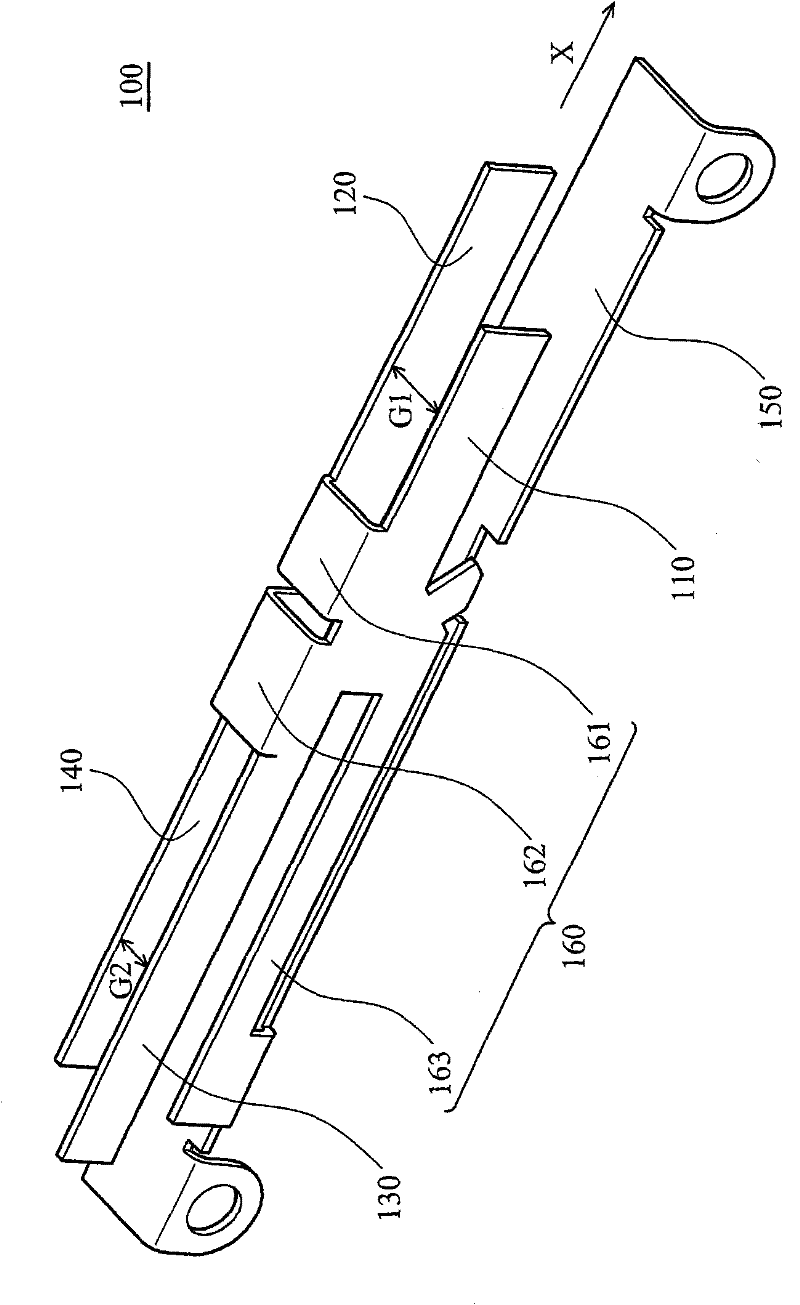
Figure 1 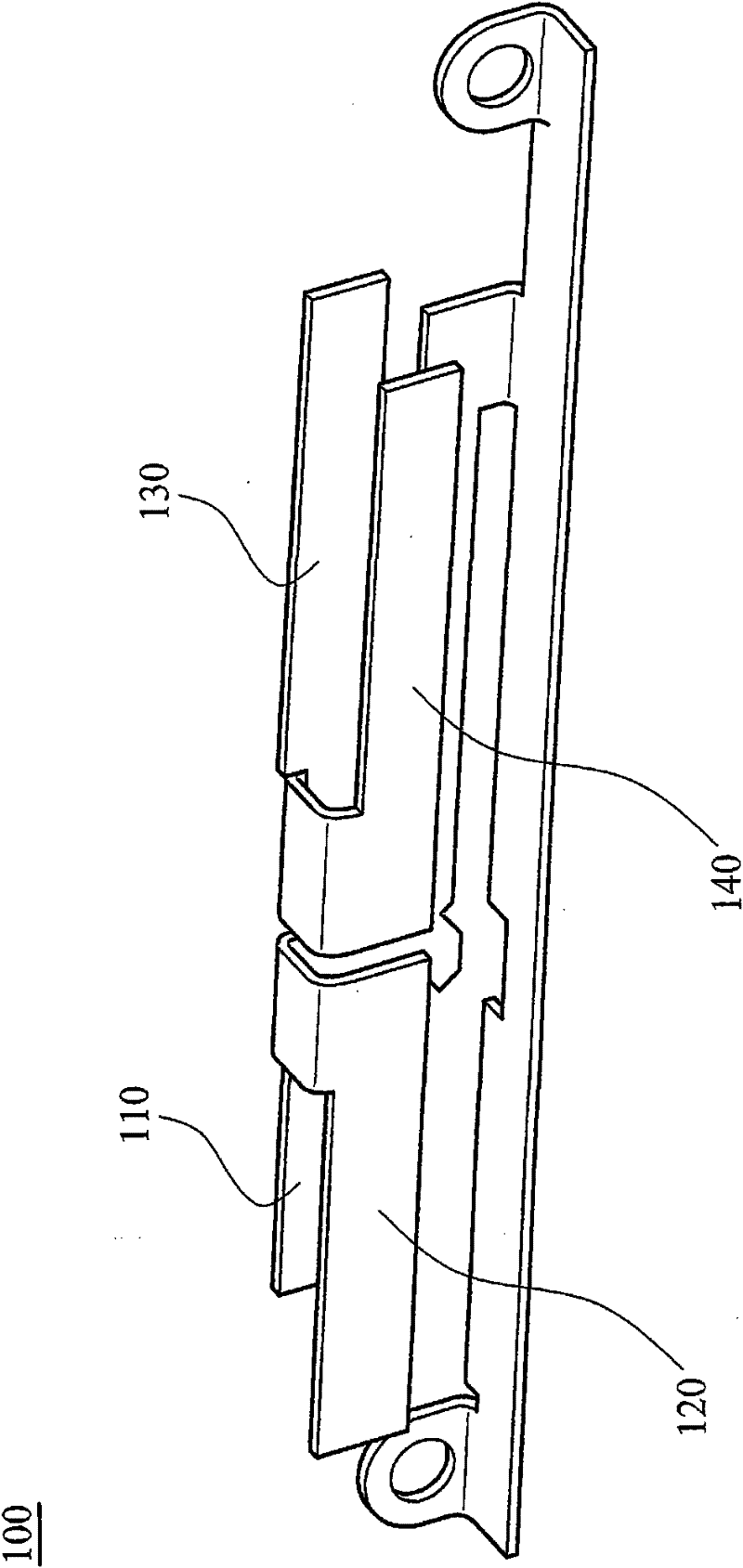
Figure 2 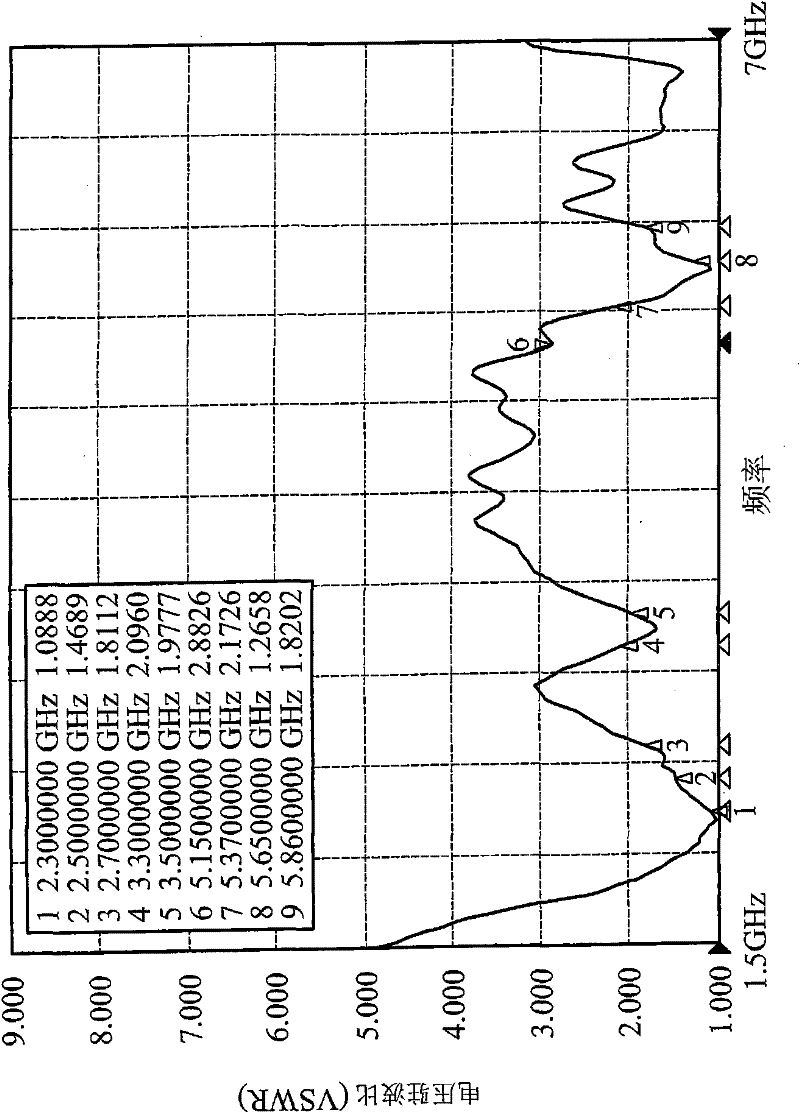
Figure 3
Abstract
Description
technical field
[0001] The invention relates to an antenna, especially an antenna capable of increasing bandwidth. Background technique
[0002] In the known antenna, in order to increase the bandwidth of the wireless signal transmitted by the antenna, it is often necessary to increase the width of the radiator, or to set an extension or a bent part on the radiator, resulting in an excessively large volume of the conventional antenna.
[0003] With the increasing number of wireless communication specifications, a single antenna must be able to meet communication specifications such as WLAN, WIFI, Bluetooth, and WIMAX at the same time. However, the above requirements often result in an overly complex structure of the antenna, and the size of the antenna is not easily reduced. In addition, interference is also prone to occur between radiators in different frequency bands. Contents of the invention
[0004] The present invention provides an antenna to solve the problems of ...
Examples
Embodiment Construction
[0017] refer to Figure 1A , Figure 1B , which shows that the antenna 100 according to the embodiment of the present invention includes a grounding element 150 , a connecting element 160 , a first radiator 110 , a second radiator 120 , a third radiator 130 and a fourth radiator 140 . The connecting piece 160 is connected to the grounding piece 150 . The first radiator 110 is connected to the connecting member 160 and extends toward a first direction (X). The first radiator 110 is used for transmitting a first wireless signal. The second radiator 120 is connected to the connecting member 160 and extends toward the first direction (X). The second radiator 120 is parallel to the first radiator 110. The second radiator 120 is used to transmit a second wireless signal. Signal. The third radiator 130 is connected to the connecting member 160 and extends toward a second direction (-X). The third radiator 130 is used for transmitting a third wireless signal. The fourth radiator 14...