
A 0.532 micron and 1.064 micron frequency doubling anti-reflection coating for large curvature lens surfaces
A technology of large-curvature lens and anti-reflection coating, applied in optical components, optics, instruments, etc., can solve problems such as damage and increase system noise
Patent Information
- Authority / Receiving Office
- CN · China
- Patent Type
- Patents(China)
- Current Assignee / Owner
- Publication Date
- 2016-04-06
Smart Images
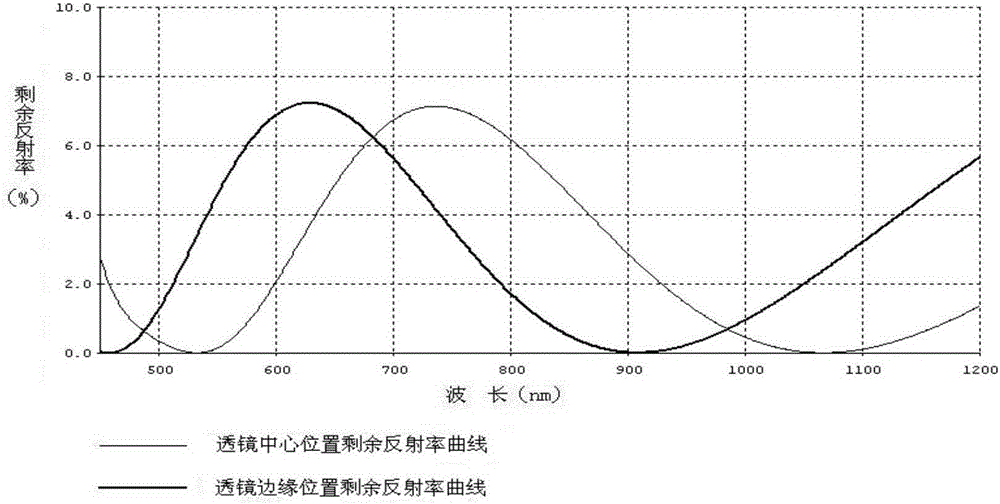
Figure 1 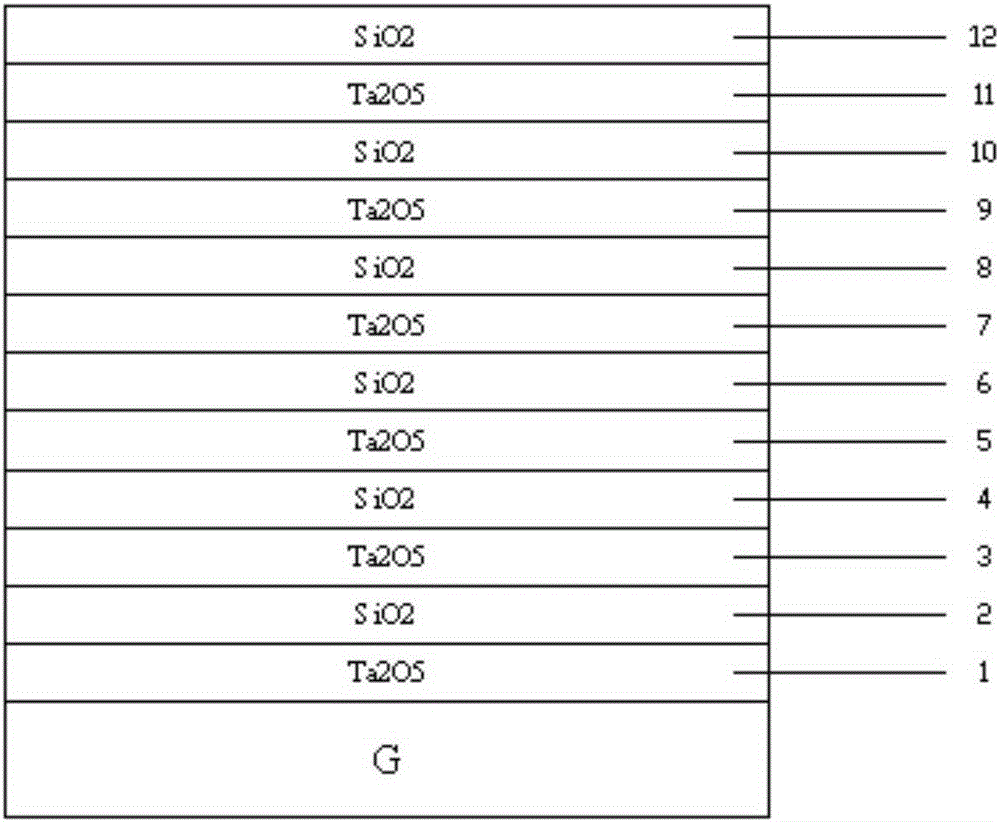
Figure 2 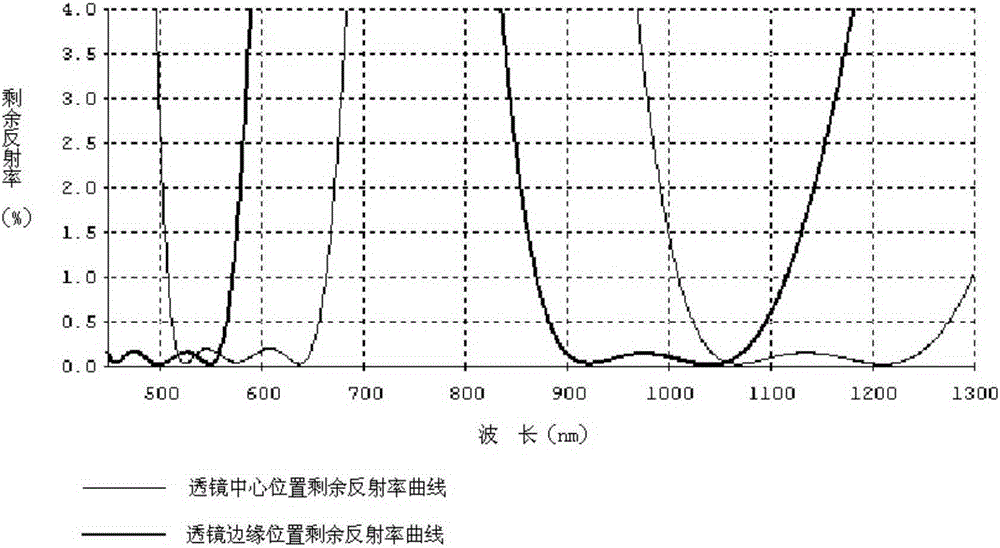
Figure 3
Abstract
Description
technical field
[0001] The invention belongs to the technical field of optical thin films, and mainly relates to a frequency doubling antireflection film deposited on the surface of a large curvature lens, in particular to a frequency doubling antireflection film with a frequency doubling of 0.532 microns and a 1.064 micron used on the surface of a large curvature lens Anti-reflective coating. Background technique
[0002] 0.532μm and 1.064μm frequency doubled anti-reflection coatings are widely used in laser suppression sighting and sighting systems. Combat effect. The performance of frequency doubling anti-reflection coatings generally includes three aspects: optical properties, physical and chemical properties, and laser damage resistance, among which optical properties and laser damage resistance are closely related to the uniformity of film thickness on the surface of the part. At present, measures to improve the uniformity of film thickness during film deposition gen...
Examples
Embodiment 1
[0031] Embodiment 1 selects K9 glass substrate for use, Ta 2 o 5 When the refractive index is 1.996, it is the standard Ta 2 o 5 Refractive index, the ratio of the radius of curvature of the lens to the aperture is equal to 1. At this time, the lens is a large curvature lens, and the first to twelfth film layers 1 to 12 are plated in sequence, and the thicknesses of the first to twelfth film layers are 11.8nm respectively , 34.5nm, 128.5nm, 15.2nm, 48.3nm, 30.8nm, 65.1nm, 189.9nm, 131nm, 47.9nm, 39.8nm, 130.2nm. After testing, the residual reflectance curves of the lens edge position and the lens center point position at 0.532 μm and 1.064 μm wavelengths were respectively obtained (see image 3 ), the residual reflectivity at the lens edge position at 0.532 μm wavelength = 0.137%, and the residual reflectivity at 1.064 μm wavelength = 0.085%; the residual reflectivity at the lens center position at 0.532 μm wavelength = 0.093%, at 1.064 μm Residual reflectivity at waveleng...
Embodiment 2
[0032] Embodiment 2 selects K9 glass substrate for use, Ta 2 o 5 When the refractive index is 1.996, it is the standard Ta 2 o 5 Refractive index, the ratio of the radius of curvature of the lens to the aperture is equal to 1.5. At this time, the lens is a large curvature lens. The first to twelfth film layers 1 to 12 are plated in sequence, and the thicknesses of the first to twelfth film layers are respectively 11.8nm , 34.5nm, 128.5nm, 15.2nm, 48.3nm, 30.8nm, 65.1nm, 189.9nm, 131nm, 47.9nm, 39.8nm, 130.2nm. After testing, the residual reflectance curves of the lens edge position and the lens center point position at 0.532 μm and 1.064 μm wavelengths were respectively obtained (see Figure 4 ), the residual reflectivity at the lens edge position at 0.532 μm wavelength=0.073%, the residual reflectivity at 1.064 μm wavelength=0.146%; the residual reflectivity at the lens center position at 0.532 μm wavelength=0.093%, at 1.064 μm Residual reflectivity at wavelength = 0.028%...
Embodiment 3
[0033] Embodiment 3 selects K9 glass substrate for use, Ta 2 o 5 When the refractive index is 1.996, it is the standard Ta 2 o 5 Refractive index, the ratio of the radius of curvature of the lens to the aperture is equal to 2. At this time, the lens is a large curvature lens. The first to twelfth film layers 1 to 12 are plated in sequence, and the thickness of the first to twelfth film layers are 11.8nm respectively. , 34.5nm, 128.5nm, 15.2nm, 48.3nm, 30.8nm, 65.1nm, 189.9nm, 131nm, 47.9nm, 39.8nm, 130.2nm. After testing, the residual reflectance curves of the lens edge position and the lens center point position at 0.532 μm and 1.064 μm wavelengths were respectively obtained (see Figure 5 ), the residual reflectivity at the lens edge position at 0.532 μm wavelength=0.184%, the residual reflectivity at 1.064 μm wavelength=0.097%; the residual reflectivity at the lens center position at 0.532 μm wavelength=0.093%, at 1.064 μm Residual reflectivity at wavelength = 0.028%; ...