
High-strength thin band steel for cold forming and manufacturing method thereof
A manufacturing method and technology of thin strip steel, applied in the field of continuous casting process, can solve the problems of uneven structure, poor formability, high yield ratio, achieve uniform grain structure, reduce the thickness of oxide scale, reduce rolling effect of temperature
Patent Information
- Authority / Receiving Office
- CN · China
- Current Assignee / Owner
- Publication Date
- 2012-11-28
Smart Images
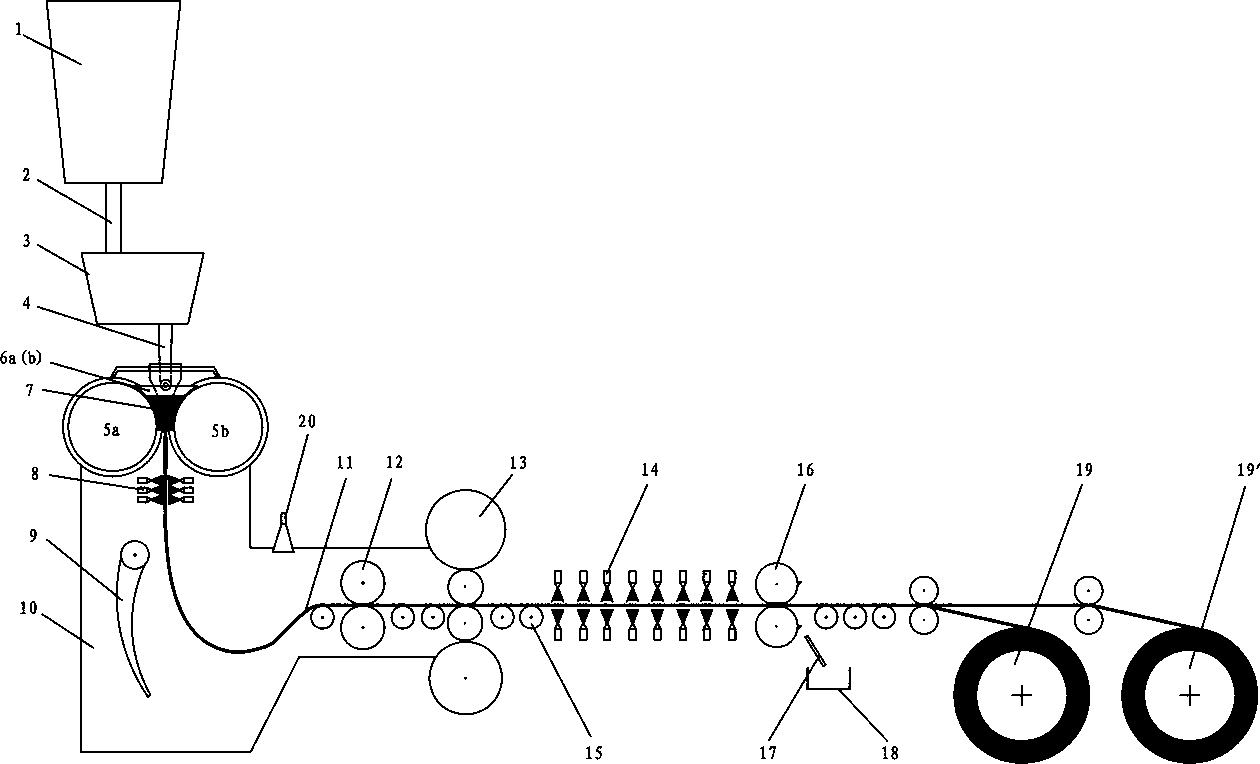
Figure 1 
Figure 2 
Figure 3
Abstract
Description
technical field
[0001] The invention belongs to the continuous casting process, in particular to a high-strength thin steel strip for cold forming and a manufacturing method thereof. Background technique
[0002] In the traditional steel production process, tin (Sn) is a typical residual element or harmful element in steel. It is very difficult and expensive to fully remove Sn in the steelmaking process. Once Sn is contained in steel, it is basically impossible to completely eliminate it. , can only reduce the content of Sn by diluting molten steel, all of which lead to the increase of the cost of steel products.
[0003] In recent years, due to the continuous recycling of scrap steel, the content of residual elements such as Sn in steel has gradually increased. Sn in steel is an element that is easy to segregate, and it is easy to be enriched at the grain boundary to cause defects such as cracks. Therefore, in the traditional process The content of Sn element in steel is s...
Examples
Embodiment Construction
[0105] see figure 1 , which shows the technological process of the present invention, molten steel is directly poured on a crystallization roller 5a, 5b and 5b which are relatively rotating and capable of rapid cooling through the ladle 1 through the ladle shroud 2, the tundish 3 and the flow distribution device 4 In the molten pool 7 surrounded by side sealing plate devices 6a, 6b, molten steel solidifies on the circumferential surface of the crystallization rollers 5a, 5b, and then forms a solidified shell, which gradually grows and then forms at the smallest gap between the two crystallization rollers (nip point). 1.5-3 mm thick cast strip 11 . The casting strip passes through the secondary cooling device 8 in the airtight chamber 10, and immediately sprays dry ice particles (solid CO 2 ), to control the cooling rate, so that the casting belt 11 is rapidly and uniformly cooled to below 1280°C. Then the cast strip is sent to the hot rolling mill 13 by swinging the guide p...