
Signal shielding method, device and system for wireless communication system
A wireless communication system and signal shielding technology, applied in the field of communication, can solve problems such as base station interference, affecting normal communication of the wireless communication system, interference, etc.
Patent Information
- Authority / Receiving Office
- CN · China
- Patent Type
- Patents(China)
- Current Assignee / Owner
- Publication Date
- 2016-05-04
- Estimated Expiration
- Not applicable · inactive patent
Smart Images
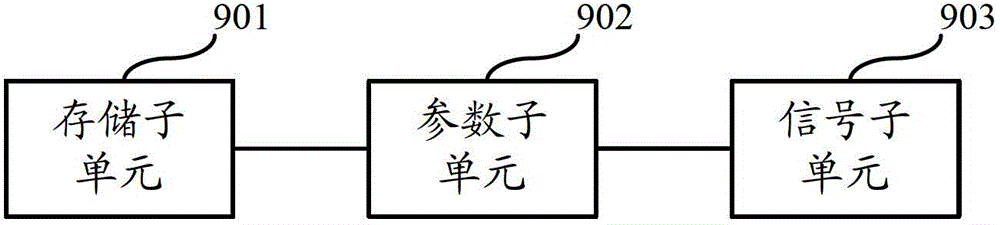
Figure 1 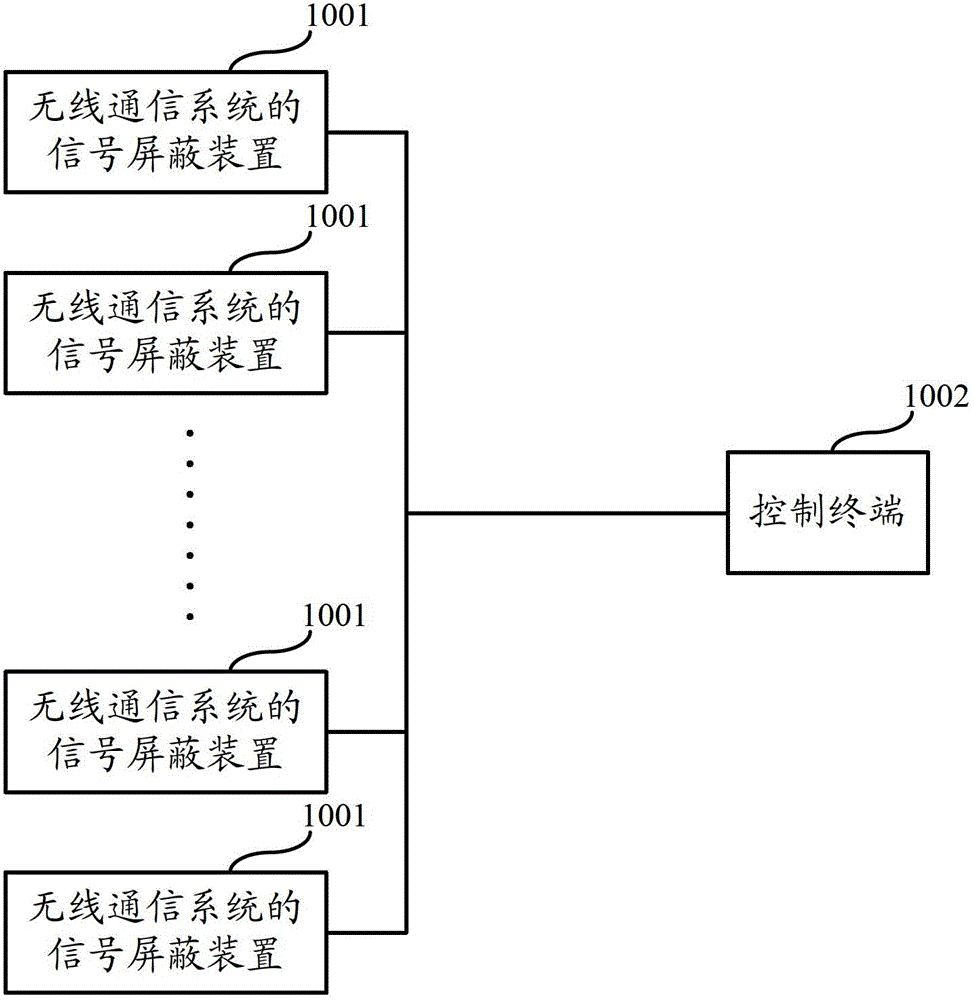
Figure 2 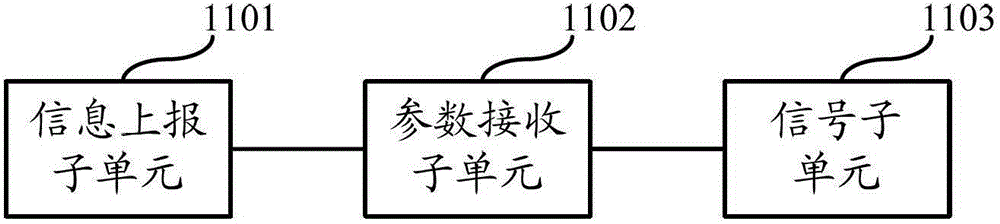
Figure 3
Abstract
Description
technical field
[0001] The present invention relates to the field of communication technology, in particular to a signal shielding method, device and system of a wireless communication system. Background technique
[0002] In modern society, terminals of wireless communication systems such as mobile phones have increasingly become indispensable and important tools in people's work and life. It is self-evident that the widespread use of mobile phones brings convenience in communication, but at the same time it also creates many hidden dangers that cannot be ignored. For example, in prisons, detention centers, examination sites, gas stations, gas stations, chemical warehouses, power dispatching rooms, hospital clinics, wards, operating rooms, as well as national intelligence agencies, military and important government departments, civil aviation control departments, etc. In any place, the signal of the mobile terminal may become a security and confidentiality hidden danger an...
Examples
Embodiment 1
[0113] Embodiment 1. The signal interception process of the Long Term Evolution (LTE) system, such as image 3 shown, including:
[0114] Step 301, carrier frequency detection; acquiring carrier frequency.
[0115] Step 302, symbol timing detection.
[0116] Step 303, cell ID identification within the group.
[0117] Step 304, wireless frame timing detection; acquiring frame timing information.
[0118] Step 305, cell ID group identification; obtaining cell ID group information.
[0119] Step 306, physical broadcast channel (PBCH) multi-antenna group identification; acquiring antenna information.
[0120] Step 307, identifying the length of the cyclic prefix (CP) of the subframe where the PBCH is located; acquiring CP length information.
[0121] Step 308, time and frequency synchronization; performing time and frequency synchronization with the wireless communication system.
[0122] Step 309, read system information, including information such as system bandwidth, Phys...
Embodiment 2
[0124] Embodiment two, the signal interception process of Wideband Code Division Multiple Access (WCDMA) system, such as Figure 4 shown, including:
[0125] Step 401, carrier frequency detection; acquiring carrier frequency.
[0126] Step 402, time slot synchronization;
[0127] Step 403, scrambling code group identification and frame synchronization; obtaining scrambling code group information.
[0128] Step 404, scrambling code identification; acquiring scrambling code information.
[0129] Step 405, read system information.
[0130] The information to be acquired in steps 401 and 402 can be obtained using the primary synchronization channel (P-SCH), the information to be obtained in step 403 can be obtained using the S-SCH channel, and the information to be obtained in steps 404 and 405 can be obtained using the primary synchronization channel (P-SCH). Control physical channel (P-CCPCH) acquisition.
Embodiment 3
[0131] Embodiment three, the signal interception process of code division multiple access and its evolution (CDMA1X or EVDO) system is as follows Figure 5 shown, including:
[0132] Step 501, carrier frequency detection; acquiring carrier frequency.
[0133] Step 502, identifying the offset of the local pseudo-random (PN) sequence; acquiring PN sequence offset information.
[0134] Step 503, time synchronization, which can be synchronized by obtaining parameters such as long code state (LC_STATE), system time (SYS_TIME), pilot frequency offset (PILOT_PN);
[0135] Step 504, read system information.
[0136] Wherein the information to be obtained in steps 501 and 502 can be obtained using a forward pilot channel (F-PICH), the information to be obtained in step 503 can be obtained using a forward synchronization (F-SYNC) signal, and the information to be obtained in step 504 It can be acquired using the Forward Paging Channel (F-PCH), Forward Broadcast Control Channel (F-BCC...