
Preparation method of 2-amino-3-chlorobenzoic methyl ester
A technology of methyl chlorobenzoate and chlorobenzoic acid is applied in the field of preparation of herbicide intermediates, and can solve the problems of complex reaction process, difficult control, and difficulty in obtaining, and achieves simple reaction process, easy operation, and improved yield. Effect
Patent Information
- Authority / Receiving Office
- CN · China
- Patent Type
- Applications(China)
- Current Assignee / Owner
- Publication Date
- 2013-07-10
Smart Images
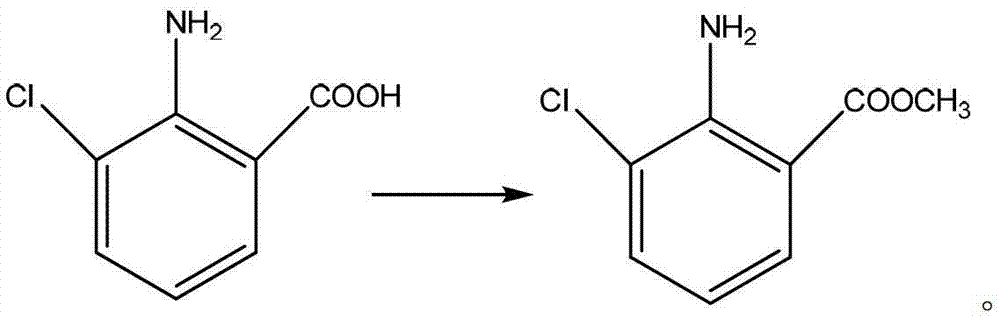
Figure 1 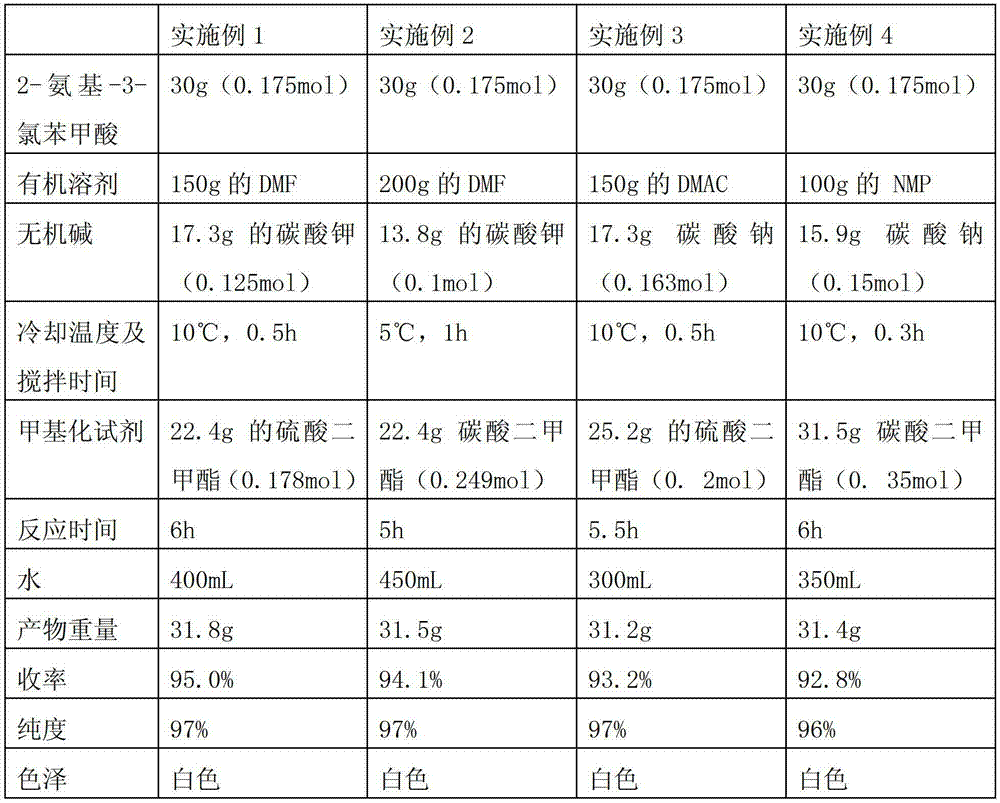
Figure 2
Abstract
Description
technical field
[0001] The invention relates to a preparation method of a herbicide intermediate, in particular to a preparation method of 2-amino-3-chlorobenzoic acid methyl ester. Background technique
[0002] Methyl 2-amino-3-chlorobenzoate is an important pharmaceutical and chemical intermediate. It is a key intermediate in the synthesis of triazolopyrimidine sulfonamide herbicides, and it is used in the synthesis of many pesticides. There are applications.
[0003] The preparation of 2-amino-3-chlorobenzoic acid methyl ester mainly contains the following several methods both at home and abroad:
[0004] U.S. patent document US4306074A discloses a kind of preparation method of 2-amino-3-chlorobenzoic acid methyl ester, and it obtains 3-chloroisatoic anhydride and Hoffman degradation by 3-chlorophthalic anhydride 6-chloroisatoic anhydride, followed by esterification to give methyl 2-amino-3-chlorobenzoate and methyl 2-amino-6-chlorobenzoate. The disadvantages of this m...
Examples
Embodiment 1)
[0020] ①At room temperature, add 150g of DMF to a 500mL reaction flask, then add 30g of 2-amino-3-chlorobenzoic acid (0.175mol), and then add 17.3g of potassium carbonate (0.125mol).
[0021] ②After the addition, cool to 10°C and stir for 0.5h, then slowly add 22.4g of dimethyl sulfate (0.178mol) dropwise.
[0022] ③After dripping, rise to room temperature and stir the reaction for 6h.
[0023] ④The reacted material was poured into 400mL water, and a white solid was separated out. After stirring for 1h, filter, and the filter cake was washed with water and dried to obtain 31.8g of 2-amino-3-chlorobenzoic acid methyl ester, the yield was 95.0%, the purity 97% (HPLC).
Embodiment 2~ Embodiment 4)
[0025] The preparation method of each embodiment is basically the same as that of Example 1, and the differences are shown in Table 1.
[0026] Table 1
[0027]
[0028] .
[0029] As can be seen from Table 1, the effect of adopting potassium carbonate as the inorganic base is slightly better than that of sodium carbonate, and the effect of adopting dimethyl sulfate as the methylating agent is also slightly better than that of dimethyl carbonate.
Embodiment 5)
[0031] ①At room temperature, add 150g of DMF to a 500mL reaction flask, then add 30g of 2-amino-3-chlorobenzoic acid (0.175mol), and then add 17.3g of potassium carbonate (0.125mol).
[0032] ②After the addition, cool to 10°C and stir for 0.5h, then slowly add 22.4g of dimethyl sulfate (0.178mol) dropwise.
[0033] ③After dripping, rise to room temperature and stir the reaction for 6h.
[0034] ④The reacted material was directly filtered, and the filter cake was washed with water and dried to obtain 30.8 g of methyl 2-amino-3-chlorobenzoate, with a yield of 91.1% and a purity of 96% (HPLC).
[0035] From Example 1 and Example 5, it can be seen that in step ④, pouring the reacted material into water is conducive to the complete precipitation of the product, so that the yield is higher.