
A kind of breeding method of aphid-resistant sorghum
A sorghum and seed technology, applied in the agricultural field, can solve problems such as difficulty in aphid-resistant breeding, achieve good aphid resistance, reduce breeding populations, and improve breeding efficiency
Patent Information
- Authority / Receiving Office
- CN · China
- Patent Type
- Patents(China)
- Current Assignee / Owner
- Publication Date
- 2016-03-02
- Estimated Expiration
- Not applicable · inactive patent
Smart Images
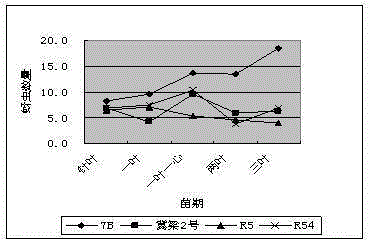
Figure 1 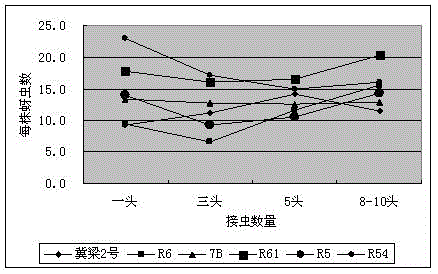
Figure 2 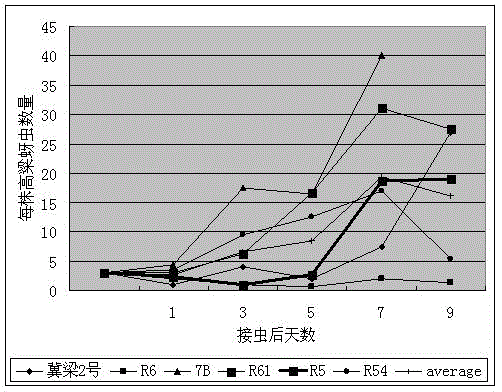
Figure 3
Abstract
Description
technical field
[0001] The invention relates to the field of agriculture, in particular to a breeding method for aphid-resistant sorghum. Background technique
[0002] Sorghum is the fifth largest grain crop in the world. It has been cultivated in my country for more than 5,000 years and was once widely planted as the main grain crop in my country. At present, sorghum is mainly grown in Jilin, Shanxi, Guizhou, Sichuan, Hebei and other places as raw grain for brewing wine and vinegar. Modern science has proved that the tannins and resistant starch in sorghum are beneficial to the human body, and have therapeutic effects on obesity, diabetes, hyperlipidemia and other chronic diseases. Eating sorghum is beneficial to health. Aphids harmful to sorghum in production include three types: sorghum aphid, wheat aphid, and corn aphid. The sorghum aphid is the most serious one for sorghum. This patent is only aimed at the sorghum aphid. Sorghum aphid is a common and rampant pest of s...
Examples
Embodiment 1
[0034] Embodiment 1: Stone R49 breeding
[0035] 130A and R47 were crossed to obtain F1 seeds: the obtained F1 seeds were planted in the field, and two generations of self-crossing were continuously planted to obtain F3 seeds, F2 aphid-resistant single plants were selected, and F3 seeds were harvested. Indoor identification of aphid resistance of the F3 generation: take the resistant single ear of the F3 generation as a unit, and take 100 seeds from each ear for resistance identification in a room with a temperature of 22-29°C and a relative humidity of 55-75%. The sorghum seeds are cultivated in the loam soil of the source field, the loam soil is packed in the nutrient hole of the nutrient tray, and the source is marked with a card. Aphids were bred 1 week in advance, and the number of bred aphids was more than 5 times the number of identified sorghum seedlings. At the 2-leaf stage, 3 aphids were artificially inoculated per plant. On the first day and the third day after in...
Embodiment 2
[0036] Embodiment 2: 98B breeding
[0037] 130B and 1041B were crossed to obtain F1 seeds: the obtained F1 seeds were planted in the field, and two generations of self-crossing were continuously planted to obtain F3 seeds, F2 aphid-resistant single plants were selected, and F3 seeds were harvested. Indoor identification of aphid resistance of the F3 generation: take the resistant single ear of the F3 generation as a unit, and take 100 seeds from each ear for resistance identification in a room with a temperature of 22-29°C and a relative humidity of 55-75%. The sorghum seeds are cultivated in the loam soil of the source field, the loam soil is packed in the nutrient hole of the nutrient tray, and the source is marked with a card. Aphids were bred 1 week in advance, and the number of bred aphids was more than 5 times the number of identified sorghum seedlings. At the 2-leaf stage, 3 aphids were artificially inoculated per plant. On the first day and the third day after inocul...