
Catalyzed oxidation of alkanes and naphthenes by conjugated polymeric metalloporphyrins
A technology for polymerizing metals and metalloporphyrins, which can be used in chemical instruments and methods, catalytic reactions, organic compounds/hydrides/coordination complex catalysts, etc., and can solve the problem of high cost
Patent Information
- Authority / Receiving Office
- CN · China
- Patent Type
- Patents(China)
- Current Assignee / Owner
- Publication Date
- 2016-03-30
- Estimated Expiration
- Not applicable · inactive patent
Smart Images
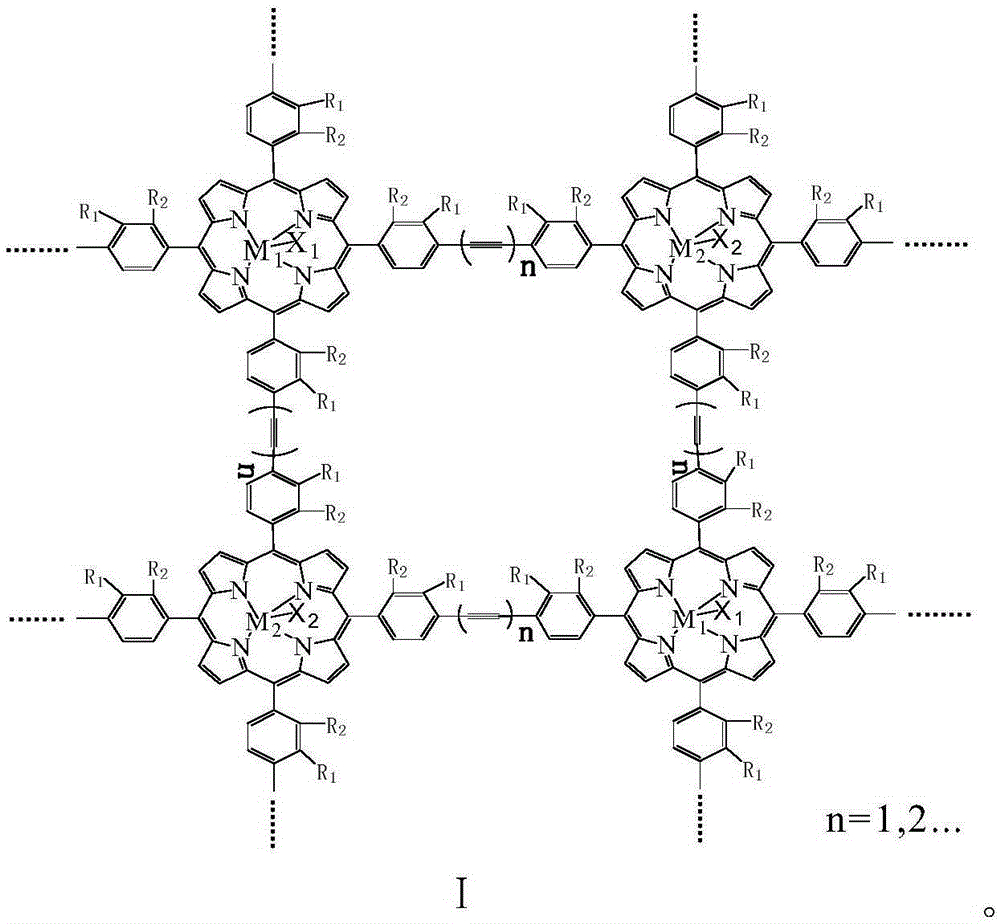
Figure 1 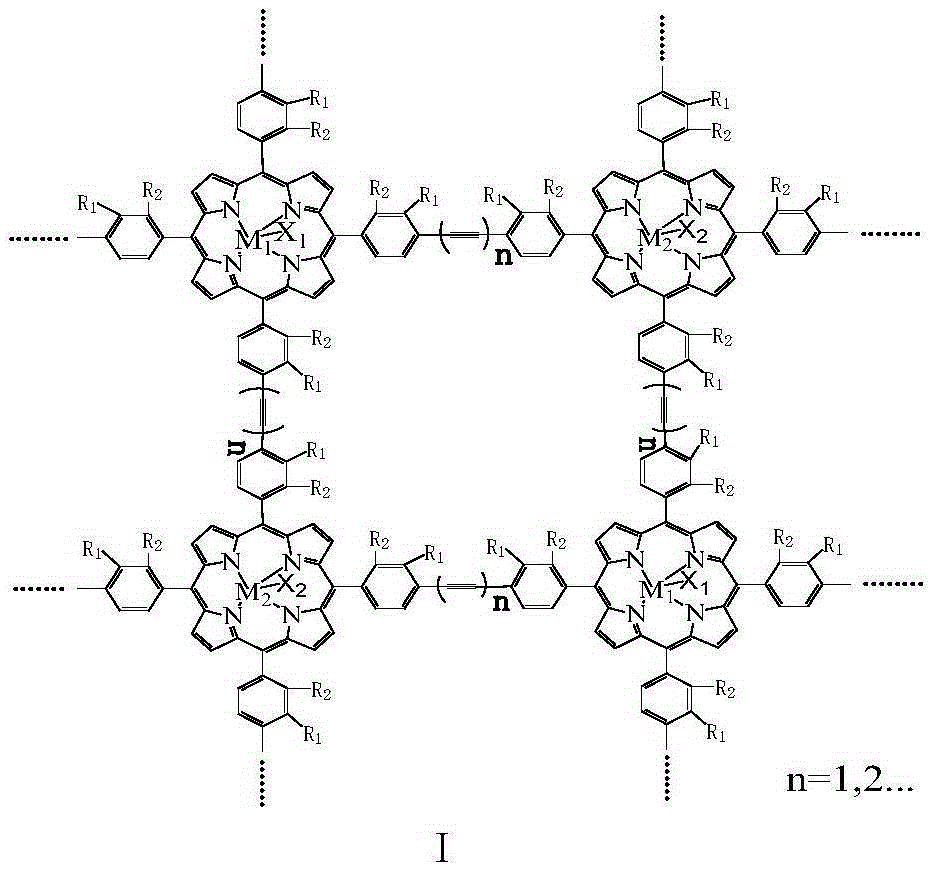
Figure 2
Abstract
Description
technical field
[0001] The present invention relates to a method for the selective catalytic air oxidation of alkanes and naphthenes under mild conditions. Background technique
[0002] Oxidation of alkanes generally needs to be carried out under high temperature and high pressure conditions, and the selectivity is poor. And because the carbon chain is easily broken, there are many side reactions, and it is easy to be deeply oxidized, the product is difficult to separate, the conversion rate is low, and the yield is not high. Using a suitable catalyst to reduce the reaction temperature and pressure is an effective way to reduce the side reactions of alkane oxidation and improve the conversion and selectivity. Single metal porphyrins and their mixtures with metal salts can effectively catalyze the carbon-hydrogen bonds in alkanes and cycloalkanes, and the selectivity and yield are relatively high. For example, the patent US5077394 discloses the use of polyhalogenated transit...
Examples
Embodiment 1
[0013] With 20mg of the metalloporphyrin polymer with structural formula I structure, R 1 = R 2 = H, M 1 = M 2 =Mn,X 1 =X 2 =Cl, n=1, molecular weight is 115000, specific surface area is 860m 2 / g, was added to 500ml cyclohexane, and 8atm air was introduced. The reactant was stirred at 125° C. for 2 hours, the conversion rate of cyclohexane was 18.1%, and the total yield of cyclohexanol and cyclohexanone in the reaction product was 92%.
Embodiment 2
[0015] With 20mg of the metalloporphyrin polymer with structural formula I structure, R 1 = H, R 2 =CH 3 ,M 1 = M 2 =Fe,X 1 =X 2 =Cl, n=2, molecular weight is 53000, specific surface area is 750m 2 / g, was added to 500ml cyclohexane, and 8atm air was introduced. The reactant was stirred at 100° C. for 4 hours, the conversion rate of cyclohexane was 8.6%, and the total yield of cyclohexanol and cyclohexanone in the reaction product was 94%.
Embodiment 3
[0017] With 20mg of the metalloporphyrin polymer with structural formula I structure, R 1 = R 2 =Cl,M 1 =Mn,M 2 =Fe,X 1 =X 2 =Cl, n=1, molecular weight is 172000, specific surface area is 970m 2 / g, add 500ml of cyclohexane, and introduce l0atm air. The reactant was stirred at 130° C. for 2 hours, the conversion rate of cyclohexane was 21.4%, and the total yield of cyclohexanol and cyclohexanone in the reaction product was 91%.