
Application of low molecular weight basic fibroblast growth factor LMW FGF2
A fibroblast, growth factor technology
Patent Information
- Authority / Receiving Office
- CN · China
- Current Assignee / Owner
- Publication Date
- 2014-12-17
Smart Images
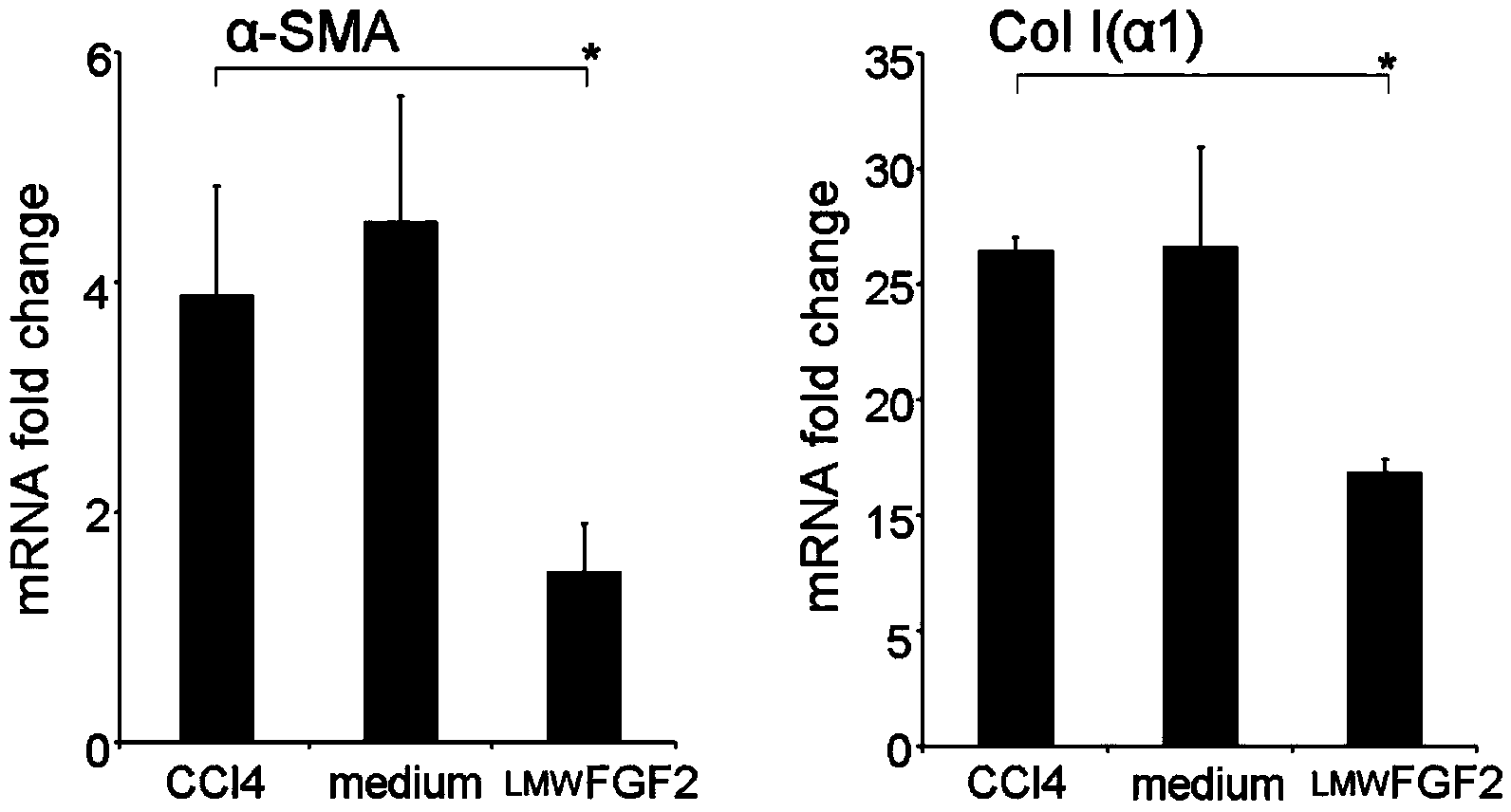
Figure 1 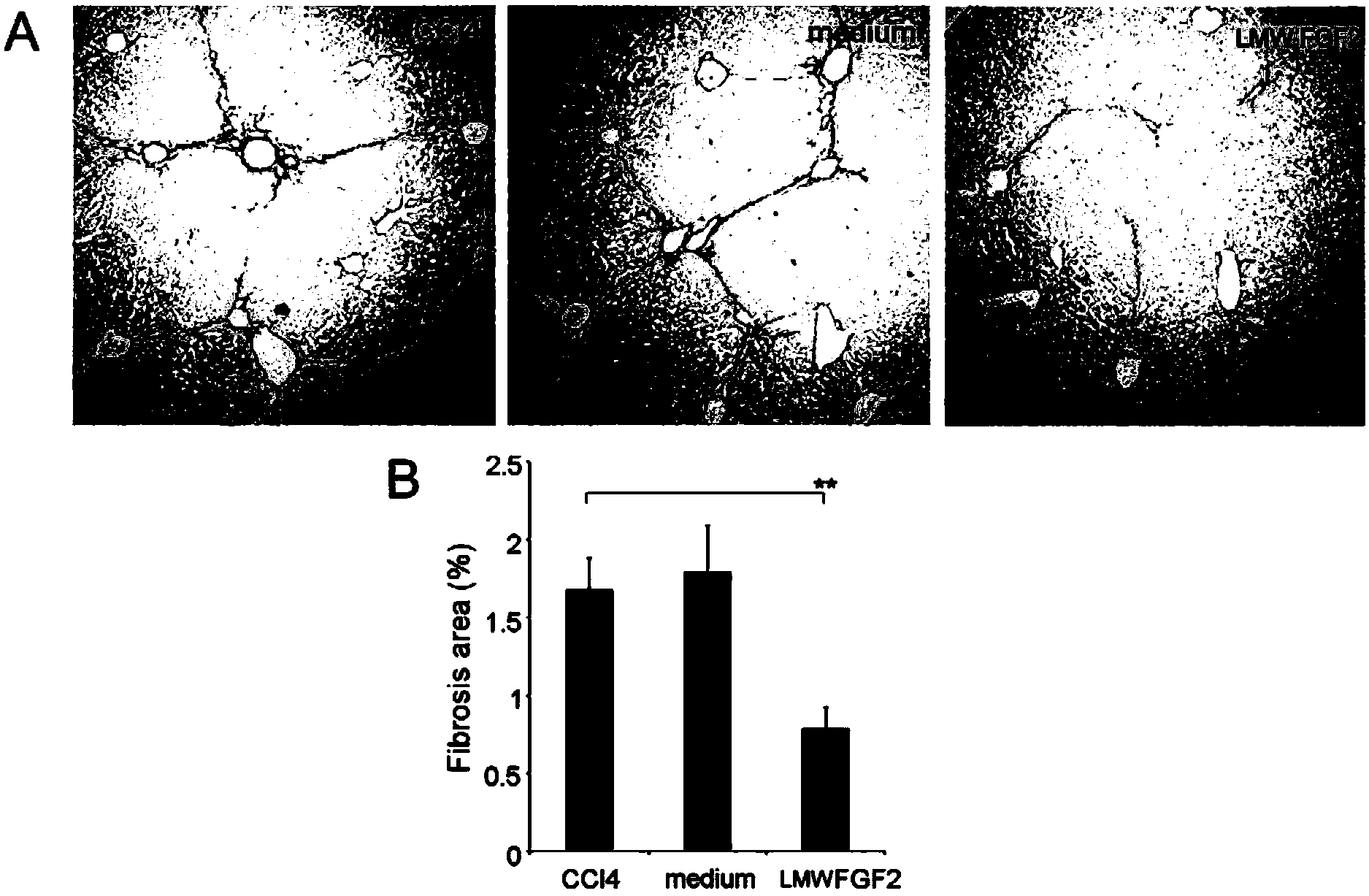
Figure 2 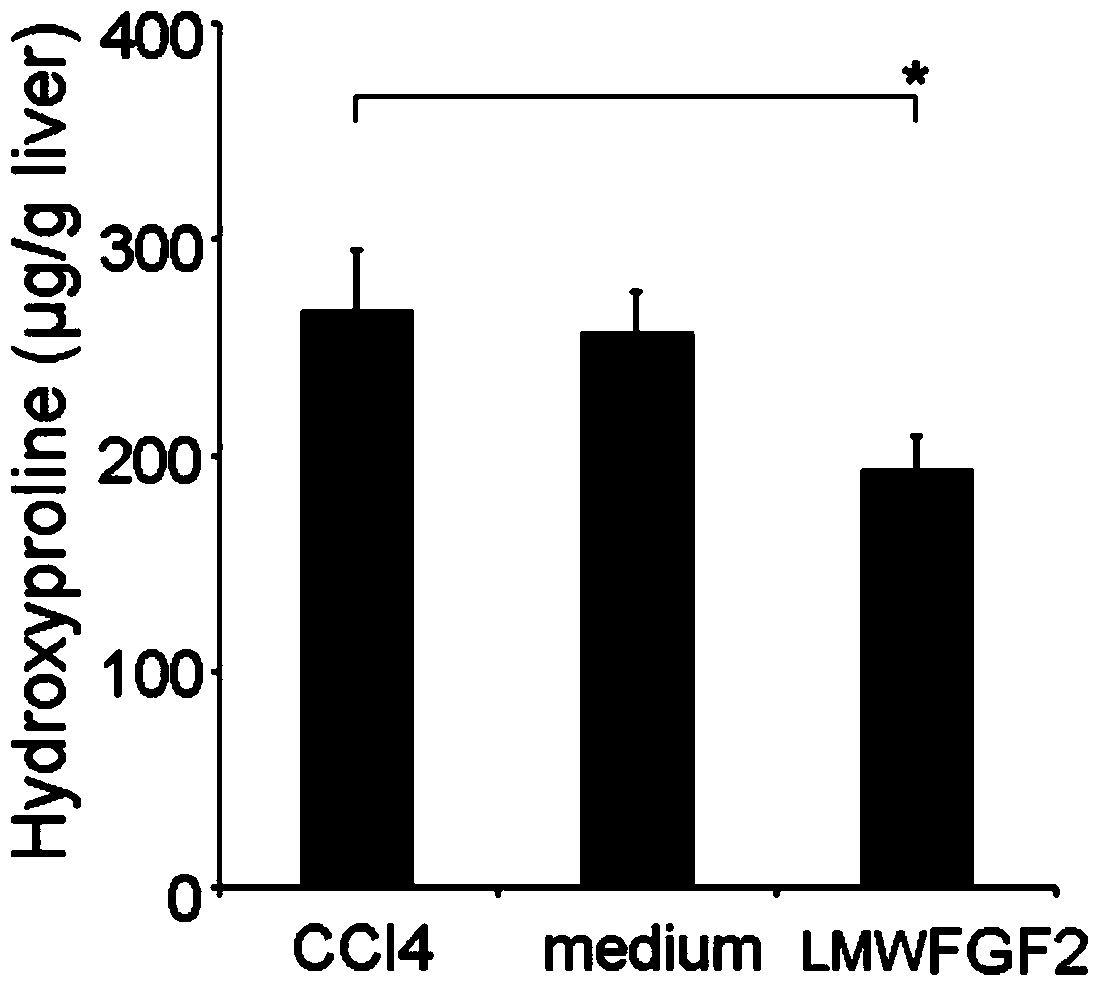
Figure 3
Abstract
Description
(1) Technical field
[0001] The invention relates to the application of a low-molecular-weight basic fibroblast growth factor LMW FGF2, in particular to the application in the preparation of anti-hepatic fibrosis drugs. (2) Background technology
[0002] Liver fibrosis and cirrhosis are the main pathological features of chronic liver diseases such as hepatitis and liver metabolic diseases, which seriously threaten health and life, and are major medical problems faced by human beings. In my country, 10%-15% of patients with hepatitis B, especially chronic active hepatitis B, may develop post-hepatitis cirrhosis within 5-10 years. In the development process of chronic liver disease of "chronic liver injury-hepatic fibrosis-cirrhosis", the prevention and treatment of liver fibrosis is the key, but there is still no effective method for this. Therefore, it is very urgent to develop effective anti-hepatic fibrosis drugs and methods.
[0003] Liver fibrosis usually results from t...
Examples
Embodiment 1
[0019] Example 1: Preparation of chronic liver injury mouse model
[0020] Utilize 10% (volume concentration) carbon tetrachloride (solvent is olive oil) to induce chemical liver damage to C57BL / 6J mice (body weight about 30 grams) of eight weeks of age, each mouse is intraperitoneally injected with 0.25ml 10% CCl 4 , 2 times a week, continuous injection for 4 weeks, to establish the liver fibrosis model, and the injected mice were fed normally in a sterile environment.
Embodiment 2
[0021] Example 2: LMW FGF2 inhibits HSC activation and reduces liver fibrosis
[0022] LMW FGF2 reagent: LMW FGF2 (purchased from Peprotech) was dissolved in IMDM culture medium (purchased from Corning Company), and every 50 μg of LMW FGF2 was dissolved in 3.3 ml of IMDM culture medium.
[0023] Continuous injection of CCl as described in Example 1 4 For 4-week-old mice, inject LMW FGF2 into the tail vein of mice in the experimental group at a dose of 60 μg / kg body weight, and inject IMDM culture solution in the control group, twice a week for 1 week. During all mice continue to carry out CCl by the method described in embodiment 1 4 Liver injury, 3 days after the last injection of LMW FGF2, the mouse liver tissue was taken, and a part of the total RNA was extracted with TRizol (Invetigen). The extraction method was carried out according to the instructions, and then reverse transcription kit RNA PCR kit (AMV) Ver3. TaKaRa) for reverse transcription. Real time-PCR detection...