
Processing method for improving quality of glycine soja tea
The technology of a wild soybean and a processing method is applied in the field of tea product processing, and can solve the problems such as the destruction of soybean nutrients, low medicinal or health value, and long processing time, and achieve the effects of improving quality, shortening processing time, and low processing cost.
Patent Information
- Authority / Receiving Office
- CN · China
- Patent Type
- Applications(China)
- Current Assignee / Owner
- Publication Date
- 2016-11-09
- Estimated Expiration
- Not applicable · inactive patent
Smart Images
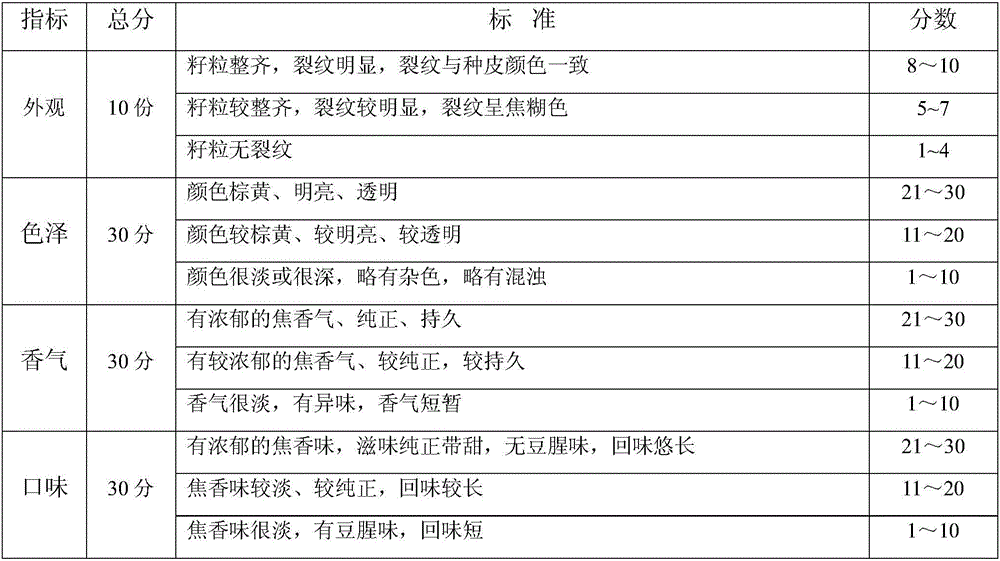
Figure 1 
Figure 2 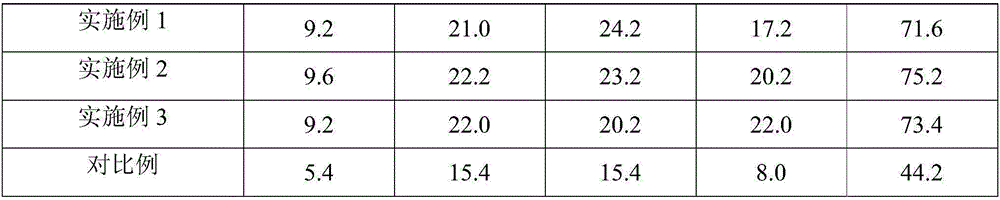
Figure 3
Abstract
Description
technical field
[0001] The invention belongs to the field of tea product processing methods, in particular to a processing method for improving the quality of wild soybean tea. Background technique
[0002] Wild soybean (Glycine soja Sieb. et Zucc) is a herbaceous plant of the leguminosae family Glycine L. and the direct ancestor of cultivated soybean (Glycine max (Linn.) Merr). The most intuitive difference between wild soybeans and cultivated soybeans is the size and color of the kernels. Wild soybean seeds are small, 81.1% of wild soybean populations have a hundred-grain weight less than 2.5g, while cultivated soybeans have a hundred-grain weight of 18g-30g. The grain color of 75.5% of the wild soybean population is black or dark brown, and the grain color of cultivated soybean is mostly yellow (soybean), and there are also black (black soybean or black soybean), cyan (green soybean or green soybean), brown, red or bi-color.
[0003] In the process of domesticating wil...
Examples
Embodiment 1
[0038] A processing method for improving the quality of wild soybean tea, comprising the following steps: placing wild soybean grains harvested in the same year in hot water (>95°C) three times the weight, soaking for 4 hours, stirring once every 2 hours during this period, and cooling naturally ;Put the soaked wild soybean grains in a germination box, accelerate germination at a constant temperature of 25°C for 30 hours until the bud length is 6mm, during this period, pour water every 5 hours for 30 seconds; place the accelerated wild soybean grains in a blast drying box , dry at 60°C for 28 hours until the water content of the grains is below 8%; place the dried wild soybean grains in an automatic roaster and bake at 140°C for 25 minutes until the skin of the grains cracks; place the roasted wild soybean grains in a dry In a room (the relative water content of the air is less than 15%), after cooling to room temperature, weigh, and pack and seal with aluminum foil bags.
Embodiment 2
[0040] A processing method for improving the quality of wild soybean tea, comprising the following steps: placing the wild soybean grains harvested in the current year in hot water (>95°C) three times the weight, soaking for 3 hours, and stirring once every 1.5 hours during this period, and naturally Cooling; put the soaked wild soybean grains in a germination box, accelerate germination at a constant temperature of 25°C for 24 hours until the bud length is 4mm, during this period, water once every 4 hours, and the watering time is 30s; place the wild soybean grains after germination in a blast drying box inside, dry at 70°C for 24 hours until the moisture content of the grain is 6%; place the dried wild soybean grains in an automatic roaster and bake at 150°C for 20 minutes until the skin of the grains cracks; place the roasted wild soybean grains in a dry In a room (the relative water content of the air is less than 15%), after cooling to room temperature, weigh, and pack and...
Embodiment 3
[0042] A processing method for improving the quality of wild soybean tea, comprising the following steps: placing wild soybean grains harvested in the same year in hot water (>95°C) three times the weight, soaking for 3.5 hours, stirring once every 1.75 hours during the period, Cool naturally; put the soaked wild soybean grains in a germination box, germinate at a constant temperature of 25°C until the bud length is 5mm, during this period, water once every 4.5h, and the watering time is 30s; place the wild soybean grains after germination in blast drying In the box, dry at 65°C until the moisture content of the grain is 6% to 8%; put the dried wild soybean grain in an automatic roaster, bake at 145°C for 22 minutes until the skin of the grain cracks; put the roasted wild soybean grain Place in a dry room (the relative water content of the air is less than 15%), cool to room temperature, weigh, and pack and seal with an aluminum foil bag.