
Double-tube inner tube method for determining consolidation coefficient and deformation hysteresis index of aquitard in situ
A technology of weakly permeable layer and deformation lag, applied in the field to determine the water release rate, conductivity coefficient and permeability coefficient of the aquitard layer, it can solve the problems of coincidence and the calculated values are too large in different degrees, so as to overcome the error of the test and the experimental process. Simple, analytically rigorous results
Patent Information
- Authority / Receiving Office
- CN · China
- Current Assignee / Owner
- Publication Date
- 2017-05-17
Smart Images
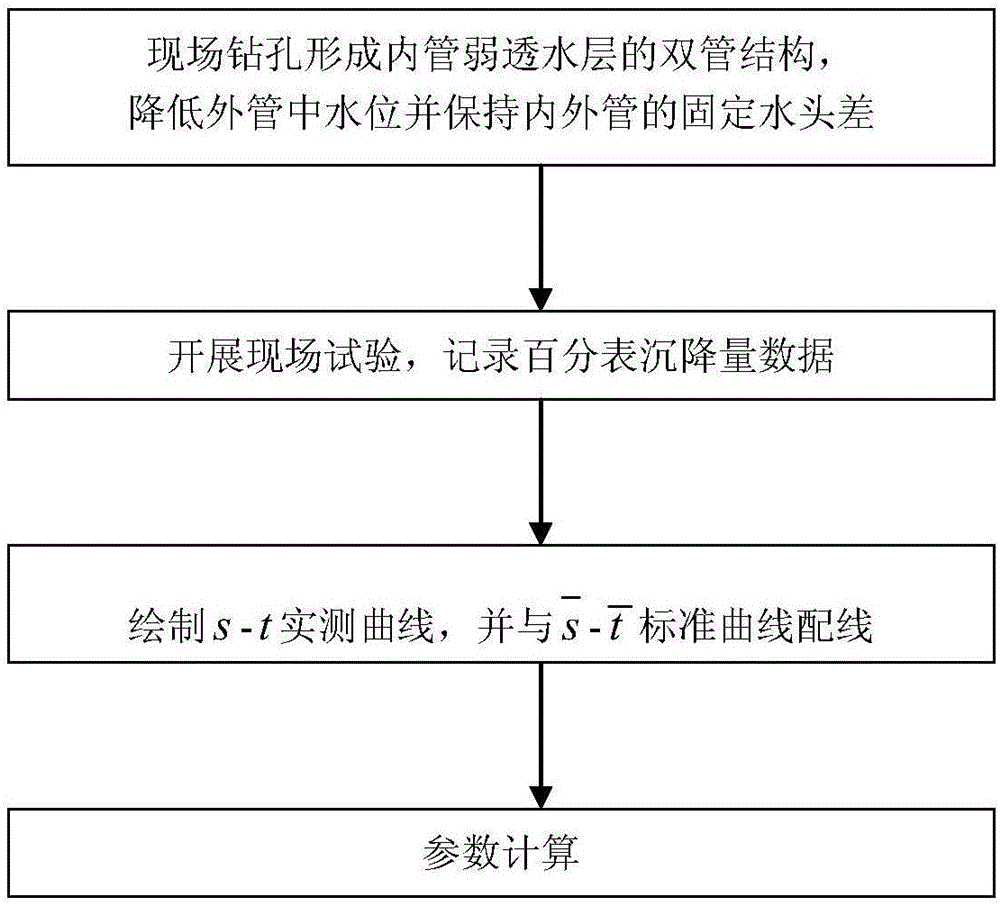
Figure 1 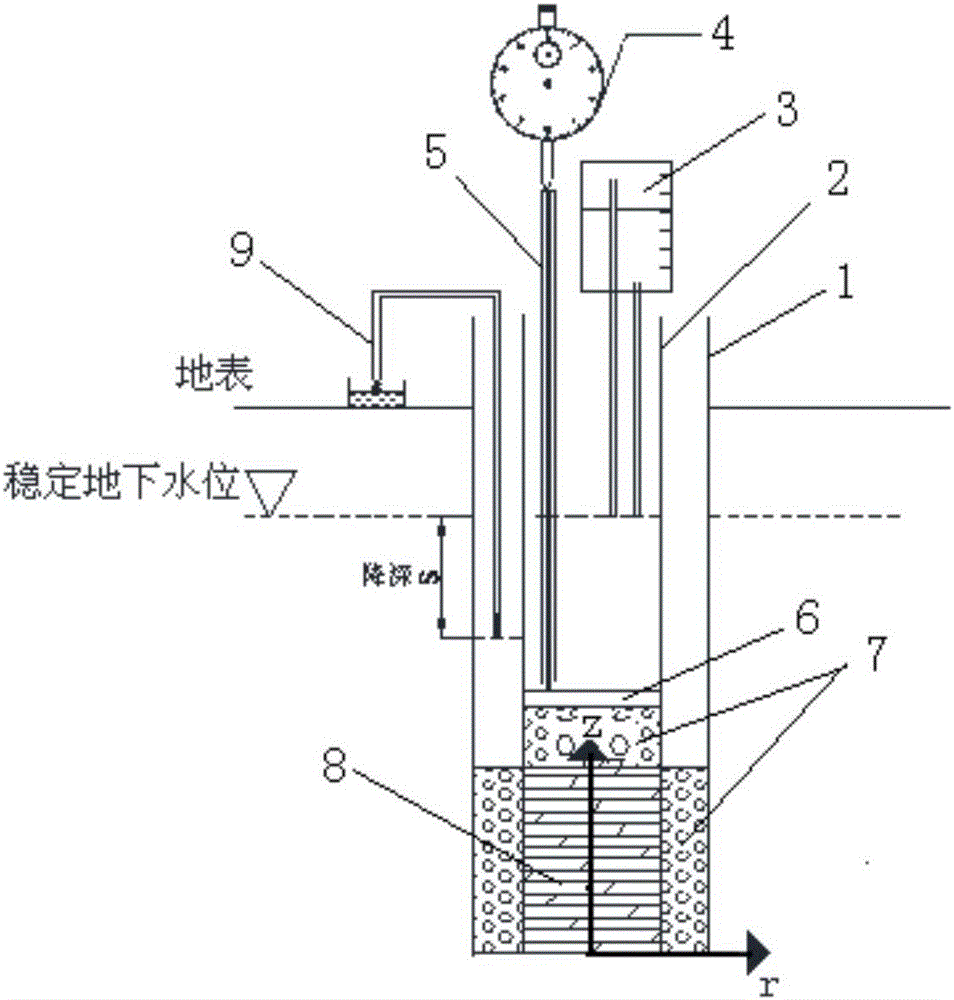
Figure 2 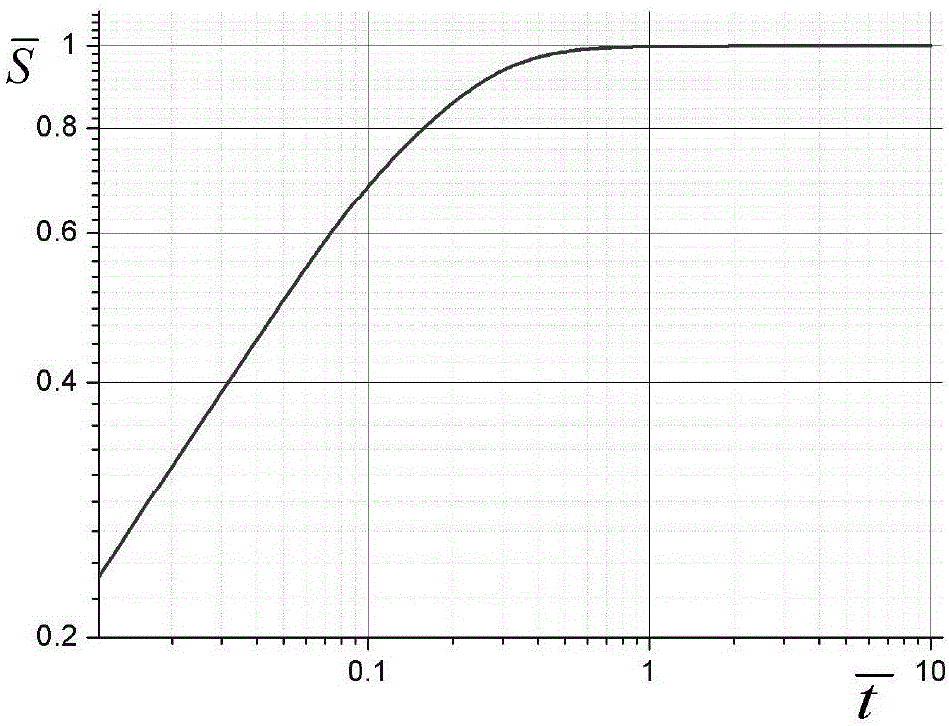
Figure 3
Abstract
Description
technical field
[0001] The invention relates to a double-pipe-in-pipe method for determining the consolidation coefficient and deformation hysteresis index of an aquitard in situ, in particular to a method for determining the water release rate, conductivity coefficient and permeability coefficient of an aquitard on site. Background technique
[0002] The water release deformation of the aquifer system is the most direct cause of regional land subsidence. Land subsidence is an environmental geological phenomenon in which the ground elevation slowly decreases. It is an irreparable permanent loss of environment and resources, and it will develop into a geological disaster in severe cases. From the perspective of hydrogeology, deep overburden is the most typical aquifer system. For example, the deep overburden of the Yangtze River Delta in China is an aquifer system consisting of three confined aquifers and four impervious layers, with a thickness of 50-200 m. In the Yangtze ...
Examples
Embodiment
[0098]Make the S(t)~t measured curve in the double-logarithmic coordinate system for the cumulative settlement change with time in Table 1 ( Figure 4 middle dot) and The standard curve (solid line in the figure) is wired so that the two curves overlap (such as Figure 4 ), choose a matching point, and write down the corresponding coordinate value [S]=3.16, and [t]=62, substituting into formula (7), (5), (8) to get
[0099]
[0100] Water release rate:
[0101]
[0102] Consolidation coefficient:
[0103]
[0104] Known average void ratio e=0.861, porosity
[0105]
[0106] Conductivity coefficient:
[0107]
[0108] Permeability coefficient: K=μ s a=6.58×10 -2 ×0.17=1.12×10 -2 (m / d)
[0109] Deformation Hysteresis Index:
[0110] Table 1 Deformation observation data
[0111]
[0112]