
Crosslinked polyethylene electric-insulation material and preparation method thereof
A technology of cross-linked polyethylene and insulating materials, which is applied in the direction of organic insulators, plastic/resin/wax insulators, etc., can solve the problems of low breakdown voltage and easy aging, so as to reduce the working temperature, prolong the service life and eliminate space The effect of charge
Patent Information
- Authority / Receiving Office
- CN · China
- Patent Type
- Applications(China)
- Current Assignee / Owner
- Publication Date
- 2017-06-20
- Estimated Expiration
- Not applicable · inactive patent
Smart Images
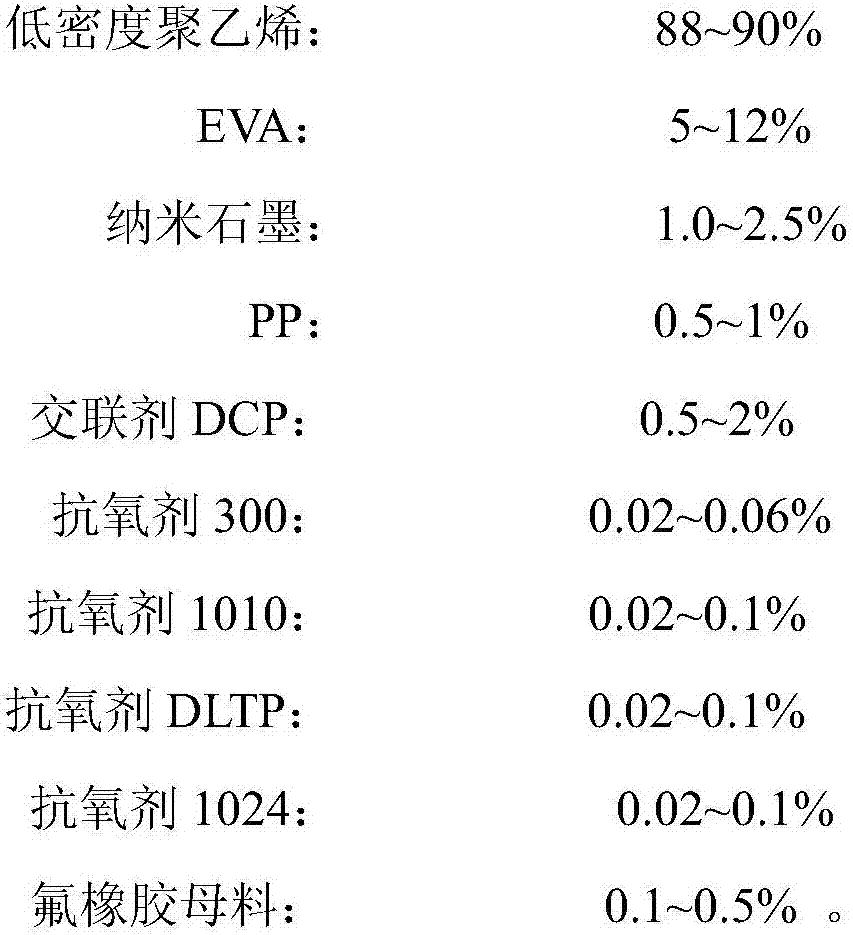
Figure 1 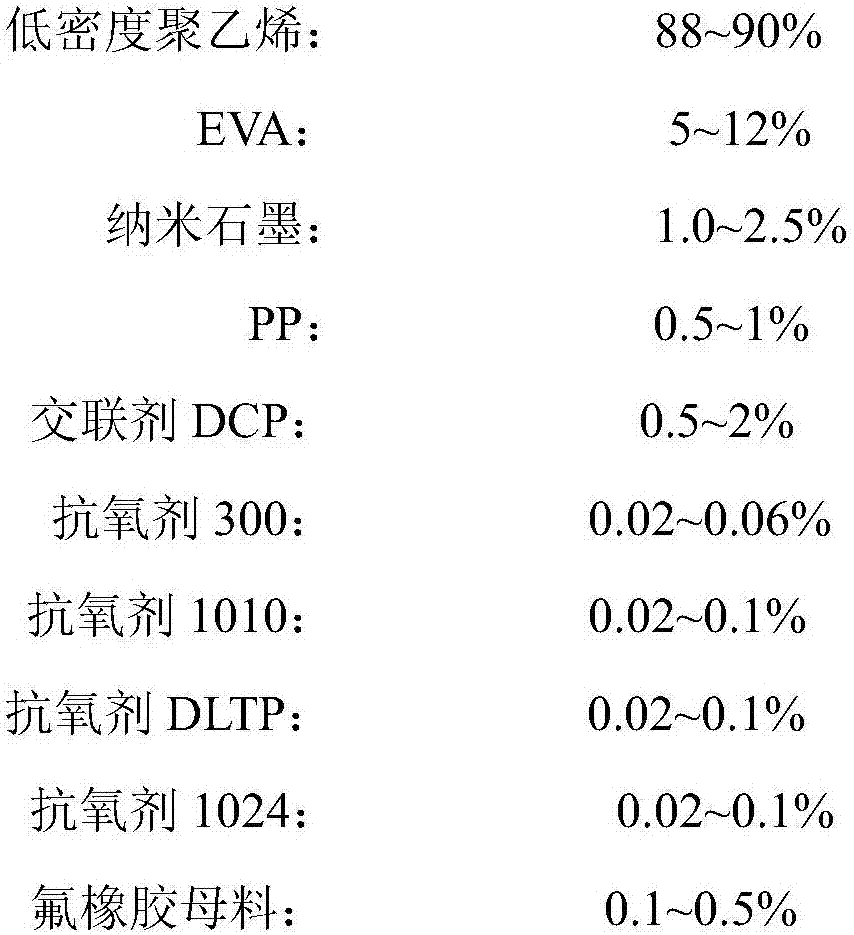
Figure 2 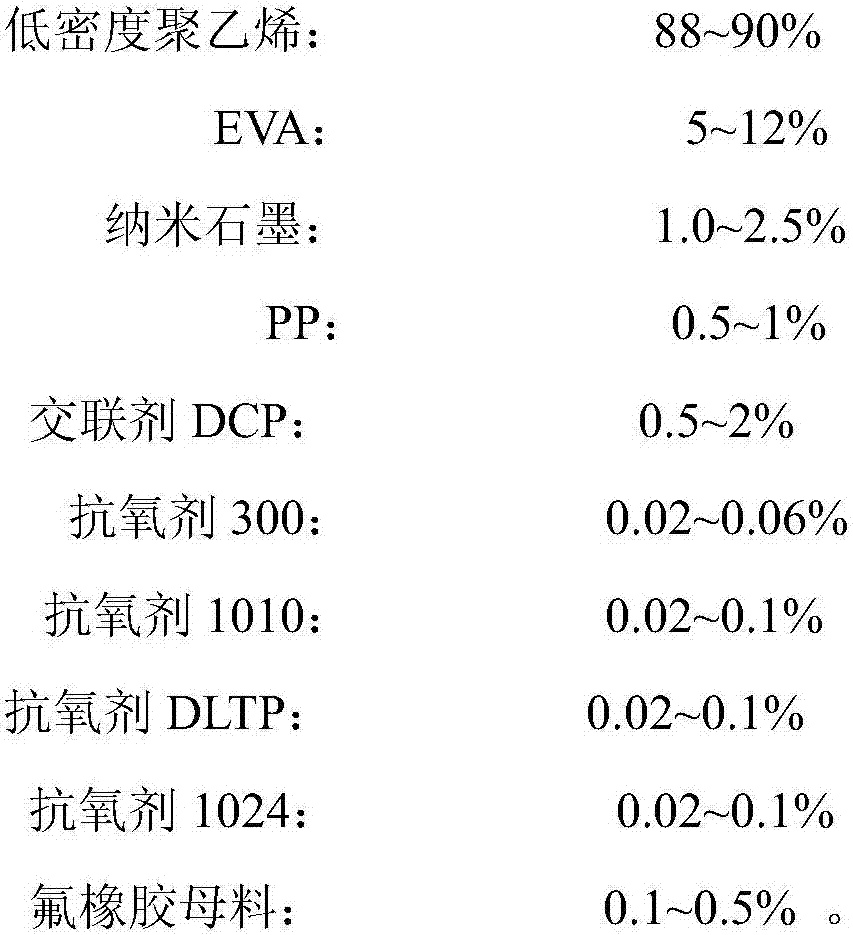
Figure 3
Abstract
Description
technical field
[0001] The invention relates to the field of insulating materials, in particular to a cross-linked polyethylene insulating material and a preparation method thereof. Background technique
[0002] High-voltage DC transmission lines have been widely used in long-distance power transmission due to their excellent electrical properties, while DC power cable insulation has high working electric field strength, thin insulation thickness, small cable outer diameter, light weight, large carrying capacity, and no AC Therefore, as an indispensable part of the DC transmission system, the DC high-voltage transmission cable is an important topic in the high-voltage transmission. In the early stage of application of high-voltage DC cables, impregnated paper insulated cables and oil-filled cables are mainly used. The disadvantages are complex manufacturing process, high cost and difficult maintenance. In 1999, cross-linked polyethylene (XLPE) insulated high-voltage DC cabl...
Examples
specific Embodiment approach 1
[0015] Embodiment 1: The cross-linked polyethylene insulating material of this embodiment is prepared from the following components in terms of mass percentage:
[0016]
specific Embodiment approach 2
[0017] Specific implementation mode two: the preparation method of the cross-linked polyethylene insulating material of the present implementation mode, the specific steps are:
[0018] Step 1. Take 100 parts of XLPE, EVA, nano-graphite, PP, crosslinking agent DCP, antioxidant 300, antioxidant 1010, antioxidant DLTP, antioxidant 1024, and fluororubber masterbatch according to the proportion;
[0019] Step 2. Add XLPE, EVA, nano-graphite, PP, crosslinking agent DCP, antioxidant 300, antioxidant 1010, antioxidant DLTP, antioxidant 1024, and fluororubber masterbatch to the mixer and mix evenly;
[0020] Step 3, transfer the above materials into a closed mixer, and carry out melt blending at a temperature of 100-120°C;
[0021] Step 4, transfer the above materials into a flat vulcanizer, carry out a cross-linking reaction at 150-180° C., and obtain a cross-linked polyethylene product added with nano-graphite after 30-60 minutes;
[0022] Step 5. After cooling the product obtained...