
Method for preparing rubber filler by using inorganic salt for neutralizing alkali lignin
A technology for alkali lignin and rubber filler, which is applied in the field of preparing rubber filler by neutralizing alkali lignin with inorganic salts, can solve problems such as environmental pollution, waste of alkali lignin, etc., so as to solve the problem of environmental pollution, improve utilization, and reduce production cost Effect
Patent Information
- Authority / Receiving Office
- CN · China
- Current Assignee / Owner
- Publication Date
- 2017-06-30
Smart Images
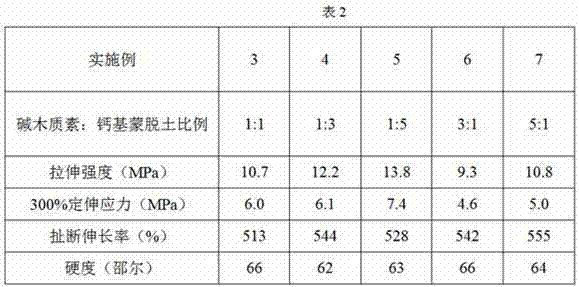
Figure 1 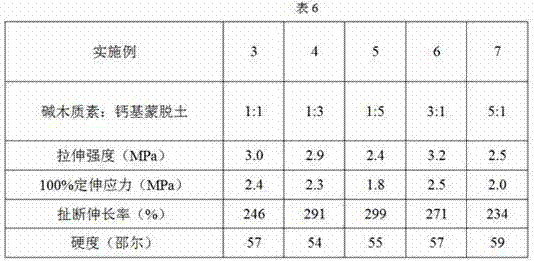
Figure 2 
Figure 3
Abstract
Description
technical field
[0001] The invention relates to a method for preparing rubber filler, in particular to a method for preparing rubber filler by using inorganic salt to neutralize alkali lignin. Background technique
[0002] At present, with the deepening of the comprehensive utilization of lignin, the application of alkali lignin to rubber composite materials has been developed. In the preparation process of rubber composite materials, if the alkali lignin is not treated, the strong alkalinity of the alkali lignin itself will affect the performance of rubber products; moreover, the lignin obtained by neutralizing the alkali lignin can be used as a rubber filler An organic modifier. Therefore, alkali lignin needs to be neutralized before rubber composites are prepared. Chinese patents CN101525447A, CN101525448A, and CN101928466A all use inorganic strong acids (hydrochloric acid or sulfuric acid, etc.) as neutralizing agents. When preparing rubber fillers, first mix clay and ...
Examples
Embodiment 1
[0023] At room temperature, add 30 grams of alkali lignin, 19.5 grams of calcium-based montmorillonite, 7.8 grams of aluminum sulfate octadecahydrate and 120 grams of deionized water in a 500 ml ball mill jar, mix, the pH of the mixture is 7, and ball mill 3h, and finally dried at 80°C for 14h to obtain lignin / calcium-based montmorillonite (the mass ratio of raw material alkali lignin and calcium-based montmorillonite is 1:1), which is set aside.
Embodiment 2
[0025] At room temperature, add 30 grams of alkali lignin, 19.5 grams of calcium-based montmorillonite, 8.4 grams of magnesium sulfate heptahydrate and 120 grams of deionized water into a 500-ml ball mill jar, mix, the pH of the mixture is 8, and ball mill for 3 hours , and finally dried at 80° C. for 16 hours to obtain lignin / calcium-based montmorillonite (the mass ratio of the raw materials alkali lignin and calcium-based montmorillonite is 1:1), which is set aside.
Embodiment 3
[0027] At room temperature, add 30 grams of alkali lignin, 19.5 grams of calcium-based montmorillonite, 9.6 grams of zinc sulfate heptahydrate and 120 grams of deionized water into a 500-milliliter ball milling tank, mix, the pH of the mixture is 7, and ball mill for 3 hours , and finally dried at 80°C for 20 hours to obtain lignin / calcium-based montmorillonite (the mass ratio of the raw material alkali lignin and calcium-based montmorillonite is 1:1), which is set aside.