
Semantic modeling method capable of carrying out dynamic abstraction of processing framework resources on the basis of data atlas, information atlas and knowledge atlas
A technology of knowledge graph and modeling method, which is applied in the field of semantic modeling based on data graph, information graph and knowledge graph, where processing architecture resources can be dynamically abstracted, and can solve problems such as increased complexity of software development, achieve low cost, and solve The effect of data information knowledge redundancy
Patent Information
- Authority / Receiving Office
- CN · China
- Current Assignee / Owner
- Publication Date
- 2017-08-11
Smart Images
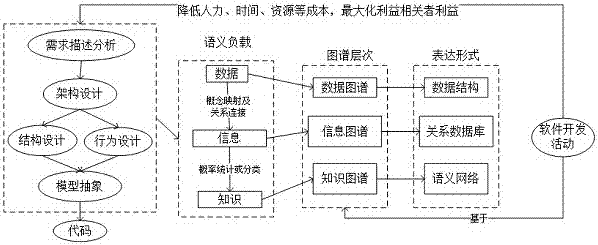
Figure 1 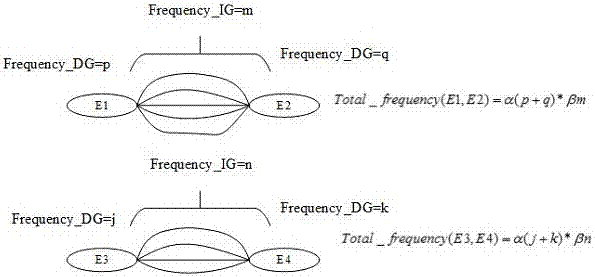
Figure 2 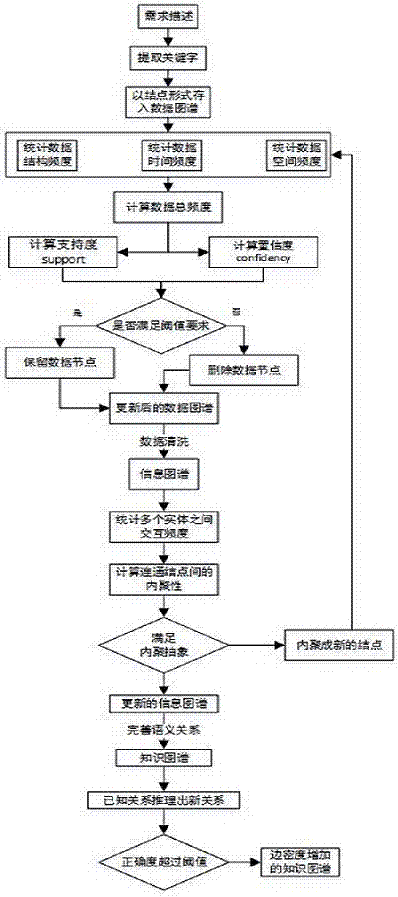
Figure 3
Abstract
Description
technical field
[0001] The present invention is a semantic modeling method based on data map, information map and knowledge map, which can dynamically abstract processing framework resources, and assists software design by calculating the frequency of data, information and knowledge on the data map, information map and knowledge map In this process, an entity self-adaptive generation mechanism is established, and the abstract level of modeling is gradually improved based on the three-layer architecture of data graph, information graph and knowledge graph. Background technique
[0002] Software development has undergone several architectural changes from its birth to the present, from the traditional architecture stage to the component-based architecture stage, and then to the service-oriented architecture stage. Each change is to deal with the ever-increasing software complexity. Spend. With the gradual expansion of the scale of software applications and the gradual deepeni...
Examples
Embodiment Construction
[0028] The present invention proposes a semantic modeling method that can dynamically abstract processing architecture resources based on data graphs, information graphs, and knowledge graphs. Figure 4 The processing flow is given, and the requirements analysis, outline design and detailed design activities in the software development activities are analyzed based on the data map, information map and knowledge map respectively, and the software development process is refined.
[0029] one. Observation and collection of data in demand analysis activities
[0030] The requirements development process is generally divided into four stages: requirements acquisition, requirements analysis, writing requirements specification and requirements verification. The main task of requirements acquisition is to understand the type and business domain of users, and determine the overall system goals and work scope according to the requirements of users. The invention uses the data map to s...