
A way to indicate whether to soft merge in noma
A technology of instructions and solutions, applied in the direction of digital transmission systems, error prevention, electrical components, etc., can solve problems such as error merging
Patent Information
- Authority / Receiving Office
- CN · China
- Patent Type
- Patents(China)
- Current Assignee / Owner
- Publication Date
- 2019-11-12
Smart Images
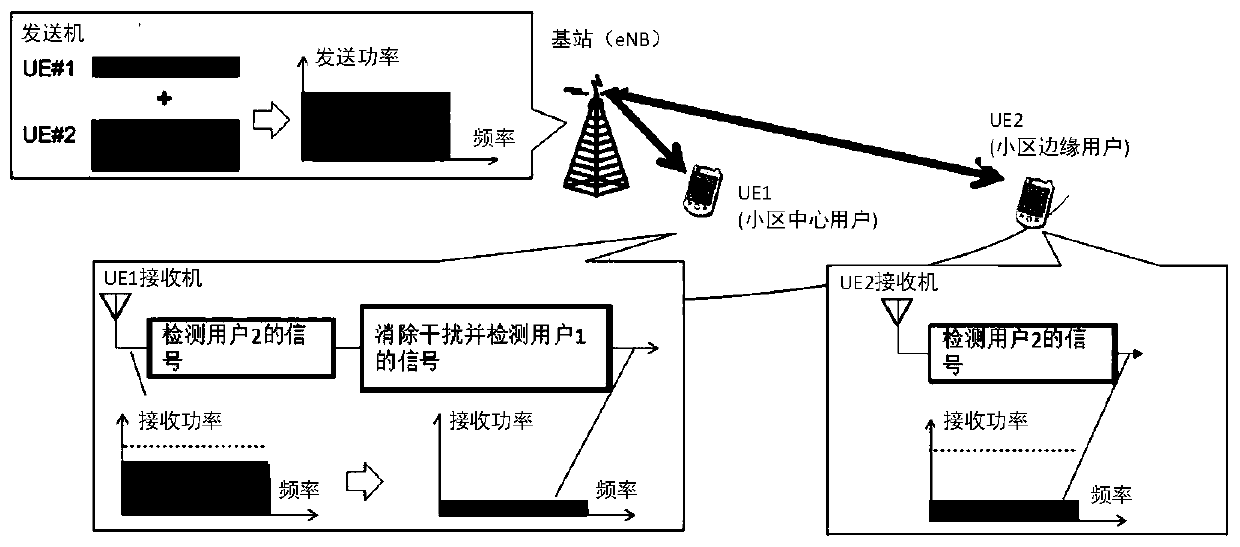
Figure 1 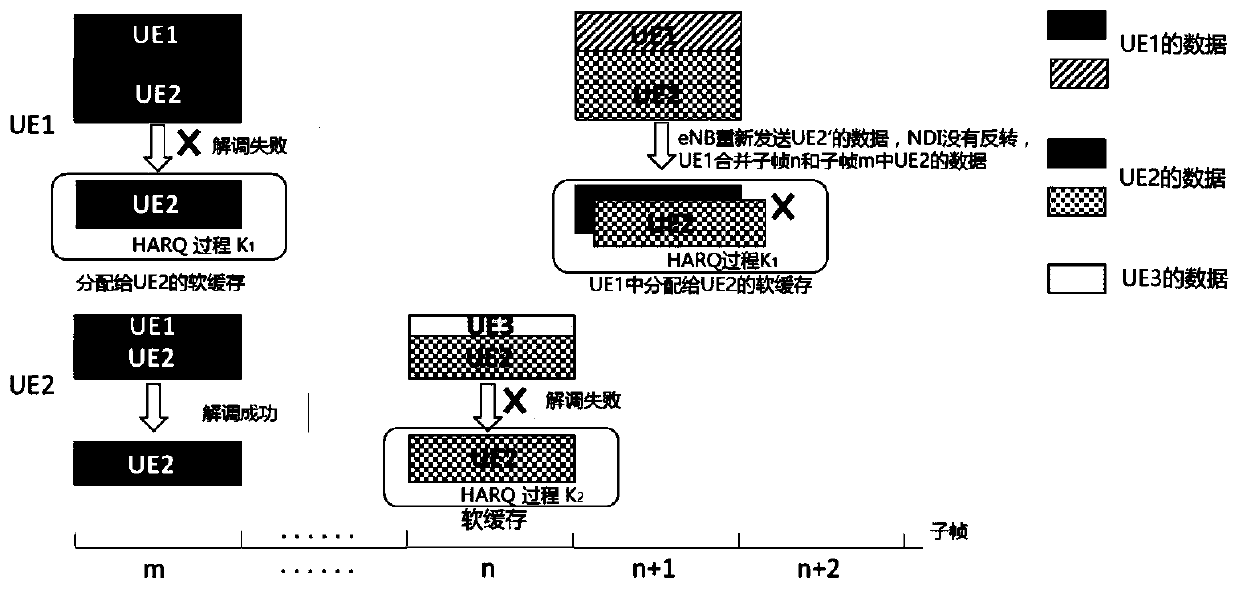
Figure 2 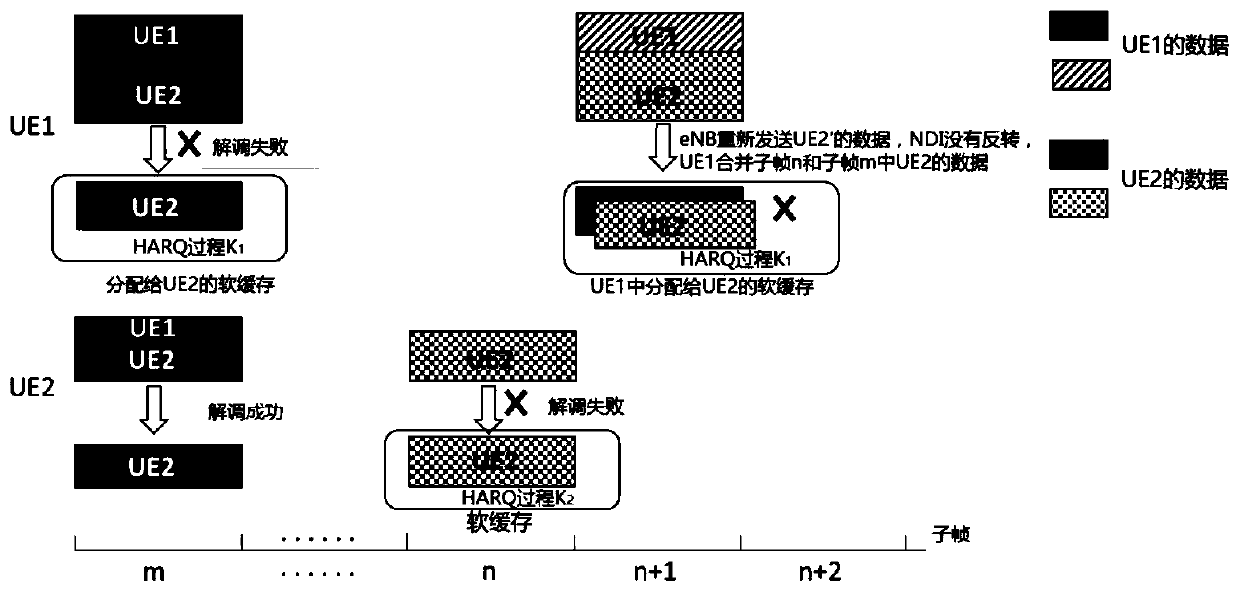
Figure 3
Abstract
Description
technical field
[0001] The invention belongs to the field of mobile communication, relates to non-orthogonal multiple access (NOMA) technology, and specifically provides a method for indicating whether to soft combine in NOMA. Background technique
[0002] In order to achieve higher spectral efficiency in the 5G system, non-orthogonal multiple access (NOMA) is proposed as an important multiplexing technology. Different from the traditional multiplexing method, NOMA will satisfy the usage of more users by allocating non-orthogonal resources. Multi-user superposition transmission using power domain on the downlink is a solution to realize NOMA. Such as figure 1 As shown, NOMA in the power domain allows multiple users to share time and frequency resources in the same spatial layer through different power allocations; specifically, the base station eNB uses the same time, spectrum, and spatial layer pairing to send near users and far The user's data, and the total power is al...
Examples
Embodiment Construction
[0023] The present invention will be further described in detail with reference to the accompanying drawings and embodiments. The accompanying drawings used in the description of the embodiments below are only some embodiments of the present invention. For those of ordinary skill in the art, other accompanying drawings can also be obtained according to these drawings without creative work. .
[0024] Such as figure 2 and image 3 As shown, when the near user is re-paired with the far user, the data of the far user buffered by the near user that was not correctly received during the previous pairing process is not necessarily the same as the data sent by the base station to the far user after re-pairing. If the base station just sends the retransmission of new data to the far user, the near user will mistakenly combine the different data of the far user only by detecting the NDI bit in the far user's PDCCH, thus causing a reception error. Through the analysis, it can be see...