
A Hybrid Duplex Transmission Method for Improving Physical Layer Security in Cognitive Relay Networks
A physical layer security, cognitive relay technology, applied in the field of hybrid duplex transmission, can solve problems such as self-interference can not be completely eliminated, transmission capacity cannot reach the theoretical maximum value, etc. The effect of the scope of application
Patent Information
- Authority / Receiving Office
- CN · China
- Patent Type
- Patents(China)
- Current Assignee / Owner
- Publication Date
- 2020-09-11
Smart Images
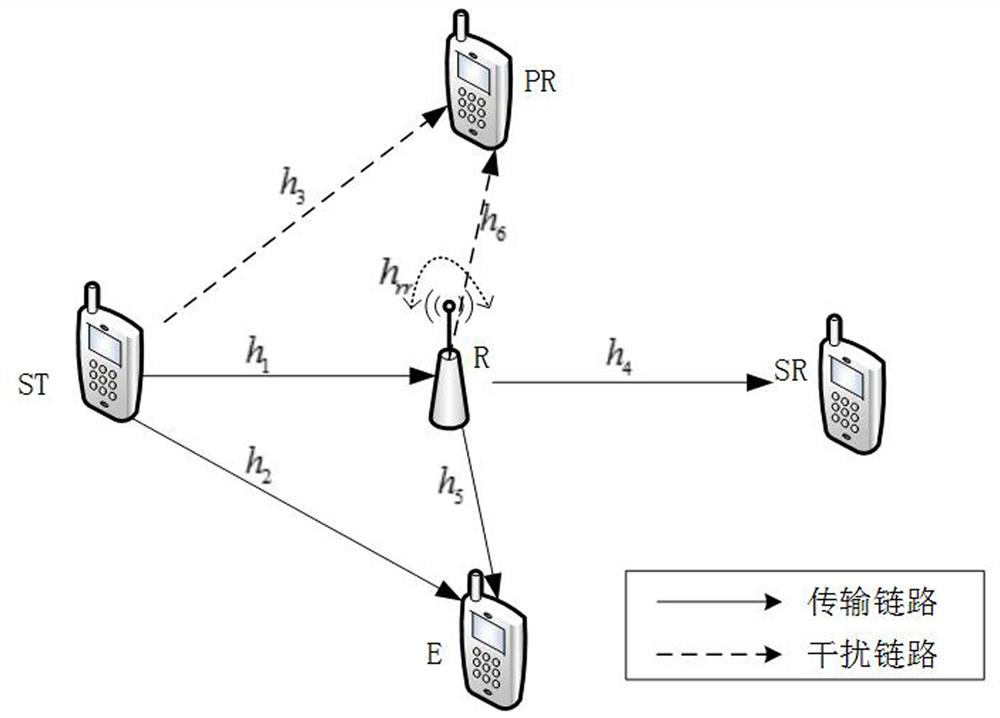
Figure 1 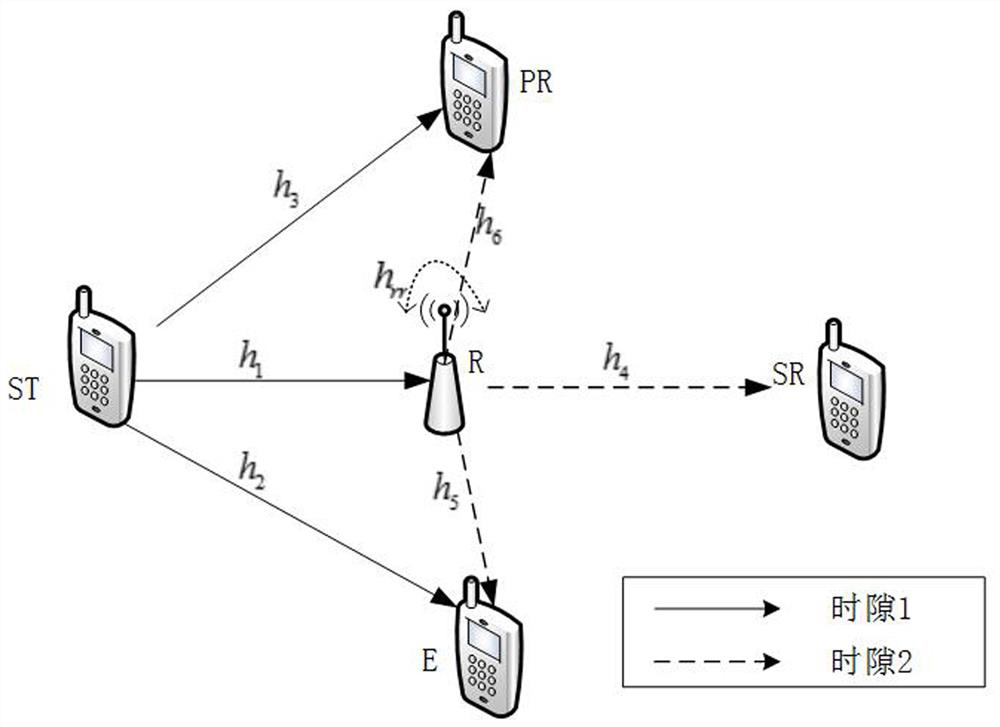
Figure 2 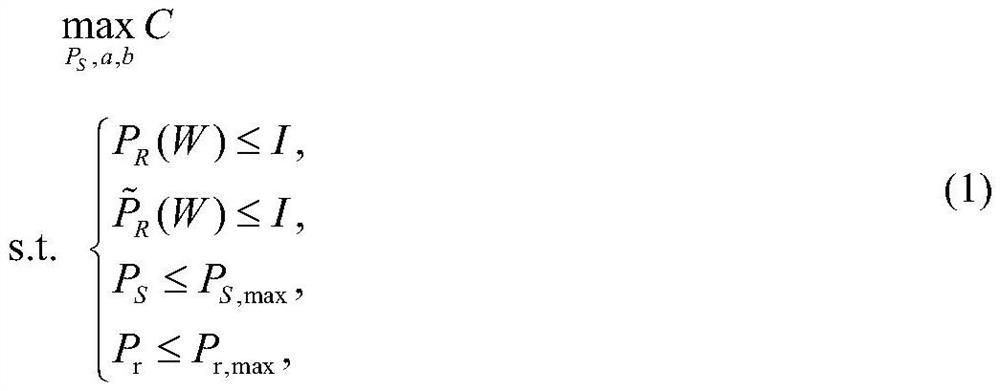
Figure 3
Abstract
Description
technical field
[0001] The invention relates to the fields of cognitive radio technology and information security technology, in particular to a hybrid duplex transmission method for improving physical layer security in a cognitive relay network. Background technique
[0002] Nowadays, as the traffic volume of wireless mobile communication is increasing rapidly, how to effectively improve the utilization rate of spectrum resources and ensure the reliability of information transmission becomes more and more important. With the continuous development of cognitive radio technology, secondary users can transmit their own information on the licensed frequency band as long as the interference to the licensed user is within the range that the primary user can tolerate when accessing the licensed frequency band, which greatly improves wireless communication. Spectrum utilization avoids the waste of spectrum resources. This concept has become an important way to solve problems such a...
Examples
Embodiment
[0029] A hybrid duplex transmission method for improving physical layer security in cognitive relay networks.
[0030] A hybrid duplex transmission method for improving physical layer security in a cognitive relay network, the method is used in a cognitive relay cooperative network, the network includes a pair of unauthorized user transmitter ST and receiver SR, a cooperative relay R and an illegal wiretapping terminal E. All nodes are full-duplex. The cooperative relay R is equipped with a transmitting antenna and a receiving antenna, and other user nodes are equipped with only one antenna. Users share frequency band resources. Cooperative relay not only improves the effectiveness of information transmission, but also plays the role of confusing illegal users to steal information by adding noise, so as to improve the security of information transmission.
[0031] The wireless channels involved in the present invention are quasi-static Rayleigh block fading and additive Gauss...