
Concert live rhythm experience enhancement system
A technology for enhancing systems and concerts, applied in transducer circuits, sensors, signal processing, etc., can solve the problems of not being able to feel the charm of live music at the same time, and not being able to feel the rhythm and intensity of live music in the sense of touch
Patent Information
- Authority / Receiving Office
- CN · China
- Patent Type
- Applications(China)
- Current Assignee / Owner
- Publication Date
- 2017-10-20
- Estimated Expiration
- Not applicable · inactive patent
Smart Images
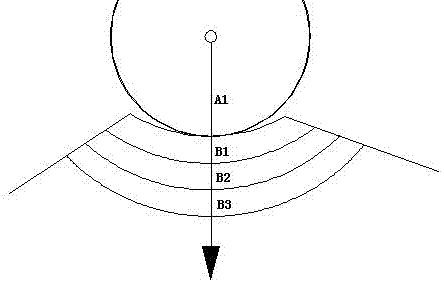
Figure 1 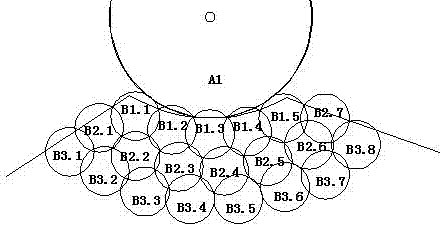
Figure 2 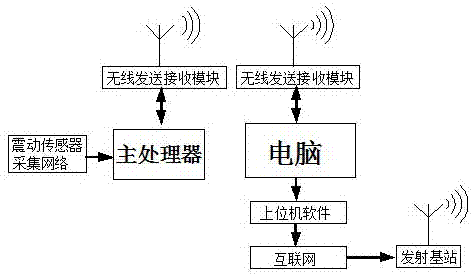
Figure 3
Abstract
Description
technical field
[0001] The invention relates to a rhythm experience enhancement system, in particular to a concert site rhythm experience enhancement system. Background technique
[0002] At the scene of the music concert, the audience can have a better visual experience through the integration of dance beauty effects, scenery, lighting and LED screens, and the audience can have a better auditory experience through various stereo surround sound. Visually, it gives the audience a good on-site experience.
[0003] In the band, the drummer controls the important links such as the speed and rhythm of the music, and the drummer especially needs to maintain a tacit cooperation state with other musicians. Usually, in a song, the strong and weak beats of each instrument are consistent. If the drums are played with accents, the guitar will also be accented, and the bass will also be accented.
[0004] Bass drum is the core part of jazz drums, and it is the main low-frequency sound ...
Examples
no. 1 example
[0027] Applied to the concert scene: the main processor obtains the vibration simulation information such as the overall rhythm and strength of the live music in real time through the vibration sensor collection network, filters, amplifies, and digitizes the collected vibration simulation information and sends the digital information to the computer host computer Software, through the host computer software to process the digital information with different degrees of time delay, the host computer software sends the digital information with different degrees of time delay to the various transmitting base stations at the concert site through the Internet, and each transmitting base station will receive the digital information Send to the mobile terminal in its own coverage area. The MCU processor of the mobile terminal converts the digital information sent by the transmitting base station into analog information, and then amplifies the analog information, and drives the subwoofer...
no. 2 example
[0029] Applied to teaching, to cultivate a sense of rhythm: fix the vibration sensor on the bass drum, snare drum, hi-hat or other rhythm instruments, so as to collect vibration simulation information such as vibration frequency and vibration amplitude of different instruments, and obtain the overall situation of live music in real time Rhythm and power. Fix the mobile terminal on the student's wrist, ankle or finger, and through the teacher's performance, the students can get synchronous feelings in vision, hearing and touch, which is conducive to students' grasp and learning of rhythm.
no. 3 example
[0031] Such as image 3 with Figure 4 , A1 is the concert stage area, B1, B2, B3 are the surrounding area of the concert stage, B1.1, B1.2, B1.3, B1.4, B1.5 are the coverage areas of the transmitting base stations distributed in the B1 area, B2.1, B2.2, B2.3, B2.4, B2.5, B2.6, B2.7 are the coverage areas of transmitting base stations distributed in B2 area, B3.1, B3.2, B3.3, B3.4, B3.5, B3.6, B3.7, and B3.8 are the coverage areas of the transmitting base stations distributed in the B3 area.
[0032] The sound on the stage passes through the B1, B2, and B3 areas in sequence from the center of the stage to the outside. In order to make the audience at different distances feel the sound and the synchronous rhythm vibration, the delay time of the digital information received by different transmitting base stations is adjusted. For example, the delay time for the transmitting base station located in the B1 area is set to 0.1 seconds, the delay time for the transmitting base st...