
Linear 33 peptide capable of preventing and treating type 1 diabetes and having function of protecting pancreatic beta cells and application of linear 33 peptide
A linear, cellular technology, applied in the fields of immunity, pharmacy and medicine, can solve problems such as kidney damage, and achieve the effect of strong pertinence, high antibody specificity and single component
Patent Information
- Authority / Receiving Office
- CN · China
- Patent Type
- Applications(China)
- Current Assignee / Owner
- Publication Date
- 2018-09-28
- Estimated Expiration
- Not applicable · inactive patent
Smart Images
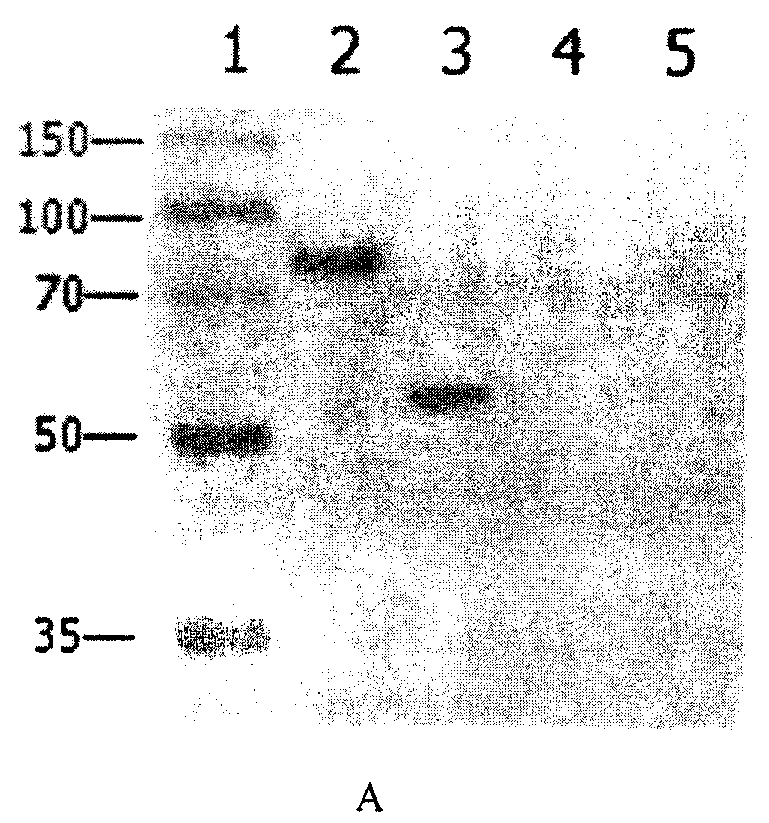
Figure 1 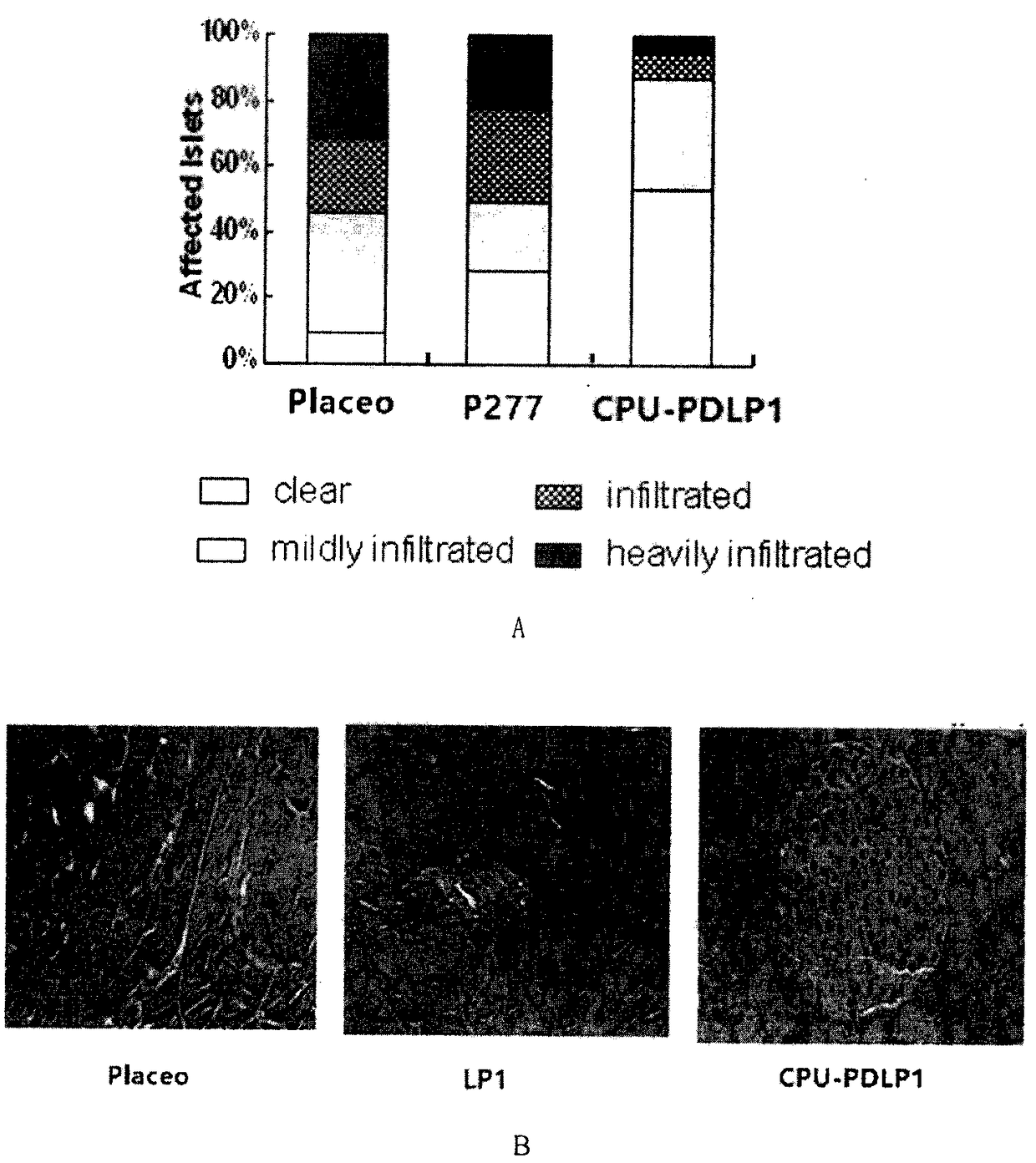
Figure 2 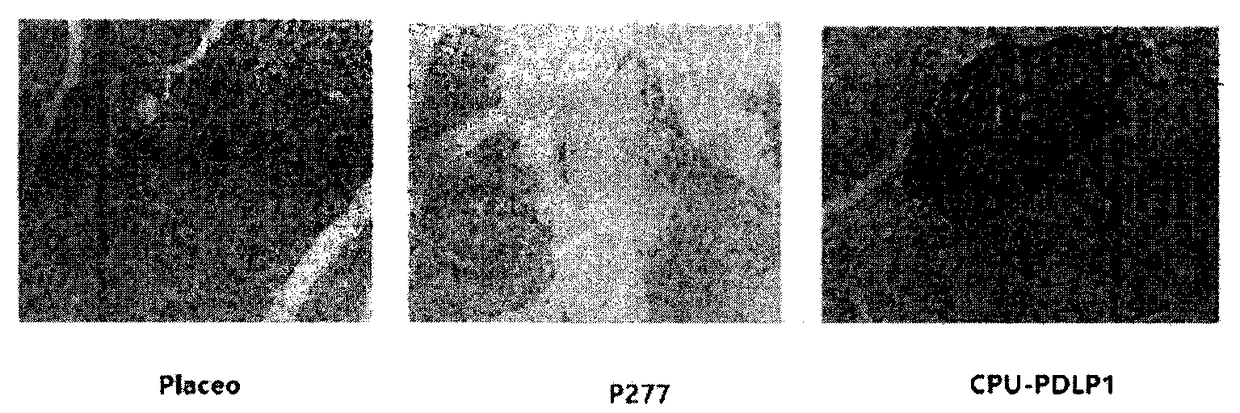
Figure 3
Abstract
Description
technical field
[0001] The invention relates to the related fields of immunity, pharmacy and medicine, and relates to a linear 33 peptide capable of preventing and treating type 1 diabetes and having the function of protecting pancreatic beta cells and its application in medicine and immunity. This 33-peptide is composed of a 10-peptide B-cell epitope of human dipeptidyl peptidase 4 (DPP4) and a 23-peptide containing a Th2 epitope. The serum of this 33-peptide immunized animal contains a high level of An antibody that can specifically bind to DPP4, which can inhibit DPP4 activity and regulate immune rebalancing towards Th2, is administered subcutaneously with this 33 peptide every 2 weeks to prevent or treat recognized type 1 diabetic NOD mice and treat STZ-induced Diabetic mice can significantly control or reverse blood sugar, significantly increase GLP-1 and Th2 cytokines, significantly reduce pancreatic glucagon and Th1 cytokines, and significantly change uric acid, creatin...
Examples
Embodiment 1
[0027] Example 1: Preparation and synthesis of B cell D1 of human DPP4.
[0028] Using B cell antigen epitope analysis software and online analysis tools, combined with secondary structure prediction and spatial structure characteristics, select several DPP4 dominant B cell antigen epitopes from hundreds of epitopes, and conduct animal immune screening to obtain immune The B cell epitope D1 of DPP4 with high originality, the amino acid sequence is shown in SEQ ID NO.1, the peptide is synthesized by FMOC solid-phase synthesis method, and the purity detected by HPLC is >95%.
Embodiment 2
[0029] Example 2: Preparation and synthesis of the 33 peptide CPU-PDLP1 of the present invention containing the B cell antigen epitope D1 of DPP4.
Embodiment 2-1
[0030] Example 2-1. Construction of a 23-peptide linked to the above-mentioned peptide D1 consisting of 10 amino acid residues. The 23-peptide is named LP1. The amino acid sequence is shown in SEQ ID No.2. LP1 is transformed from a Th2 cell epitope. This Th2 cell epitope is derived from a P277 peptide at positions 437-460 of human heat shock protein HSP60. The N-terminal of the P277 peptide has a Th2 cell epitope consisting of 13 amino acids. Epitope P2, a connecting peptide consisting of 10 amino acid residues is added to its N-terminus to form LP1. The amino acid sequence of the connecting peptide LP1 consisting of 10 amino acid residues is shown in SEQ ID No.3, named L1, wherein Contains a B cell epitope derived from the membrane-adjacent region JM2 of human islet cell-specific antigen-insulinoma-associated protein-2 (IA-2), its amino acid sequence is: FEYQD, named IA2 (5).