

Making method of bamboo joint flower vase jun porcelain artware
A production method and handicraft technology, applied in decorative art, clay products, special decorative structures, etc., can solve the problems that affect the value and yield of Jun porcelain, and achieve good glaze bonding performance, beautiful appearance, and uniform glaze color distribution. Effect
Patent Information
- Authority / Receiving Office
- CN · China
- Patent Type
- Applications(China)
- Current Assignee / Owner
- Publication Date
- 2018-10-23
- Estimated Expiration
- Not applicable · inactive patent
Smart Images
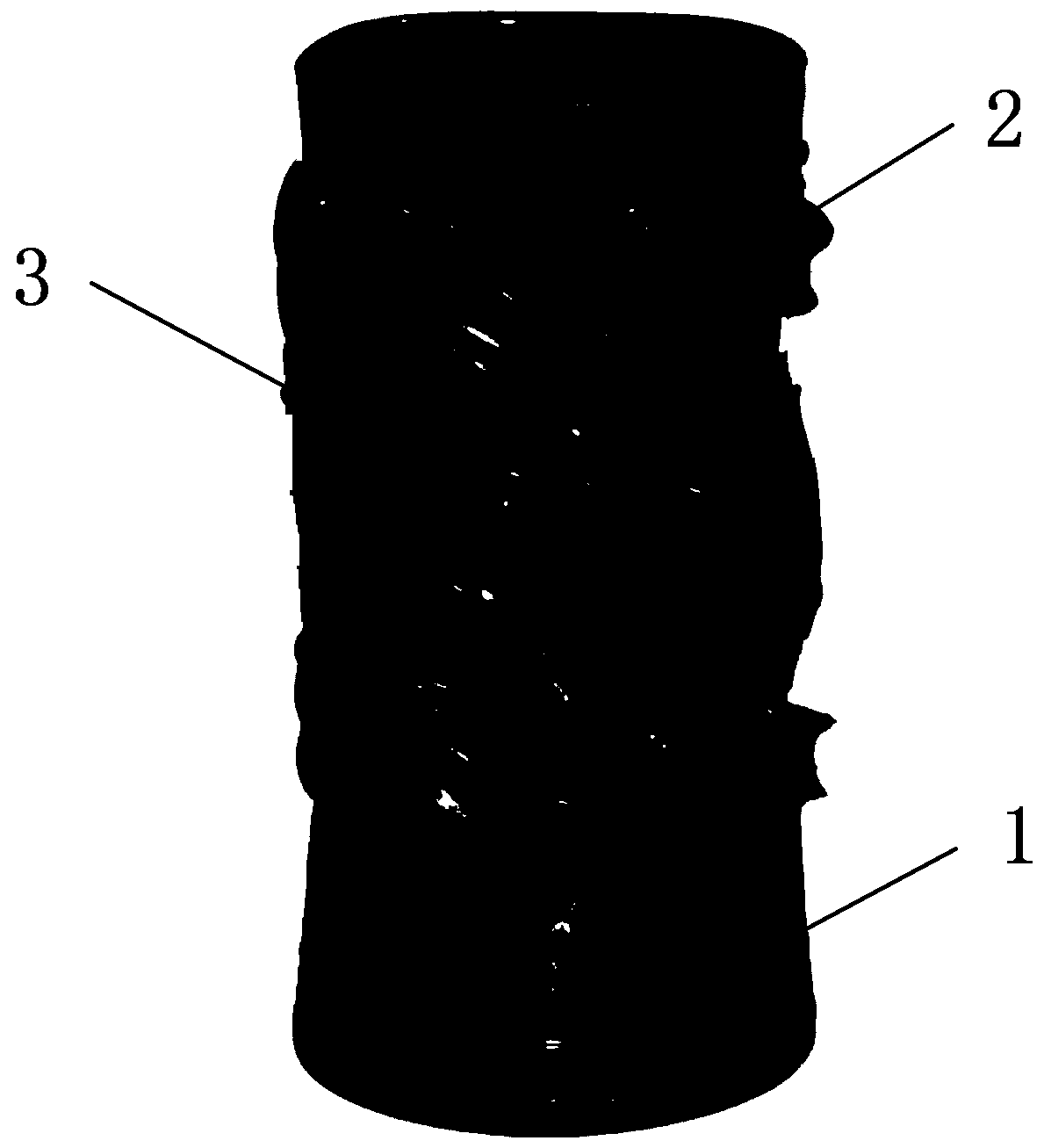
Figure 1
Abstract
Description
technical field
[0001] The invention relates to the field of Jun porcelain crafts, in particular to a method for making a Jun porcelain handicraft of bamboo-jointed vases. Background technique
[0002] Jun Porcelain is known as the first of my country's "Five Famous Porcelains". It is a specialty of Yuzhou City, Henan Province. , out of the kiln and other unique features, which cannot be achieved and compared with other ceramic handicrafts. Bamboo has always been a favorite plant in China. It is deeply loved by literati and scholars. In ancient times, it was known as one of the "Three Friends of the Winter". Bamboo leaves have the meaning of green bamboo leaves, youth and elegance, and bamboo-shaped handicrafts are deeply loved by people. However, when making Jun porcelain vases, the process from material selection to firing finished products, especially the selection of enamel, directly affects the value and yield of Jun porcelain. Contents of the invention
[0003] In ...
Examples
Embodiment 1
[0021] Such as figure 1 Shown, a kind of manufacture method of bamboo vase Jun porcelain handicraft, comprises the following steps:
[0022] Step 1. Select pottery clay; the pottery clay includes the following components: 50 parts of kaolin, 5 parts of alkaline earth, 3 parts of quartz stone, 8 parts of sandstone, 8 parts of lead powder, 8 parts of mullite, and 1 part of iron ore;
[0023] Step 2, practice mud; first coarsely crush the clay into sand or powder, then grind it, add water and mix it into a mud ball;
[0024] Step 3, drawing the blank; the mud ball is drawn out of the blank of the bottle body 1, and the mouth of the cup is square;
[0025] Step 4, mold making; carve the models of the ball 3 and the bamboo leaf 2 respectively, and make plaster molds with the carved models;
[0026] Step 5, grouting molding; the pottery clay in step 1 is first roughly crushed into sand or powder, and then ground to a fineness of 230 mesh, mixed with water and ball milled to make a...
Embodiment 2
[0033] A method for making a Jun porcelain handicraft with a bamboo vase, comprising the following steps:
[0034] Step 1. Select pottery clay; the pottery clay includes the following components: 65 parts of kaolin, 10 parts of alkaline earth, 5 parts of quartz stone, 12 parts of sandstone, 10 parts of lead powder, 10 parts of mullite, and 2 parts of iron ore;
[0035] Step 2, practice mud; first coarsely crush the clay into sand or powder, then grind it, add water and mix it into a mud ball;
[0036] Step 3, drawing the blank; the mud ball is drawn out of the blank of the bottle body, and the mouth of the cup is square;
[0037] Step 4, mold making; carve the models of the ball 3 and the bamboo leaf 2 respectively, and make plaster molds with the carved models;
[0038] Step 5, grouting molding; the pottery clay in step 1 is first roughly crushed into sand or powder, and then ground to a fineness of 250 mesh, mixed with water and ball milled to make a slurry; then the slurry...