
Mach-Zehnder interferometer optical path difference measurement device and method based on polarization interference
A technology of measuring device and interferometer, which is applied to measuring device, uses optical device to transmit sensing components, instruments, etc., can solve the problems of small coherence length of broadband light, slow response speed, complex demodulation system, etc., and achieves demodulation speed. Fast, achieve the effect of measurement, simple structure
Patent Information
- Authority / Receiving Office
- CN · China
- Patent Type
- Patents(China)
- Current Assignee / Owner
- Publication Date
- 2020-03-06
Smart Images
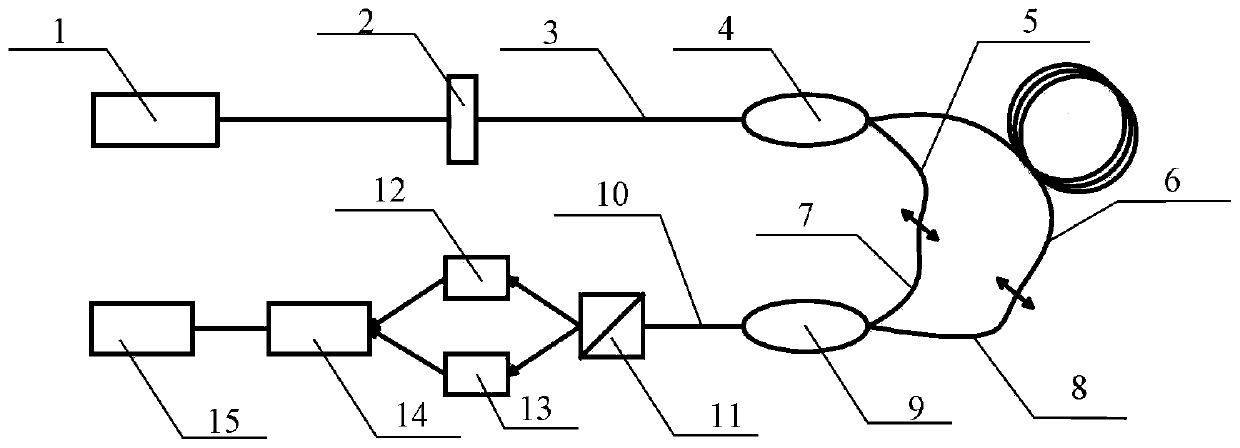
Figure 1 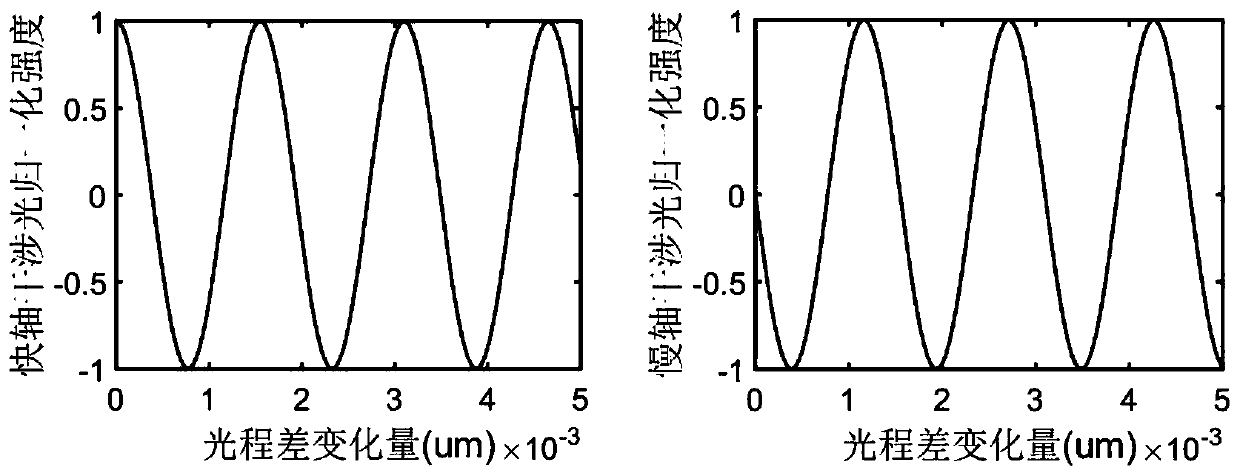
Figure 2 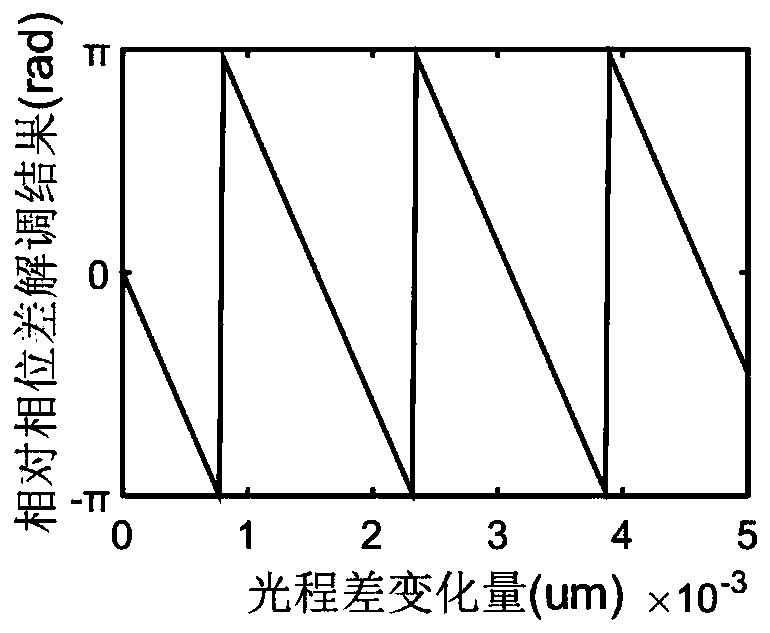
Figure 3
Abstract
Description
technical field
[0001] The invention relates to the technical field of optical fiber sensing, in particular to a measuring device and method for optical path difference of an optical fiber Mach-Zehnder interferometer based on polarization interference technology. Background technique
[0002] Optical fiber Mach-Zehnder interferometer, as a kind of optical fiber sensor, has the advantages of high sensitivity, anti-electromagnetic interference, fireproof, explosion-proof and corrosion resistance. It realizes sensing measurement by measuring the optical path difference between two paths, and is mainly used in temperature and stress sensing. ; After the polarization state is introduced, it is also commonly used to measure the electro-optical coefficient, linear polarization degree, ellipticity and other characteristics of crystals.
[0003] In 2007, Tu Xiaoguang et al. (Tu Xiaoguang, Zhao Lei, Chen Ping, et al. "Electro-Optical Effect Measurement of Thin-Film Material Using PM F...
Examples
Embodiment 2
[0054] Embodiment 2: The specific implementation of the second optical path difference measurement method of optical fiber Mach-Zehnder interferometer based on polarization interference technology
[0055] The demodulation process of the above fiber optic Mach-Zehnder interferometer optical path difference measurement device based on polarization interference technology is as follows:
[0056] The light output by the narrow-linewidth laser light source 1 is polarized by the polarizer 2, and is divided into two beams of linearly polarized light by the first polarization-maintaining coupler 4, respectively entering the two arms of the Mach-Zehnder interferometer, that is, the polarization-maintaining fiber L 2 and L 3 , and the polarization maintaining fiber L 2 and L 4 The optical axis is connected at an angle of 45°, polarization maintaining fiber L 3 and L 5 Connect at an angle of 45° so that the polarization direction of the output polarized light corresponds to the pola...