
Interference Management Method for Heterogeneous Networks Based on Multidimensional Resource Allocation
A heterogeneous network and resource allocation technology, applied in wireless communication, electrical components, etc., can solve problems such as large cross-layer interference
Patent Information
- Authority / Receiving Office
- CN · China
- Patent Type
- Patents(China)
- Current Assignee / Owner
- Publication Date
- 2021-08-20
Smart Images
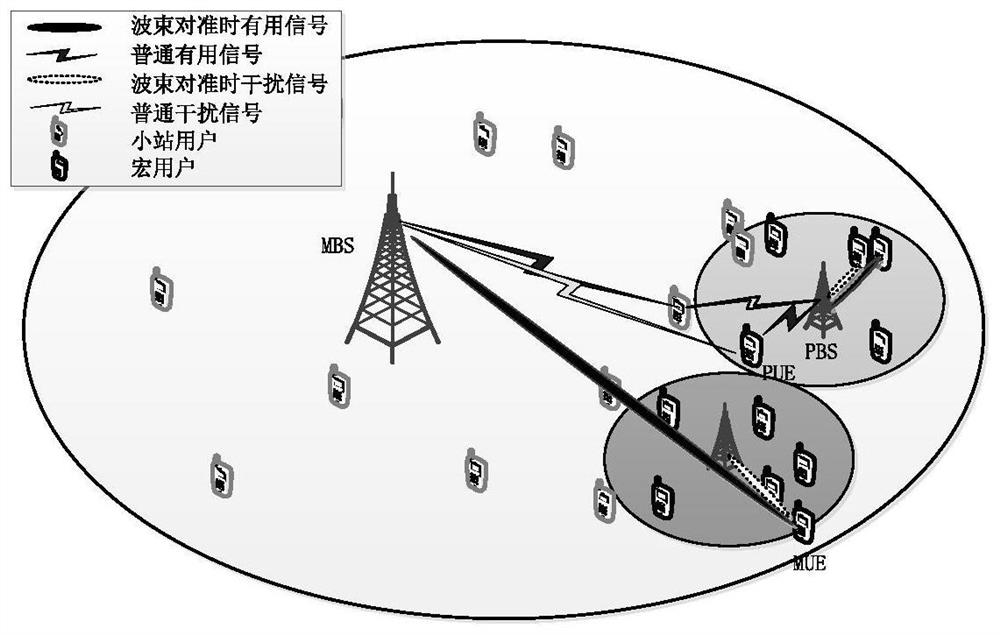
Figure 1 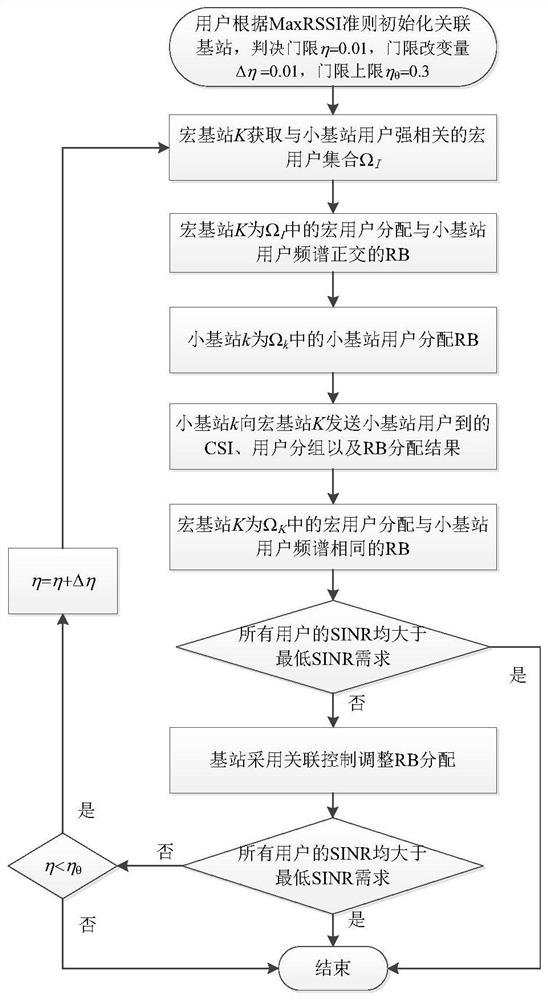
Figure 2 
Figure 3
Abstract
Description
technical field
[0001] The invention belongs to the technical field of wireless communication, and relates to a heterogeneous network interference management method, in particular to an interference management method based on multi-dimensional resource allocation under partial channel state information in an Orthogonal Frequency Division Multiple Access (OFDMA) network, which can be used in Acer The uplink of the heterogeneous wireless network where the base station and the small base station coexist. Background technique
[0002] In recent years, the rapid development of wireless communication technology and the urgent need of users for information communication, office or entertainment with other people anytime and anywhere have promoted the large-scale popularization of smart terminal equipment, and at the same time led to the rapid growth of users' demand for data traffic. In order to improve network throughput, operators deploy multiple small base stations within the co...
Examples
Embodiment Construction
[0051] Below with reference to accompanying drawing and specific embodiment, the present invention is described in further detail:
[0052] refer to figure 1 , the heterogeneous network of the present invention includes 1 macro base station and 3 small base stations, and each base station is configured with 4 antennas. There are 360 users in the heterogeneous network, and the users are randomly distributed within the coverage area of the macro base station, and the hotspot area where the small base station is located is densely populated. Each user can only be associated with one base station, and each RB under the base station is allocated to at most 4 users. In order to improve spectrum utilization and avoid co-layer interference between small base stations, small base stations partially reuse the spectrum resources of macro base stations, and use orthogonal spectrum between adjacent small base stations, use the same frequency spectrum.
[0053] refer to figure 2 , ...