
Liquid crystal curing method, display panel and display device
A technology of display panel and curing method, which is applied in the fields of instruments, nonlinear optics, optics, etc., and can solve the problems such as the decrease of the transmittance of the display panel
Patent Information
- Authority / Receiving Office
- CN · China
- Current Assignee / Owner
- Publication Date
- 2021-07-23
Smart Images
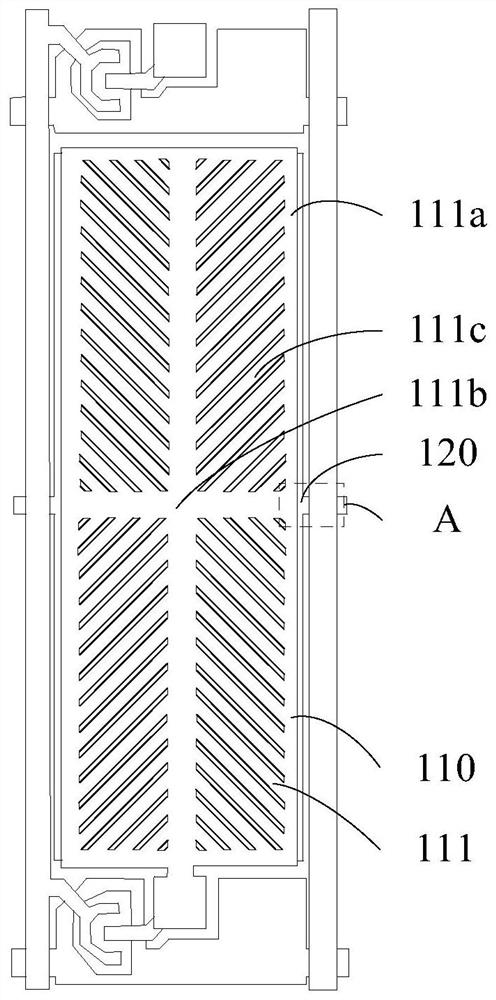
Figure 1 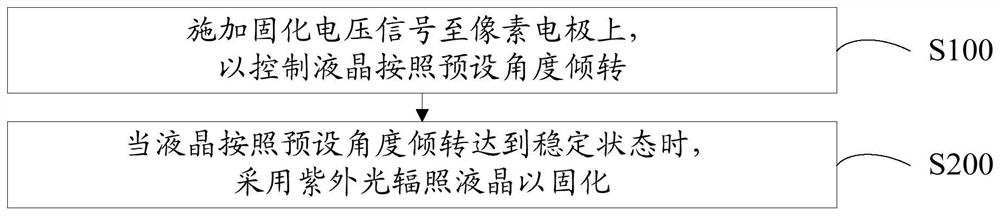
Figure 2 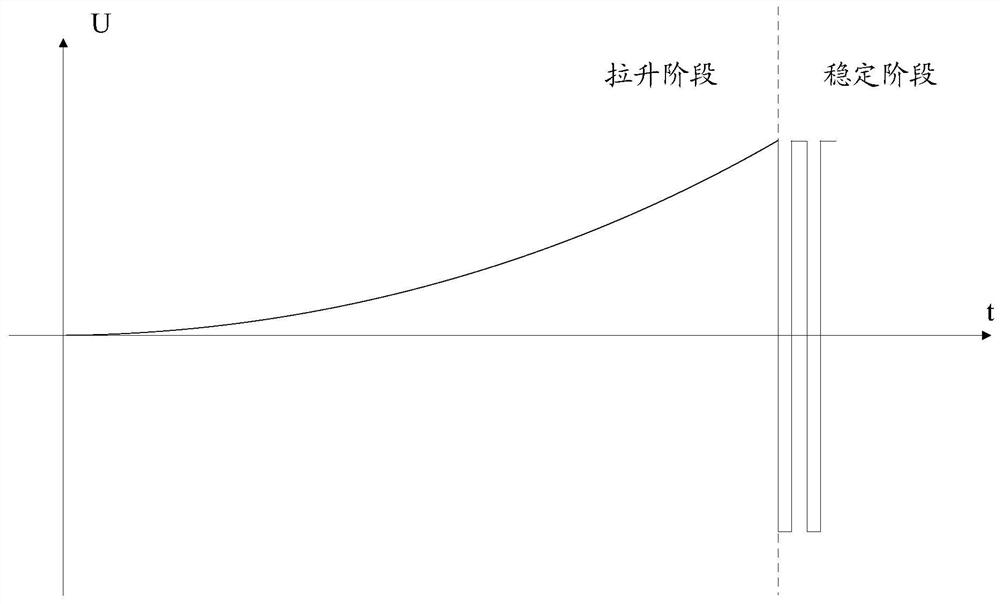
Figure 3
Abstract
Description
technical field
[0001] The invention relates to the field of display technology, in particular to a liquid crystal curing method, a display panel and a display device. Background technique
[0002] Currently, liquid crystal display panels on the mainstream market can be divided into three types, namely twisted nematic (Twisted Nematic, TN) or super twisted nematic, in-plane switching (In-Plane Switching, IPS) and vertical alignment (Vertic Alignment). , VA) type. A liquid crystal display device generally includes a backlight module, a first substrate and a second substrate oppositely arranged, and liquid crystal filled between the first substrate and the second substrate. In the process of solidifying the liquid crystal to form a pre-tilt angle, the signal coupling between the pixel electrode and the common electrode on the first substrate will easily lead to the tilt of the liquid crystal molecules being affected by the common electrode. The transmittance is reduced. Co...
Examples
Embodiment Construction
[0027] The following will clearly and completely describe the technical solutions in the embodiments of the present invention with reference to the accompanying drawings in the embodiments of the present invention. Obviously, the described embodiments are only part of the embodiments of the present invention, not all of them. Based on the embodiments of the present invention, all other embodiments obtained by persons of ordinary skill in the art without creative efforts fall within the protection scope of the present invention.
[0028] It should be noted that if there is a directional indication (such as up, down, left, right, front, back...) in the embodiment of the present invention, the directional indication is only used to explain the position in a certain posture (as shown in the accompanying drawing). If the specific posture changes, the directional indication will also change accordingly.
[0029] In addition, if there are descriptions involving "first", "second" and ...