
A High Precision Fully Differential Capacitance-Voltage Conversion Circuit System
A voltage conversion circuit, fully differential technology, applied in the field of MEMS inertial devices, can solve the problems of increased system power consumption and area, inability to obtain high-precision detection, output signal influence, etc., to suppress zero drift, eliminate low-frequency noise and offset, Improve the effect of changing accuracy
Patent Information
- Authority / Receiving Office
- CN · China
- Patent Type
- Patents(China)
- Current Assignee / Owner
- Publication Date
- 2021-01-05
Smart Images
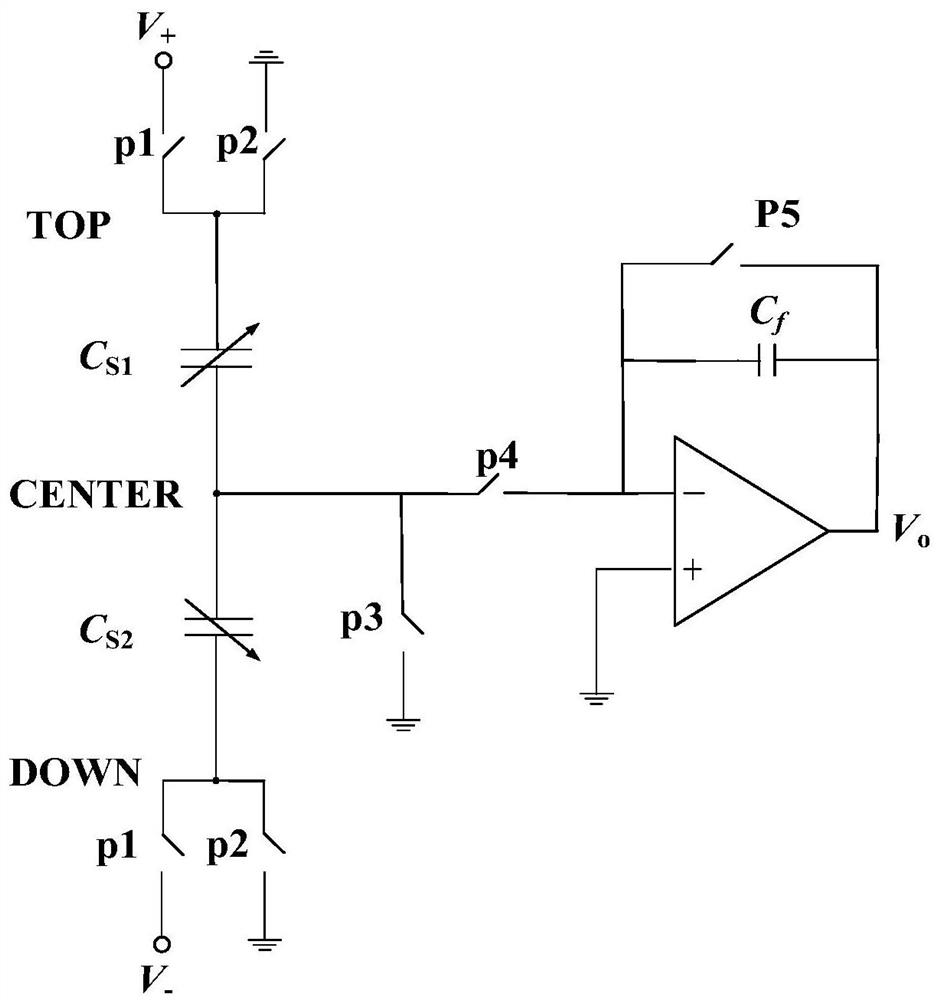
Figure 1 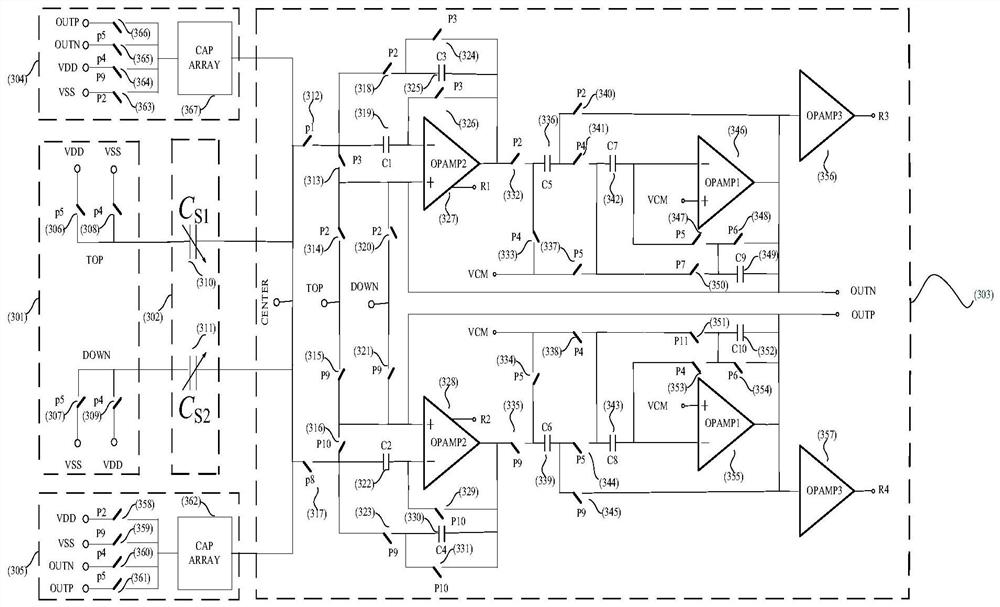
Figure 2 
Figure 3
Abstract
Description
technical field
[0001] The invention relates to the field of MEMS inertial devices, in particular to a high-precision fully differential capacitance-voltage conversion circuit system. Background technique
[0002] Acceleration sensors can convert weak acceleration physical signals into electrical signals that can be detected. High-precision acceleration sensors are widely used in earthquake detection, automotive safety, aerospace, space microgravity measurement and other measurement fields that require high precision. People began to study the structure and manufacturing technology of the acceleration sensor very early. With the development and popularization of MEMS technology in recent years, the integration of microelectronics technology and mechanical engineering makes the acceleration sensor no matter in structure or performance. There have been great improvements and improvements. Capacitive acceleration sensor is currently the most researched type of acceleration sen...
Examples
Embodiment Construction
[0025] The present invention will be further described below in conjunction with accompanying drawing:
[0026] figure 1 It is a traditional single-ended detection circuit. The overall circuit adopts a single-ended charge amplifier and a switched capacitor structure, which can effectively reduce the influence of parasitic capacitance and improve the accuracy of circuit switching. The working process of the circuit is the charge detection stage and the charge transfer stage. In the charge detection stage: p1 is high level, p2 is low level, p3 is low level, and the sensitive capacitor C S1 and C S2 The upper and lower pole plates are respectively connected to V - and V + , at this time stored in the sensitive capacitor C S1 and C S2 The charges are V + C S1 and V - C S2 . P4 is low level, p5 is high level, the output of the operational amplifier is shorted to the input, the output of the operational amplifier is 0, and the integral capacitor C f Both ends are grounded...