
Method for producing PVC resin and obtained resin
A PVC resin and production method technology, applied in the field of organic chemistry, can solve the problems of long-term use performance, physical and mechanical performance degradation, stability, and poor whiteness of PVC, and achieve high anti-aging performance, reduced black and yellow spots, The effect of little change in light transmittance
Patent Information
- Authority / Receiving Office
- CN · China
- Patent Type
- Applications(China)
- Current Assignee / Owner
- Publication Date
- 2019-05-31
- Estimated Expiration
- Not applicable · inactive patent
Smart Images
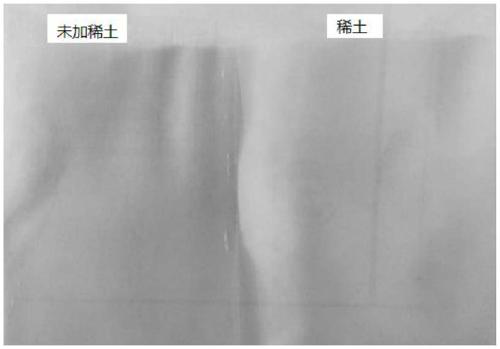
Figure 1 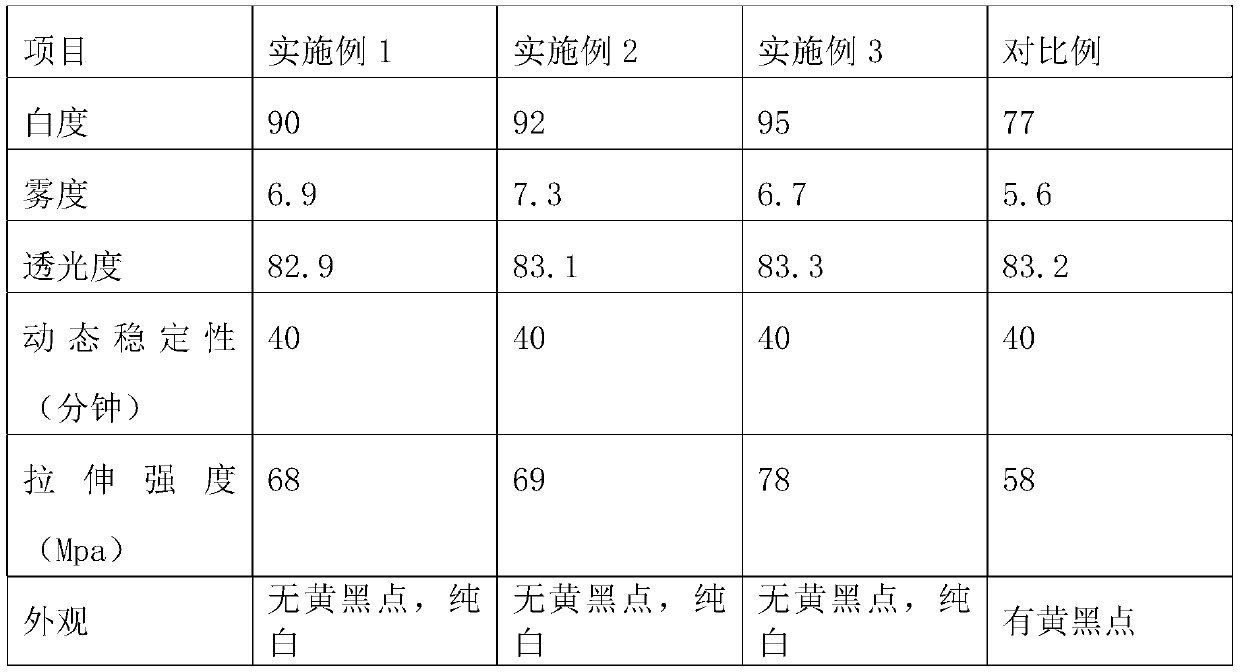
Figure 2
Abstract
Description
technical field
[0001] The invention belongs to the field of organic chemistry, and in particular relates to a production method of a chlorine-containing polymer. Background technique
[0002] Polyvinyl chloride (PVC) is one of the plastic products with the largest output in the world. PVC is a white powder with an amorphous structure, with a small degree of branching and a relative density of about 1.4. It is cheap and widely used, and is widely used in building materials, industrial products, daily necessities, pipes, packaging materials, foaming materials, sealing materials, etc. It can also be compounded with metal materials, such as building materials such as door and window structures for buildings, wall decorations, etc. Due to the excellent electrical insulation properties of PVC, it can be used in the manufacture of plugs, sockets, switches and cables in the electrical and electronic industries.
[0003] Although PVC has a wide range of uses, there are also some p...
Examples
Embodiment 1
[0035] A kind of production method of PVC resin, adopts suspension polymerization production process, described production method comprises operation:
[0036] Rare earth additives, vinyl chloride (VCM) monomers, and ion-free water are sequentially added into the polymerization kettle, wherein the rare earth additives are lanthanum stearate, and the mass of lanthanum stearate is 0.035% of VCM. delay 120s;
[0037] After adding the configured quantitative dispersant, initiator and other auxiliary agents, the polymerization kettle enters the reaction stage. Initiator: EHP and CNP (mass ratio 1:3), the total dosage is 8 / 10,000 of the monomer mass.
[0038] Dispersant 2: 25 parts of GH-20 (polyvinyl alcohol)
[0039] Dispersant 1: 80 parts of 7206 (polyvinyl alcohol)
[0040] HG-02 (polyvinyl alcohol) 10 parts
[0041] 60HD50 (hydroxypropyl methylcellulose) 10 parts
[0042] The total amount of dispersant is 8 / 10,000 of the monomer mass.
[0043] The reaction process is contr...
Embodiment 2
[0045] The production method of this embodiment is basically the same as that of Example 1, except that the rare earth auxiliary agent lanthanum stearate is added in the production process, and the quality of lanthanum stearate is 0.046% of VCM.
Embodiment 3
[0047] The production method of this embodiment is basically the same as that of Example 1, except that the rare earth additive lanthanum stearate is added in the production process, and the quality of lanthanum stearate is 0.073% of VCM.