
Method for synthesizing 2-acetyl-4-chlorothiophene
A technology of acetylthiophene and chlorothiophene, applied in directions such as organic chemistry, can solve the problems of high cost of trichloroisocyanuric acid, high content of dichloro by-products, unfavorable industrialized production, etc., and achieves environmental friendliness, less by-products, good quality The effect of market prospects
Patent Information
- Authority / Receiving Office
- CN · China
- Current Assignee / Owner
- Publication Date
- 2020-04-28
Smart Images
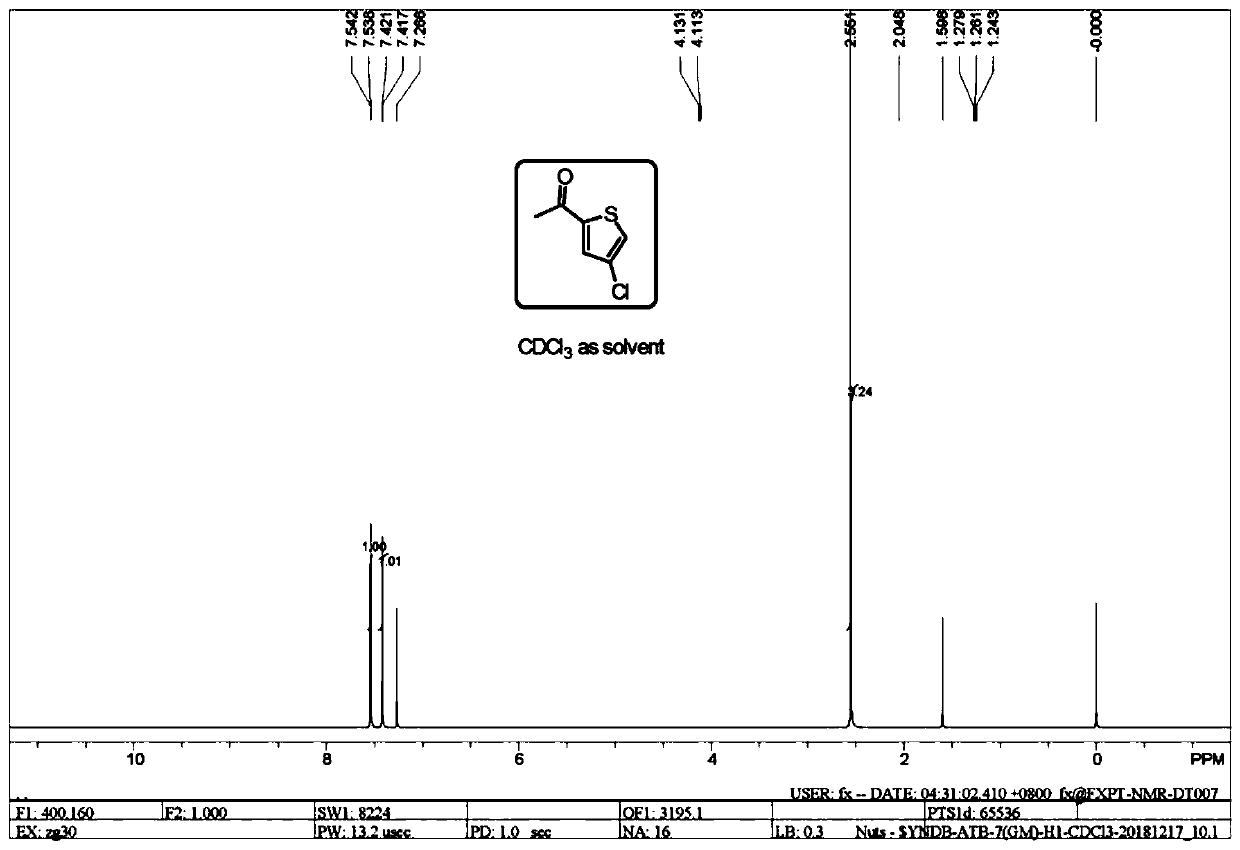
Figure 1 
Figure 2 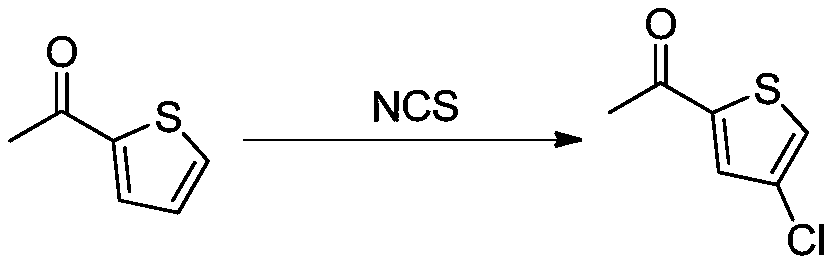
Figure 3
Abstract
Description
technical field
[0001] The invention belongs to the field of chemical drug synthesis, and in particular relates to a method for synthesizing 2-acetyl-4-chlorothiophene. Background technique
[0002] 2-Acetyl-4-chlorothiophene is an important intermediate of Avatrombopag (Avatrombopag). Avatrombopag is an oral thrombopoietin (TPO) receptor agonist that stimulates the proliferation and differentiation of megakaryocytes in myeloid progenitor cells, thereby increasing platelet production. Avatrombopag was first developed by Japan's Astellas Pharmaceutical Group, after several authorizations, the new drug development was finally completed by AkaRx Pharmaceuticals, a subsidiary of Dova Pharmaceuticals in the United States. It was approved by the US FDA on May 23, 2018. The product name is Doptelet, which is used for adults with chronic liver disease (CLD) who suffer from thrombocytopenia and plan to undergo medical or dental surgery. Doptelet has been shown to safely increase pl...
Examples
Embodiment 1
[0028] Embodiment 1, the method for synthesizing 2-acetyl-4-chlorothiophene of the present invention
[0029] Add 2-acetylthiophene (1kg, 7.925mol) and dichloromethane (10L) into the reaction flask, then add aluminum trichloride (3.17kg, 23.775mol) in batches, stir for 30min after the addition, and then Add N-chlorosuccinimide (NCS, 2.12kg, 15.85mol), and react at room temperature for 6 hours after the addition, and the reaction is complete as detected by TLC. Pour the reaction solution into 2L of cold water, separate the layers, extract the organic phase with water twice (500ml each time), and dry over anhydrous sodium sulfate. After filtration, the filtrate was concentrated to dryness to obtain a crude product. Distillation under reduced pressure gave 914.0 g of 2-acetyl-4-chlorothiophene with a yield of 71.8%.
[0030] The HNMR spectrum of the 2-acetyl-4-chlorothiophene prepared by the present invention is as follows figure 1 shown. The HPLC collection of illustrative p...
Embodiment 2
[0031] Embodiment 2, the method for synthesizing 2-acetyl-4-chlorothiophene of the present invention
[0032] Add 2-acetylthiophene (1 kg, 7.925 mol) and dichloromethane (10 L) into the reaction flask, and then add zinc chloride (3.24 kg, 23.775 mol) in batches, and stir for 30 min after the addition is complete. Then N-chlorosuccinimide (NCS, 2.12 kg, 15.85 mol) was added in batches, and after the addition was completed, it was reacted at room temperature for 7 hours, and the reaction was complete as detected by TLC. Pour the reaction solution into 2L of cold water, separate the layers, extract the organic phase with water twice (500ml each time), and dry over anhydrous sodium sulfate. After filtration, the filtrate was concentrated to dryness to obtain a crude product. Through distillation under reduced pressure, 869.4 g of 2-acetyl-4-chlorothiophene was obtained, with a yield of 68.3% and a purity of 99.58% upon detection.