
Membrane reactor and process for continuous production of alkyl anthraquinone by using same
A technology of alkyl anthraquinone and reactor, which is applied in the production process field of preparing alkyl anthraquinone, can solve the problems of affecting normal production, easy blockage, slow temperature rise of tubular reactor, etc., and achieves continuous production and is not suitable for blockage , Reduce the effect of heating time and reaction time
Patent Information
- Authority / Receiving Office
- CN · China
- Patent Type
- Applications(China)
- Current Assignee / Owner
- Publication Date
- 2020-08-21
Smart Images
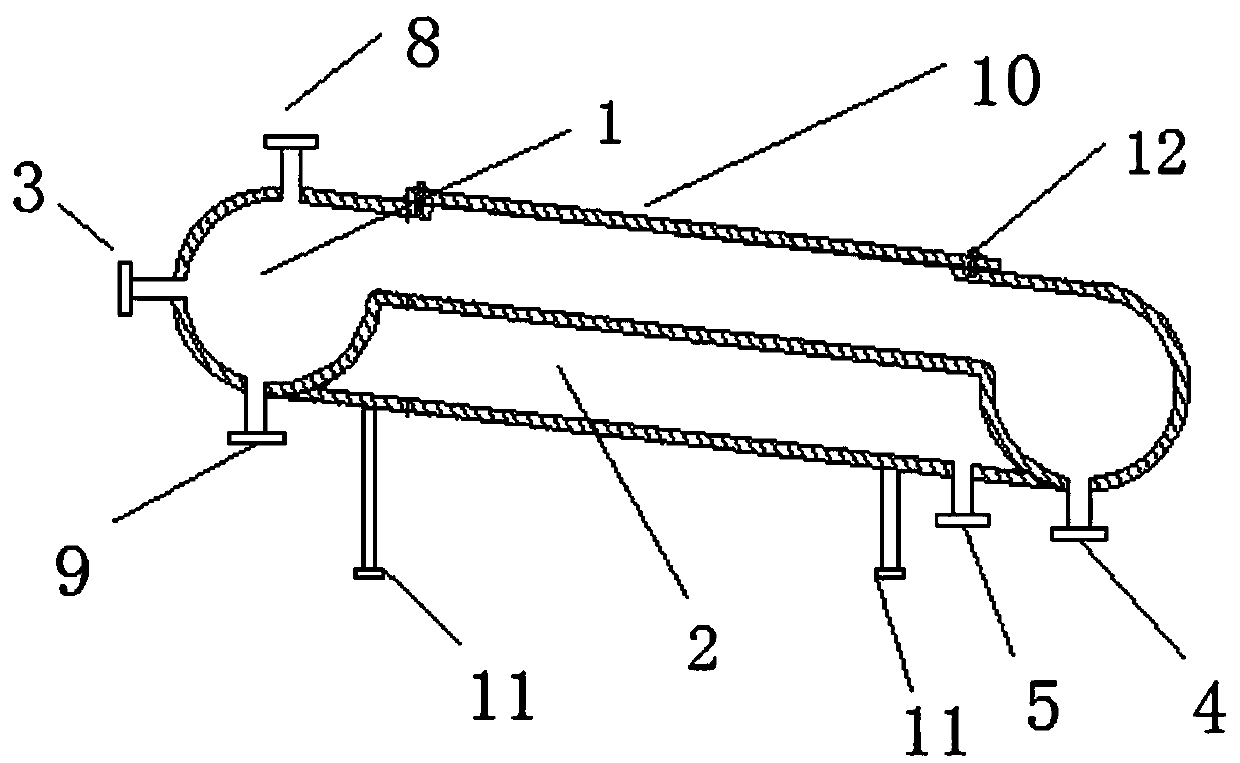
Figure 1 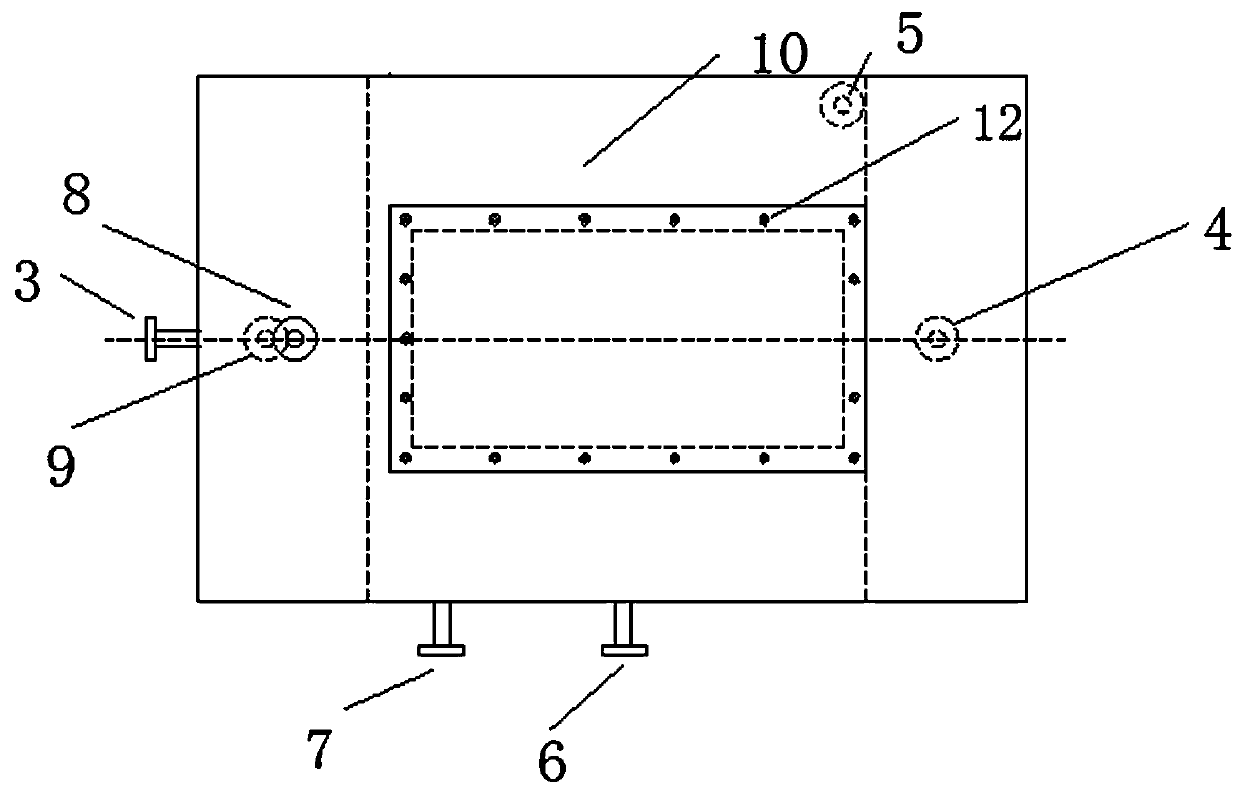
Figure 2 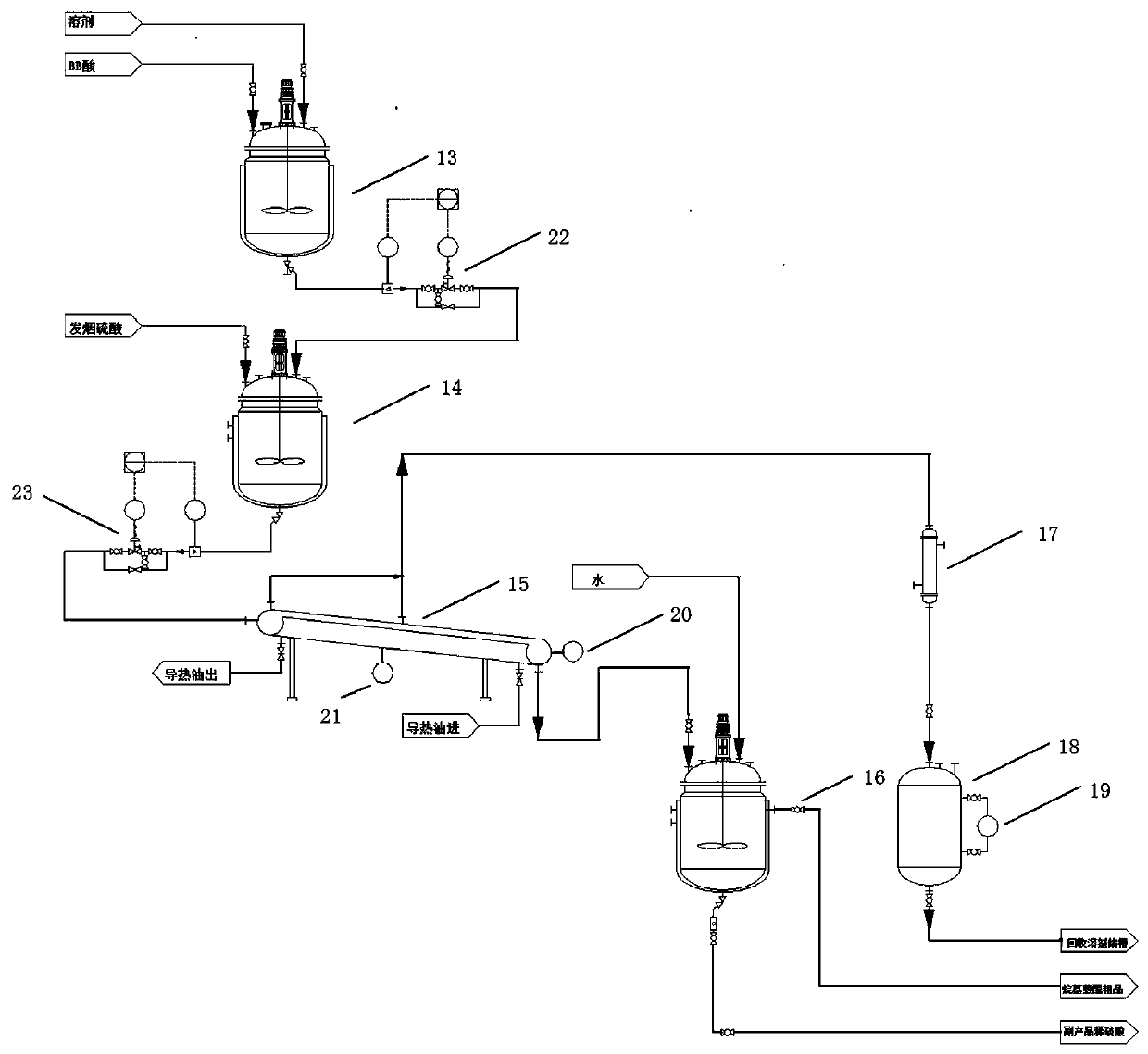
Figure 3
Abstract
Description
technical field
[0001] The invention relates to a production process for preparing alkyl anthraquinone, in particular to a process for continuous production of alkyl anthraquinone using a thin film reactor. Background technique
[0002] At present, alkylanthraquinones are mainly produced by the phthalic anhydride method at home and abroad. Firstly, the ketoacids generated by phthalic anhydride and alkylbenzene under the action of a catalyst, and the BB acid are dehydrated with oleum to produce alkylanthraquinones.
[0003] European patent EP0055951B1 describes BB acid with 20% SO 3 Fuming sulfuric acid was reacted in a kettle at 100°C for 2 hours at a mass ratio of 1:5 to obtain 2-ethylanthraquinone with a yield of about 80%. This method has a large concentration of oleum and is easy to overflow SO 3 Gas, intermittent production, poor production environment, slow heat transfer of equipment, long reaction time, many by-products, and large amount of waste acid, which is not ...
Examples
Embodiment 1
[0029] Such as figure 1 and figure 2 As shown, a thin-film reactor includes a reaction material chamber 1, a heat-conducting material chamber 2, a reaction material inlet 3, a reaction material outlet 4, a heat-conducting material inlet 5, a heat-conducting material outlet 6, a thermometer socket 7, a gas phase Material outlet 8 and discharge port 9;
[0030] The reaction material cavity 1 and the heat-conducting material cavity 2 are attached to each other; the reaction material inlet 3 and the reaction material outlet 4 are respectively located at both ends of the reaction material cavity 1; the heat-conducting material inlet 5 and the The heat-conducting material outlets 6 are respectively located at both ends of the heat-conducting material cavity 2; the thermometer socket 7 is located on the heat-conducting material cavity 2; the gas-phase material outlet 8 is located at the top of the reaction material cavity 1; The discharge port 9 is located at the bottom of the rea...
Embodiment 2
[0034] equipment such as image 3 As shown, the implementation process: 2-[(4-ethylphenyl)benzoyl]benzoic acid and chloroform enter the No. 1 at the same time at the speed of 9KG / h and 10L / h respectively (weight ratio 1:1.63) Quickly mix in the mixer 13, after mixing, enter the No. 2 mixer 14 and 16.6L / h 20% oleum (2-[(4-ethylbenzene Base) benzoyl] benzoic acid and oleum weight ratio 1:3.5) continue to mix in the No. 2 mixer 14, after mixing, the flow rate 32L / h is adjusted by the No. 2 regulating valve group 23 and enters the thin film reactor 15. The temperature of the heat transfer oil thermometer 21 on the thin film reactor 15 makes the temperature of the reaction liquid thermometer 20 stable at 140 to 145°C; the solvent trichloromethane vapor enters the condenser 17 from the gas phase material outlet 9 on the top of the thin film reactor 15, and the condensed The solvent chloroform enters the recovery solvent receiving tank 18 for use; the reaction liquid enters the wate...
Embodiment 3
[0037] equipment such as image 3As shown, the implementation process: 2-[(4-tert-amylphenyl)benzoyl]benzoic acid and dichloroethane are simultaneously fed at the speed of 7KG / h and 6L / h (weight ratio 1:1.1) Quickly mix in No. 1 mixer 13, after mixing, enter No. 2 mixer 14 and 10L / h fuming sulfuric acid (2-[(4-tert-amylbenzene) Base) benzoyl] benzoic acid and oleum weight ratio 1:2.72) continue to mix in the No. 2 mixer 14, after mixing, the flow rate 22L / h is adjusted by the No. 2 regulating valve group 23 and enters the thin film reactor 15. The temperature of the heat transfer oil thermometer 21 on the thin film reactor 15 makes the temperature of the reaction liquid thermometer 20 stable at 140 to 145°C; the solvent dichloroethane vapor enters the condenser 17 from the gas phase material outlet 9 on the upper part of the thin film reactor 15, and after condensation The solvent dichloromethane enters the recovery solvent receiving tank 18 for use; the reaction liquid enter...