
Soft PE non-woven fabric applied to hygienic products and manufacturing method of soft PE non-woven fabric
A technology for hygiene products and manufacturing methods, applied in textiles, papermaking, non-woven fabrics, etc., can solve problems such as increased frictional resistance, poor spinnability, and poor composite effect.
Patent Information
- Authority / Receiving Office
- CN · China
- Current Assignee / Owner
- Publication Date
- 2020-11-03
- Estimated Expiration
- Not applicable · inactive patent
Smart Images
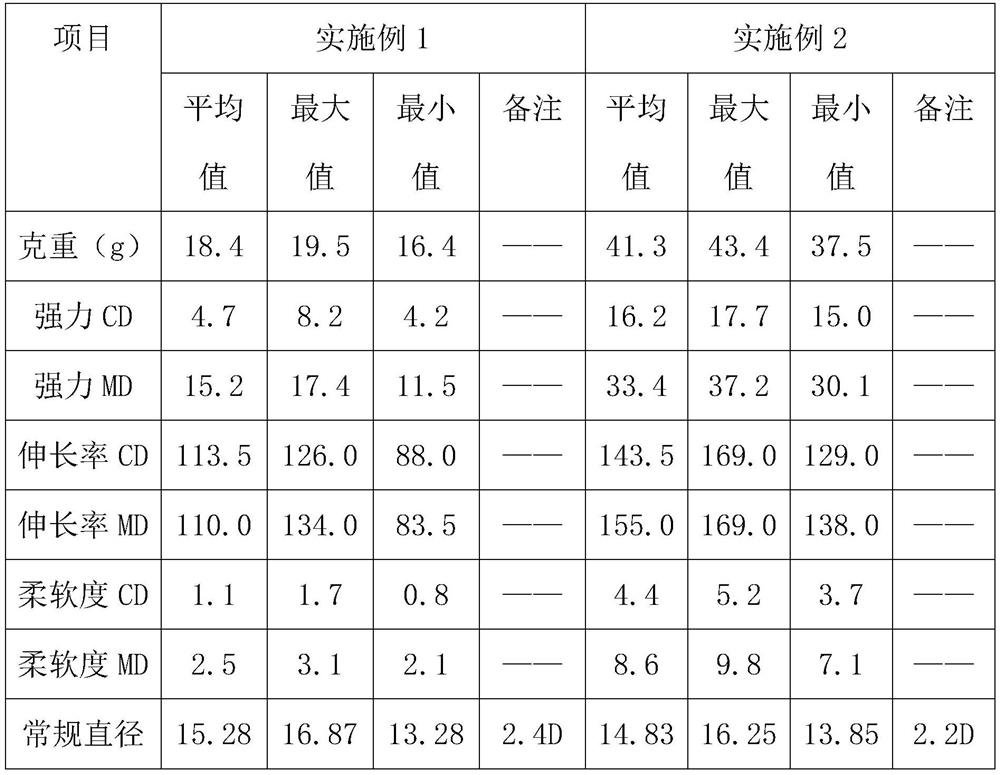
Figure 1 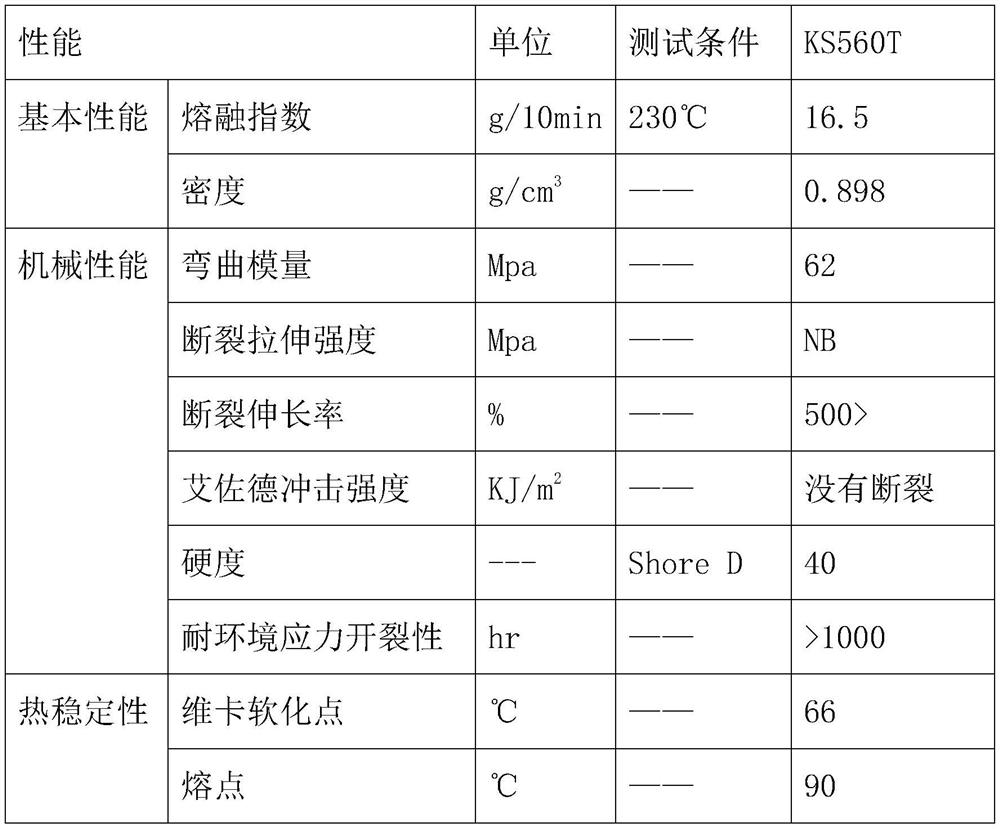
Figure 2 
Figure 3
Abstract
Description
technical field
[0001] The invention relates to the technical field of PE nonwoven fabrics, in particular to a soft PE nonwoven fabric used in sanitary products and a manufacturing method thereof. Background technique
[0002] Non-woven fabric, also known as non-woven fabric, is composed of oriented or random fibers. It is called cloth because of its appearance and certain properties. Polyethylene (PE) non-woven fabric is a new type of non-woven fabric. It has the characteristics of non-toxic, skin-friendly, good thermal adhesion, and soft hand feeling. It is especially suitable for the medical and health field. It is an excellent material for surgical gowns, protective clothing, sanitary napkins, and diapers.
[0003] At present, the non-woven fabrics in the prior art are usually made of polyolefin resins. When using such non-woven fabrics, in the case of resins with high crystallinity, although the spinnability is good, the softness is poor, and the hand feeling is poor. ...
Examples
Embodiment 1
[0029] A soft PE non-woven fabric used in hygiene products, including a soft layer and a composite layer, the soft layer is made of low-melting PE raw material, the composite layer is made of PP raw material and adhesive material, the PE raw material is KS560T, the The PP raw material is H39S-2, and the binder is OMBM.
[0030] A kind of manufacturing method of the soft PE non-woven fabric that is applied to hygienic article, adopts following steps to operate:
[0031] S1. Add low-melting PE raw material KS560T into the first die head A, add conventional PP raw material H39S-2 and binder OMBM into the second die head B at a ratio of 1:1, and then mix and stir to form a slurry material;
[0032] S2. Extrude and melt the mixed and stirred slurry into the screw through the feeding system to obtain a hot melt;
[0033] S3, filtering, metering and distributing the hot melt at a certain temperature and a certain pressure;
Embodiment 2
[0049] A soft PE non-woven fabric used in hygiene products, including a soft layer and a composite layer, the soft layer is made of low-melting PE raw material, the composite layer is made of PP raw material and adhesive material, the PE raw material is KS560T, the The PP raw material is H39S-2, and the binder is OMBM.
[0050] A kind of manufacturing method of the soft PE non-woven fabric that is applied to hygienic article, adopts following steps to operate:
[0051] S1. Add low-melting PE raw material KS560T into the first die head A, add conventional PP raw material H39S-2 and binder OMBM into the second die head B at a ratio of 1:1, and then mix and stir to form a slurry material;
[0052] S2. Extrude and melt the mixed and stirred slurry into the screw through the feeding system to obtain a hot melt;
[0053] S3, filtering, metering and distributing the hot melt at a certain temperature and a certain pressure;
[0054] S4. Spinning the distributed and metered hot melt...
Embodiment 3
[0071] A soft PE non-woven fabric used in hygiene products, including a soft layer and a composite layer, the soft layer is made of low-melting PE raw material, the composite layer is made of PP raw material and adhesive material, the PE raw material is KS560T, the The PP raw material is H39S-2, and the binder is OMBM.
[0072] A kind of manufacturing method of the soft PE non-woven fabric that is applied to hygienic article, adopts following steps to operate:
[0073] S1. Add the low melting point PE raw material KS560T into the first die head, add the conventional PP raw material H39S-2 and the binder OMBM into the second die head according to the ratio of 1:1, and then make it mix and stir to form a slurry;
[0074] S2. Extrude and melt the mixed and stirred slurry into the screw through the feeding system to obtain a hot melt;
[0075] S3, filtering, metering and distributing the hot melt at a certain temperature and a certain pressure;
[0076] S4. Spinning the distribu...