
Method for predicting sensitivity of lung adenocarcinoma patient to platinum-containing double-drug chemotherapy based on miRNA
A lung adenocarcinoma, sensitive technology, applied in the field of biomedicine, can solve problems such as difficulty in predicting sensitivity
Patent Information
- Authority / Receiving Office
- CN · China
- Patent Type
- Applications(China)
- Current Assignee / Owner
- Publication Date
- 2021-12-31
- Estimated Expiration
- Not applicable · inactive patent
Smart Images
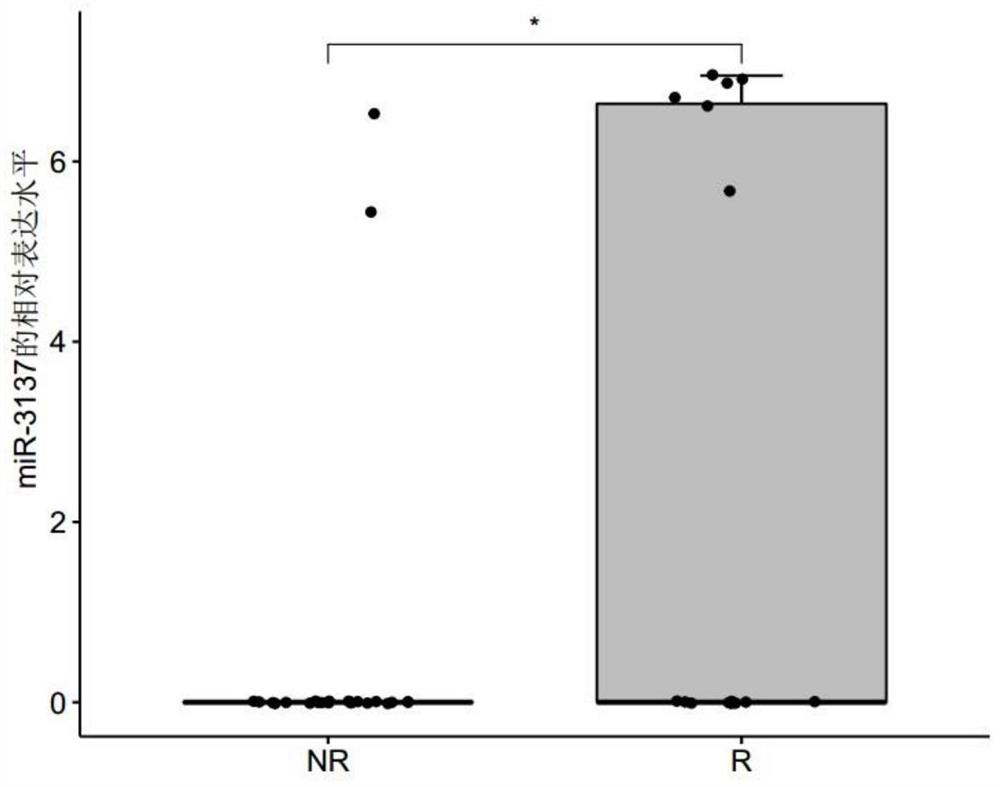
Figure 1 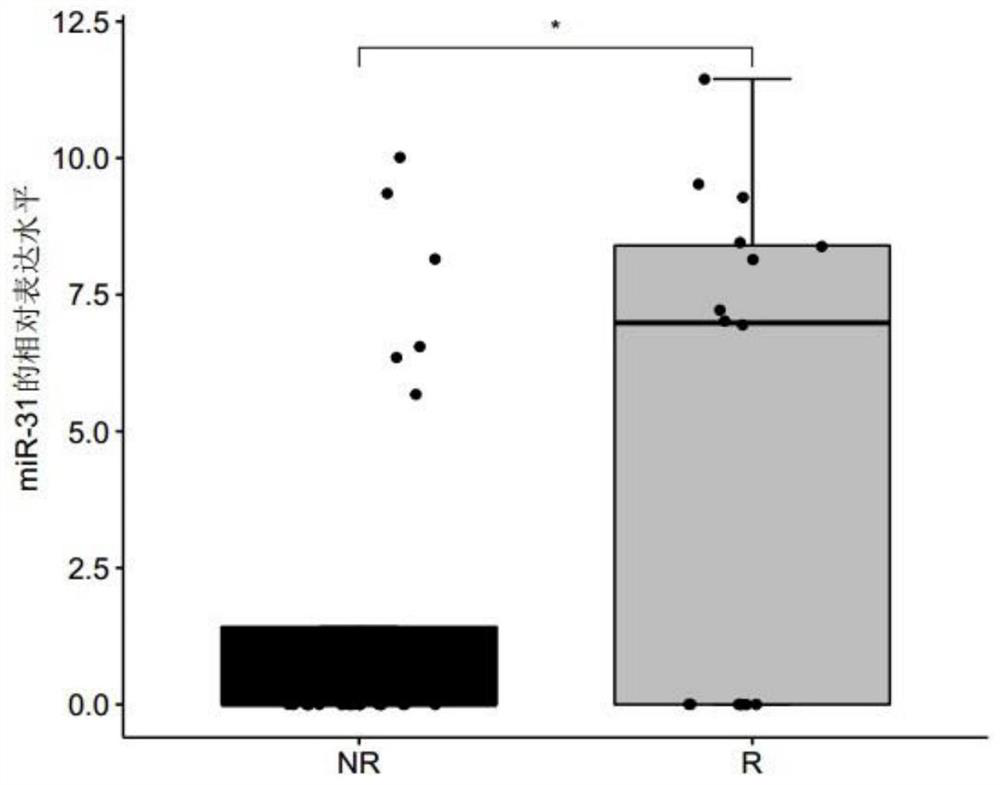
Figure 2 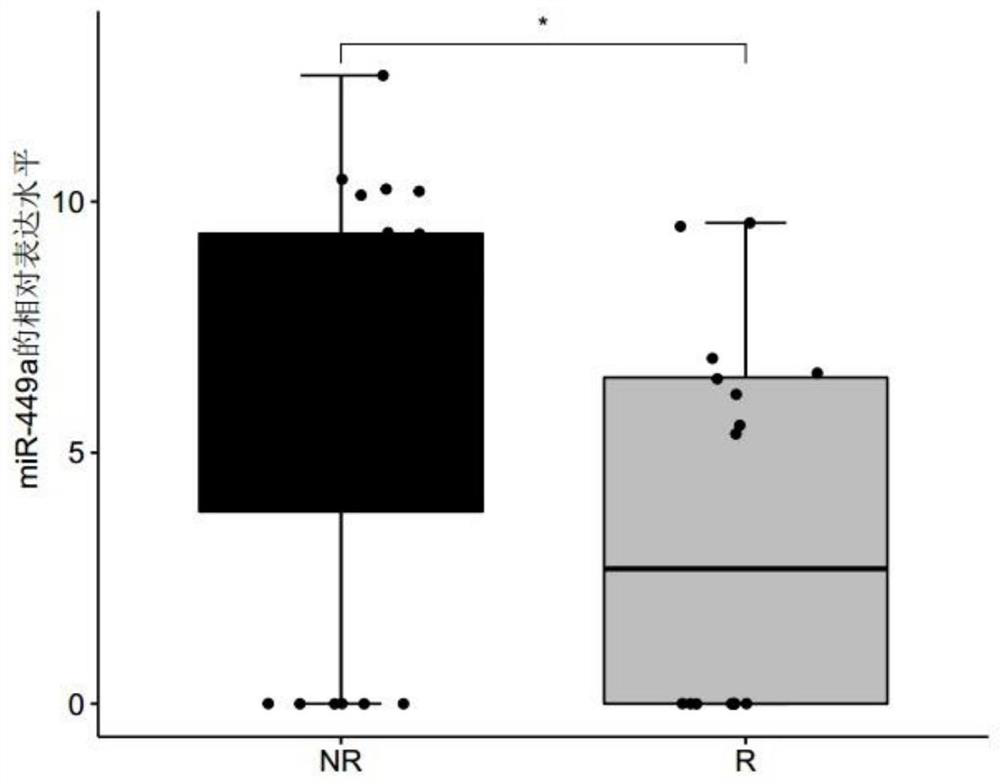
Figure 3
Abstract
Description
technical field
[0001] The invention belongs to the technical field of biomedicine, and in particular, the invention relates to predicting the sensitivity of lung adenocarcinoma patients to platinum-containing double-drug chemotherapy based on miRNA. Background technique
[0002] Lung cancer (Lung cancer) is the malignant tumor with the highest morbidity and mortality worldwide, among which non-small cell lung cancer (Non-small cell lung cancer, NSCLC) accounts for 80%, and lung adenocarcinoma (Lung adenocarcinoma) is the most common form of NSCLC. Main histological types (Ji P, Diederichs S, Wang W, et al. MALAT-1, a novel noncoding RNA, and thymosin β4 predict metastasis and survival in early-stage non-small cell lung cancer [J]. Oncogene, 2003, 22 (39 ):8031-8041.). Although the current research and clinical trials on lung cancer are progressing rapidly, the prognosis of lung cancer is still poor, 80-85% of patients are diagnosed at advanced stage, and the 5-year surviva...
Examples
Embodiment 1
[0075] Example 1 Gene screening related to sensitivity of lung adenocarcinoma to platinum-containing double-drug chemotherapy
[0076] 1. Data source
[0077] Before pathologically diagnosed lung adenocarcinoma patients received platinum-containing double-drug chemotherapy, their tumor tissues were collected, and according to whether lung adenocarcinoma responded to platinum-containing double-drug chemotherapy, combined with RECIST (Response Evaluation Criteria for Solid Tumors) guidelines, the above-mentioned Patients with lung adenocarcinoma were divided into response group (R, responder) or non-response group (NR, non-responder); the patients with lung adenocarcinoma had not received platinum-based chemotherapy before receiving platinum-containing double-drug chemotherapy; all The responding group includes lung adenocarcinoma patients with complete response (CR, complete response) and lung adenocarcinoma patients with partial response (PR, partial response), and the non-respo...
Embodiment 2
[0082] Application of differentially expressed genes screened in Example 2 in predicting sensitivity of lung adenocarcinoma to platinum-containing double-drug chemotherapy
[0083] 1. Experimental method
[0084] For the genes differentially expressed between the responder group and the non-response group screened in Example 1, receiver operating characteristic (ROC) analysis was performed using the R package "pROC" (version 1.15.0), and the receiver operating characteristic (ROC) was calculated. The area under the characteristic curve (AUC) was used to evaluate the accuracy of a single differentially expressed gene, a combination of any two differentially expressed genes, and a combination of three differentially expressed genes in predicting the sensitivity of lung adenocarcinoma to platinum-containing double-drug chemotherapy, wherein the The range of AUC value is 0-1;
[0085] Among them, when judging the diagnostic efficiency of a single differentially expressed gene in ...