
Cutting and sealing apparatuses and methods
a sealing apparatus and cutting edge technology, applied in the direction of cross-cut reciprocating saws, sawing apparatuses, paper cutting, etc., can solve the problems of cutting edges that are not prone to fraying, and the use of scissors and other conventional cutting apparatuses cannot prevent fraying. , to achieve the effect of reducing or eliminating the likelihood of misalignmen
Patent Information
- Authority / Receiving Office
- US · United States
- Patent Type
- Patents(United States)
- Current Assignee / Owner
- Publication Date
- 2019-03-12
- Estimated Expiration
- Not applicable · inactive patent
Smart Images
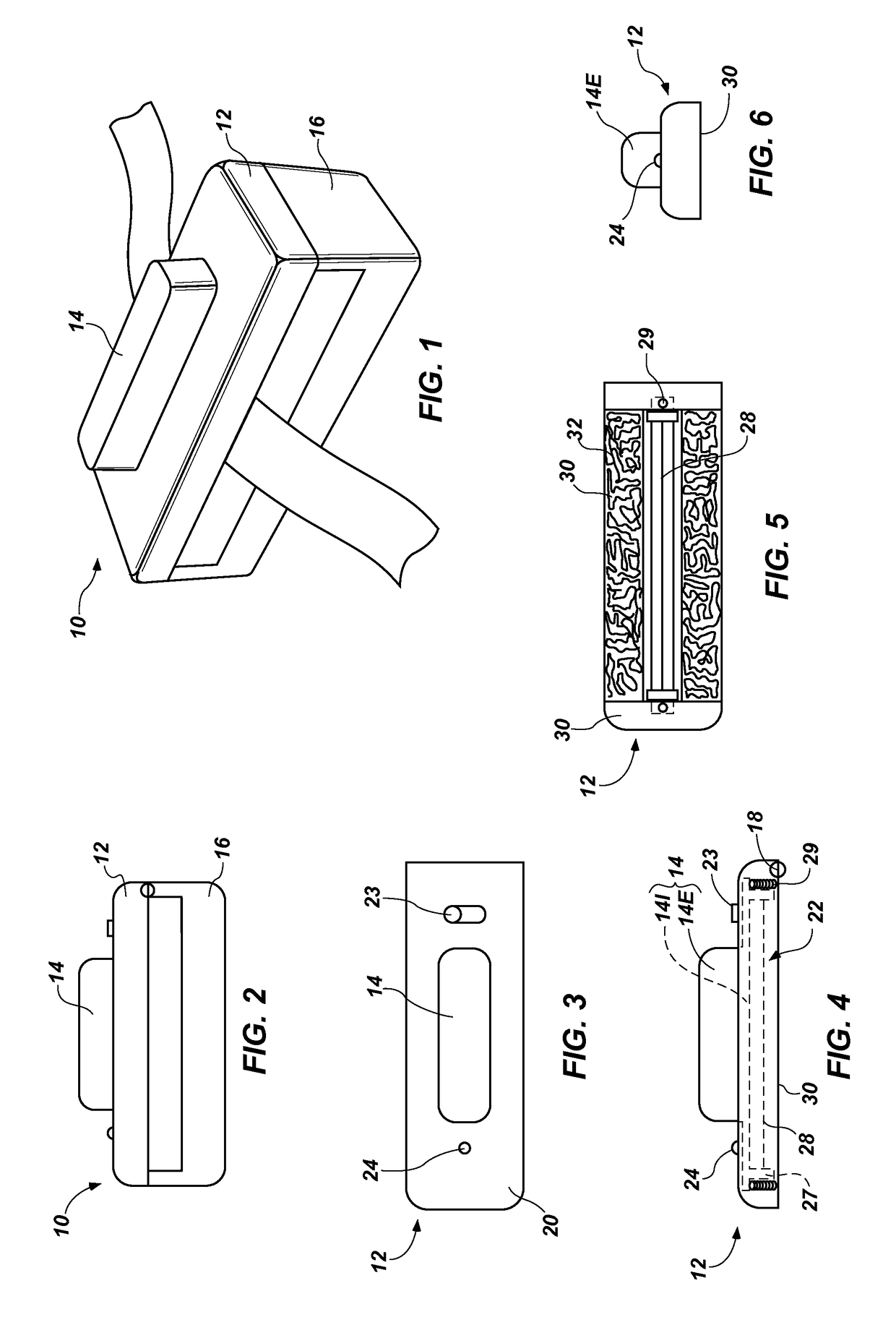
Figure 1 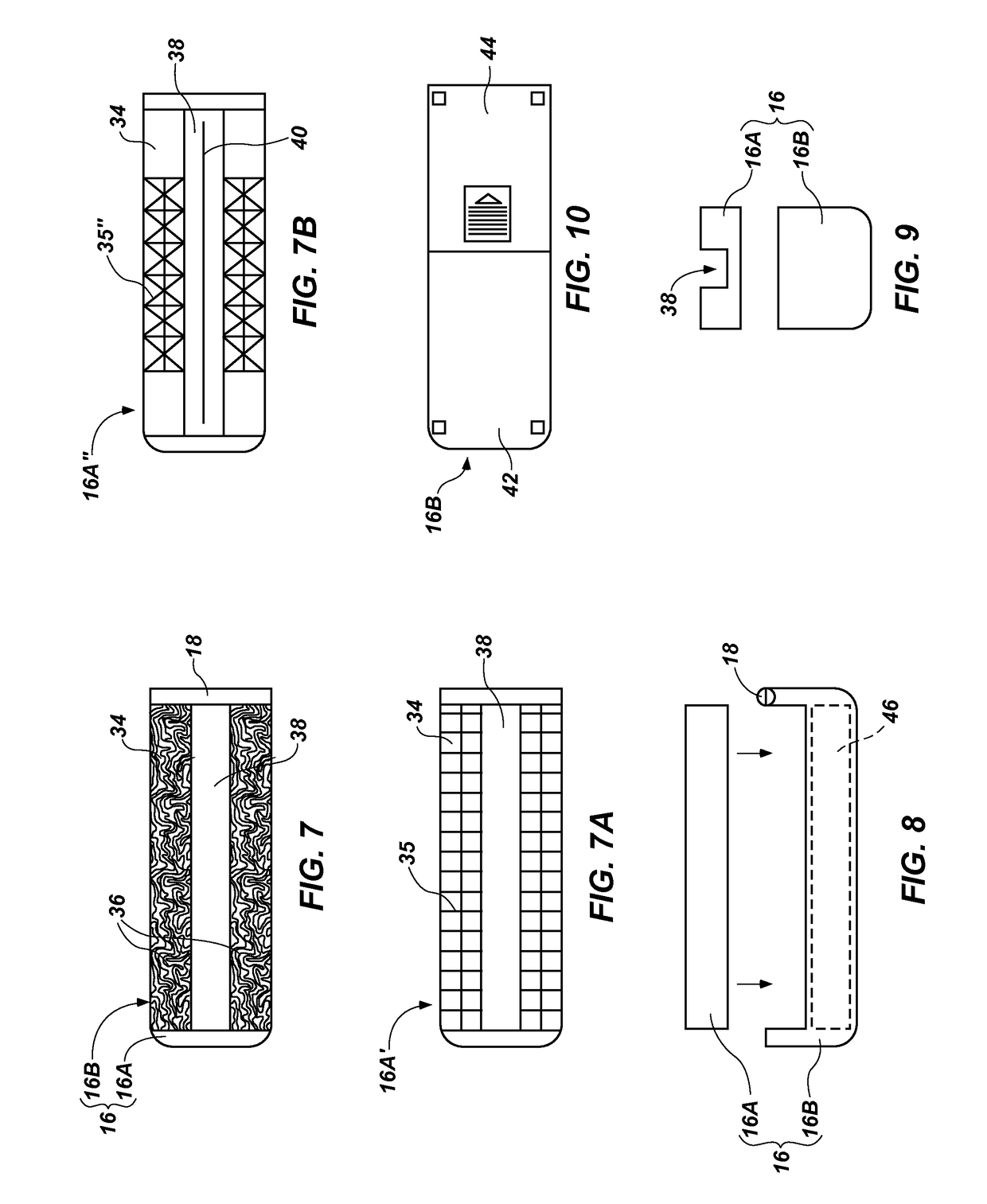
Figure 2 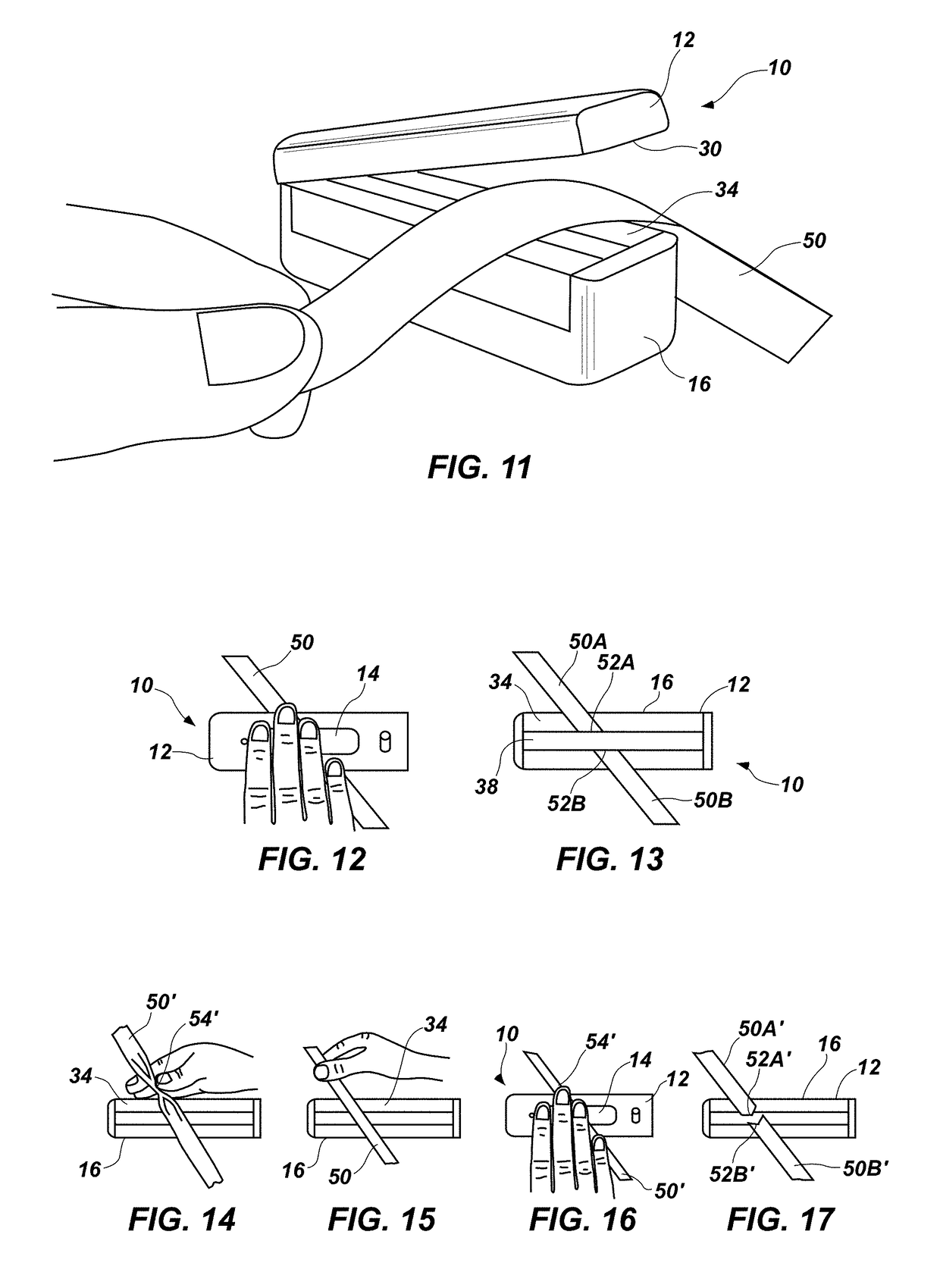
Figure 3
Abstract
Description
CROSS-REFERENCE TO RELATED APPLICATIONS
[0001] This application is a non-provisional of U.S. Provisional Patent Application No. 61 / 506,940 titled “Portable Cutting Apparatus,” filed Jul. 12, 2011, (the “'940 Application”). A claim for the benefit of priority to the '940 Application is hereby made pursuant to 35 U.S.C. § 119(e). The entire disclosure of the foregoing application is, by this reference, hereby incorporated herein.TECHNICAL FIELD
[0002] This disclosure relates generally to apparatuses for cutting elongate elements, such as ribbons, strings, cords and the like, and for sealing the cut ends of the elongate elements. More specifically, this disclosure relates to hot wire apparatus for forming clean cuts through elongate elements while sealing the cut ends of the elongate elements, and to cutting and sealing methods.BACKGROUND OF RELATED ART
[0003] Conventionally, scissors have been used to cut ribbons and other elongate elements. When scissors are used to cut a ribbon, the indiv...
Examples
Embodiment Construction
[0027]FIG. 1 illustrates an embodiment of a cutting apparatus 10 that incorporates teachings of this disclosure. The illustrated cutting apparatus 10 includes a top 12 and a base 16, which are configured to be at least partially assembled with and disassembled from one another. More specifically, the top 12 may be configured to be positioned over and assembled with the base 16 to define a closed arrangement between the top 12 and the base 16. In addition, the top 12 may be configured to be removed from or spaced apart from the base 16 to provide an open arrangement of the top 12 and the base 16. In some embodiments, a hinge 18 (FIGS. 3 and 7) may secure corresponding edges of the top 12 and the base 16 to one another to facilitate movement of the top 12 between the closed position over the base 16 and the open position relative to the base 16.
[0028]With reference to FIGS. 2 through 6, an embodiment of the top 12 of a cutting apparatus 10 is described in further detail. The top 12 ma...