
Image processing method and system for irregular output patterns
a processing method and output pattern technology, applied in the field of visual image processing, can solve the problems of poor dynamic range, limited spatial resolution of phosphene patterns, irregularities of patient's phosphene maps, etc., and achieve the effect of improving correlation
Patent Information
- Authority / Receiving Office
- US · United States
- Patent Type
- Patents(United States)
- Current Assignee / Owner
- Publication Date
- 2019-10-01
Smart Images
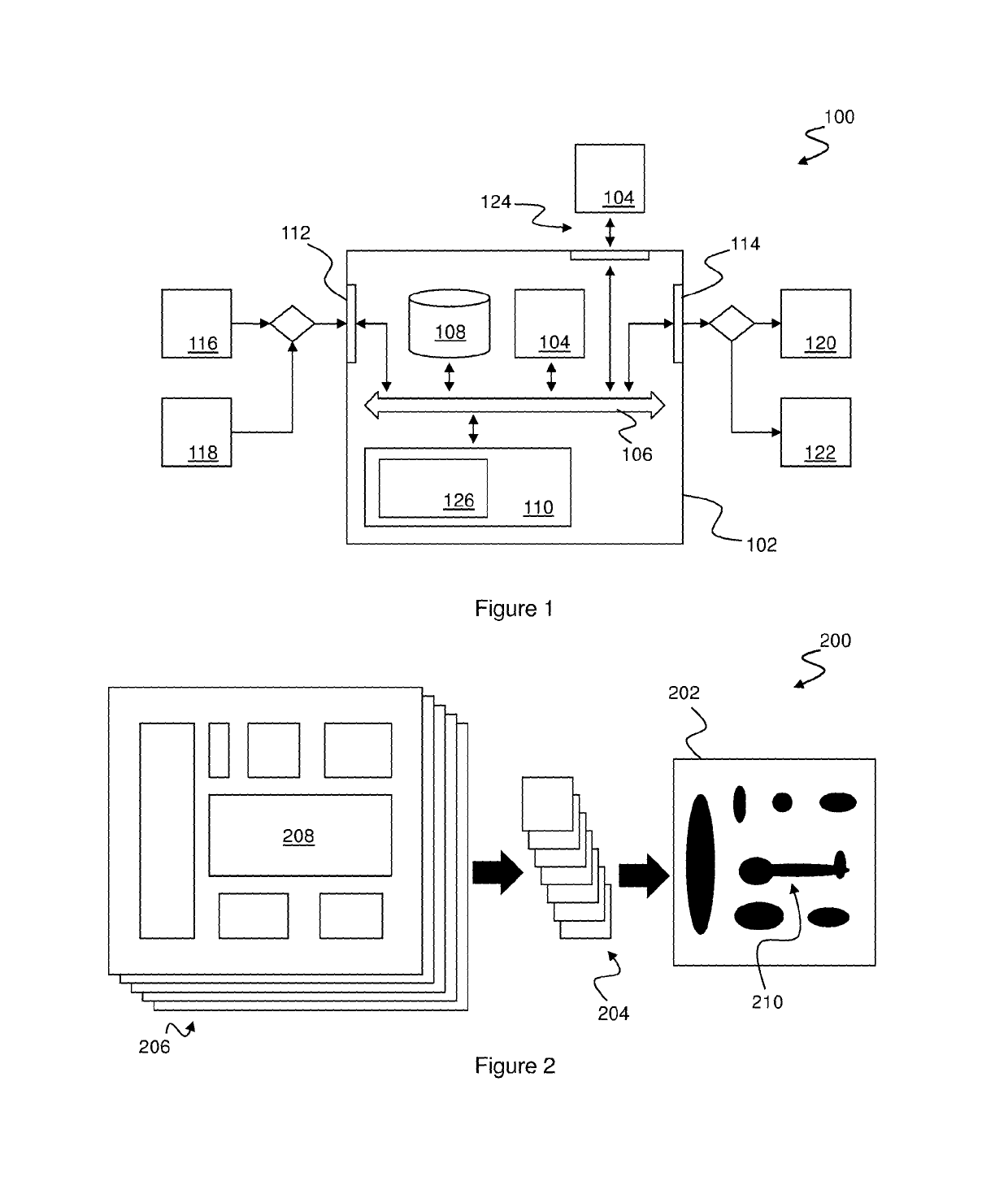
Figure 1 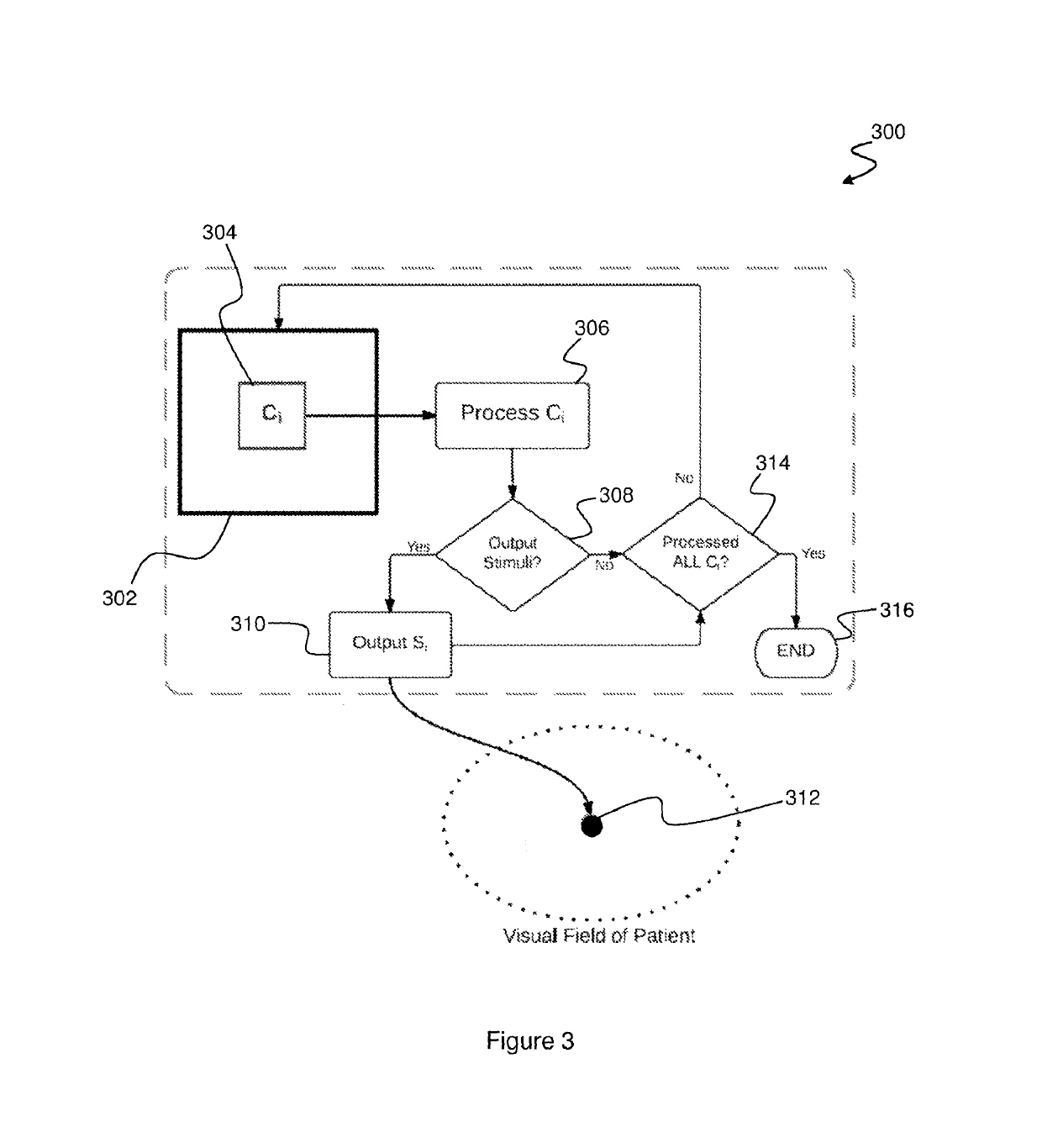
Figure 2 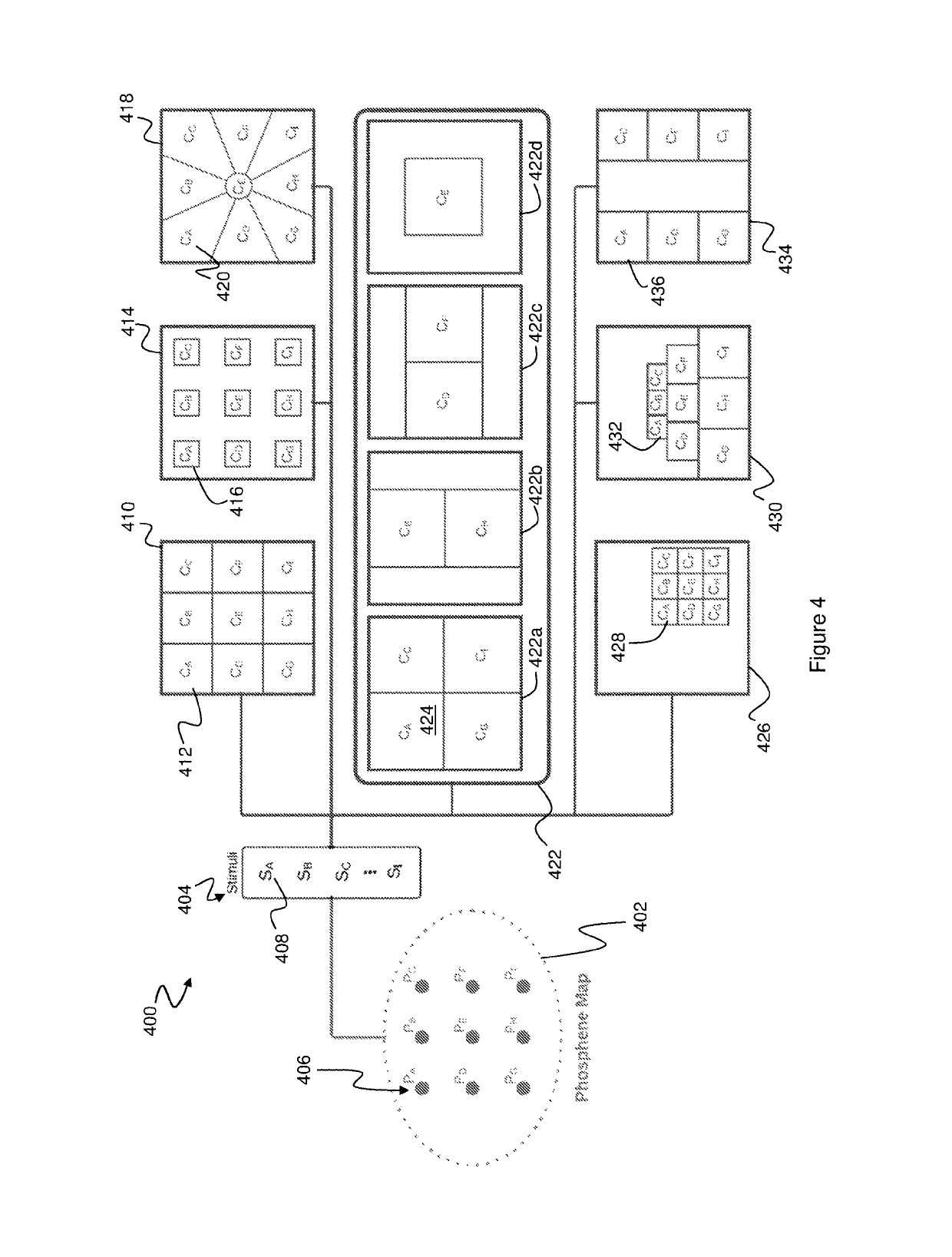
Figure 3
Abstract
Description
CROSS-REFERENCE TO RELATED APPLICATIONS
[0001] This application is the National Stage of International Patent Application No. PCT / AU2015 / 050123, filed Mar. 23, 2015, which claims the benefit of Australian Patent Application No. 2014901055, filed Mar. 25, 2014, the disclosures of which are incorporated herein by reference in their entireties.FIELD OF THE INVENTION
[0002] The present invention relates to visual image processing, and particularly to processing of spatial information for rendering by systems which produce a generally irregular output image. A particular application of the invention is in image processing for prosthetic vision systems (e.g. ‘bionic eyes’).BACKGROUND OF THE INVENTION
[0003] Existing cortical and retinal visual prostheses produce bionic vision by translating imagery from a head worn video camera into spatial-temporal patterns of electrical stimulation of a patient's visual pathway. The stimuli are usually delivered using multiple electrodes configured as an impl...
Examples
Embodiment Construction
[0075]FIG. 1 is a block diagram of a visual image processing system 100 embodying the invention. The system 100 comprises a processing unit 102, which may be a portable or wearable device carried by a patient as part of a prosthetic vision system.
[0076]The processing unit 102 includes a microprocessor 104, which is operatively associated, in use, via an address and data bus 106 with non-volatile memory 108 and volatile memory 110. In a portable device, the non-volatile memory 108 may be Read Only Memory (ROM), flash memory, or the like. If a lower level of portability is required, the non-volatile memory 108 may include a magnetic medium, such as a hard-disk drive. The volatile memory 110 is typically Random Access Memory (RAM), or similar.
[0077]The microprocessor 104 is further associated with at least one sensor input interface 112, and an output interface 114 for generation of stimuli.
[0078]Information provided to the sensor input 112 may be generated from one or more sensors 116...