
Baby sleeping garment
a sleeping garment and baby technology, applied in the field of sleeping garments for babies and infants, can solve the problems of infants at risk of suffocation, difficulty in swaddling infants as they grow older, and waking up
Patent Information
- Authority / Receiving Office
- US · United States
- Patent Type
- Patents(United States)
- Current Assignee / Owner
- Publication Date
- 2020-02-25
Smart Images
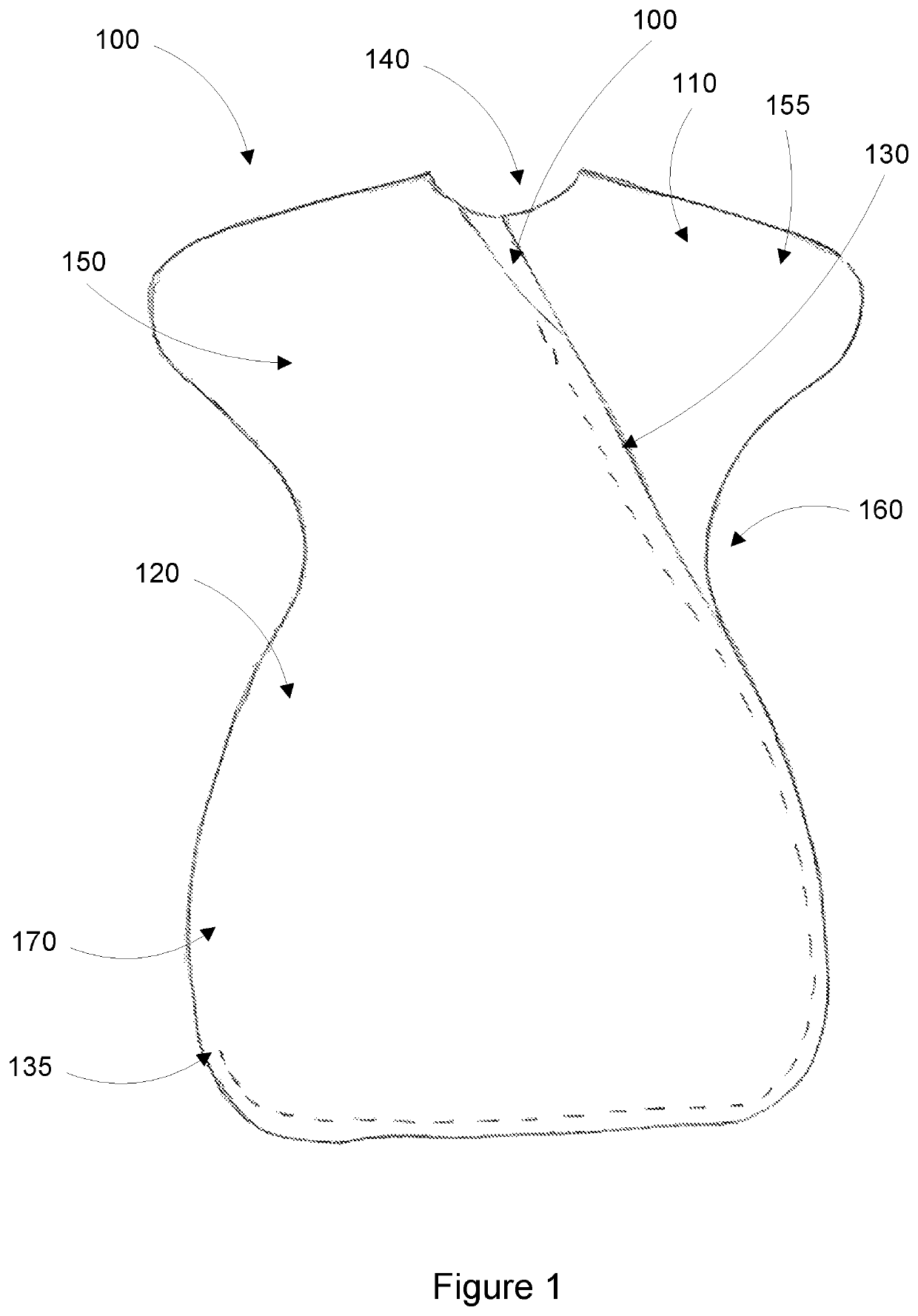
Figure 1 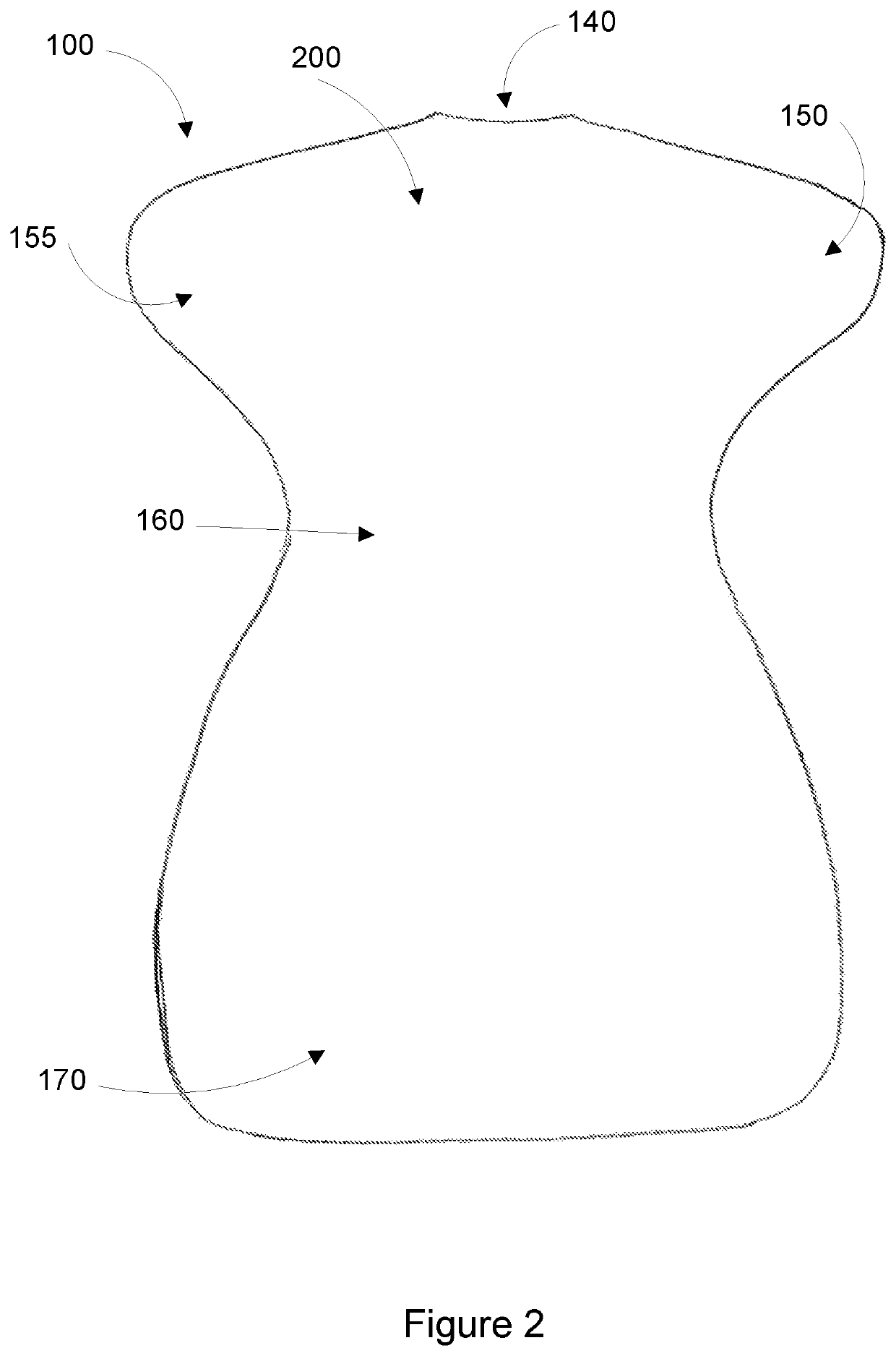
Figure 2 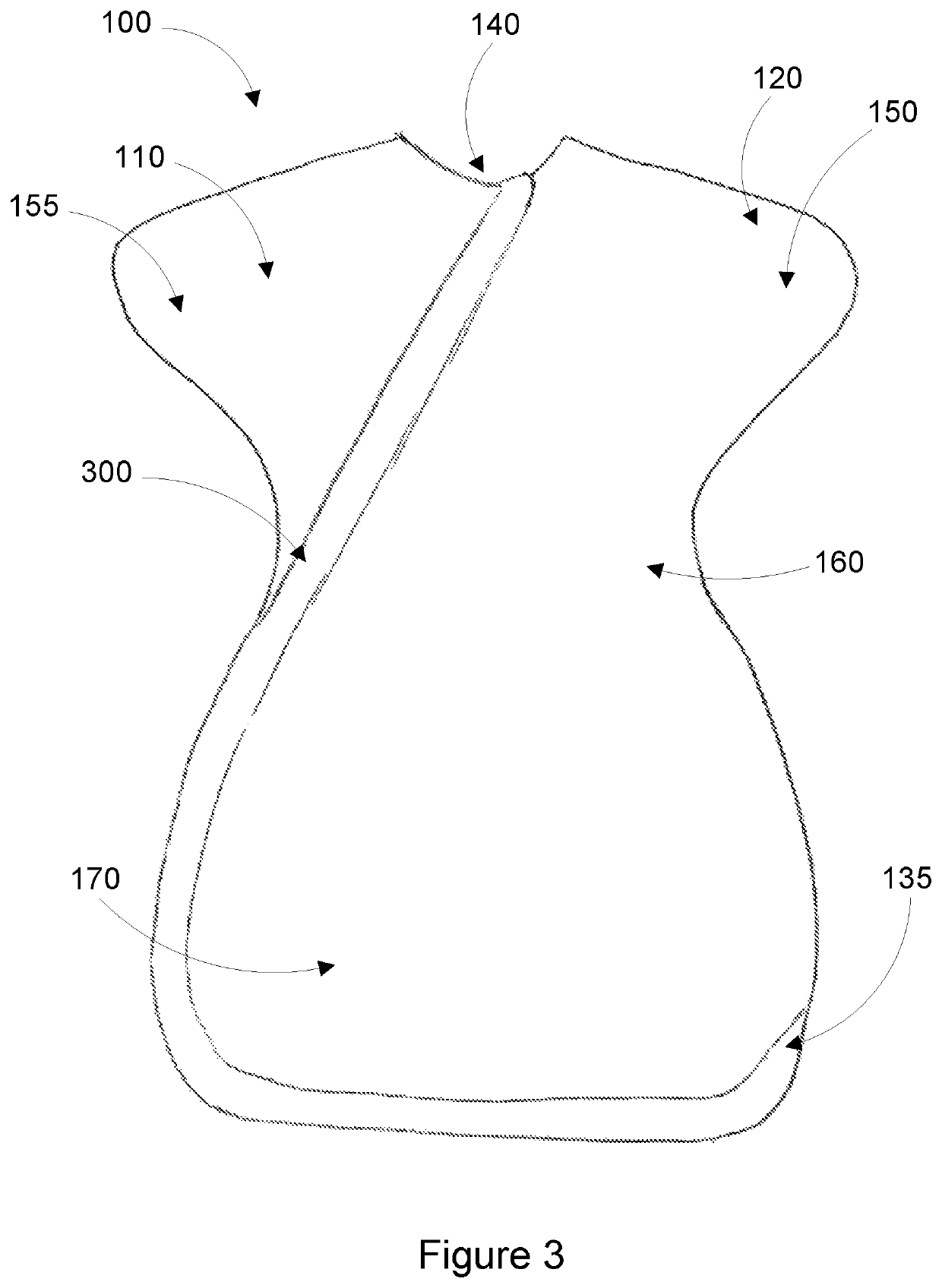
Figure 3
Abstract
Description
CROSS-REFERENCE TO RELATED APPLICATIONThe present application claims priority from Australian Patent Application No. 2016900452 filed Feb. 10, 2016, the disclosure of which is hereby incorporated herein by reference.BACKGROUND OF THE INVENTIONDescribed embodiments generally relate to garments for babies and infants. In particular, described embodiments are directed to sleeping garments for babies and infants.While babies and infants are in a REM state of sleep, they will often experience twitches and jerks, which are known as the startle reflex, or the moro reflex. This may cause the child to flail their arms sidewards and / or upwards before bringing their arms in to their chest in the foetal position. If the child is falling asleep when a startle reflex occurs, they may be caused to wake up.In order to deal with this, babies are often swaddled or wrapped from birth until they grow out of the startle reflex. Babies and infants often find comfort in being swaddled or wrapped up, as it...
Examples
Embodiment Construction
Described embodiments generally relate to garments for babies and infants. In particular, described embodiments are directed to sleeping garments for babies and infants.
FIG. 1 shows a front view of garment 100. Garment 100 may be used as a baby or infant sleep garment designed to help babies and infants transition away from being swaddle wrapped, helping babies and infants to cope better with the ‘startle reflex’ and helping them to sleep better and longer. Garment 100 may allow the wearer to move their arms freely, while still providing an enclosed, secure feeling. This allows the baby to roll over onto their stomach and support themselves with their arms, reducing the risk of suffocation. Garment 100 may be a sleep suit that encloses the wearer from the neck down, and provides a slight resistance to the movement of their arms, allowing them to feel secure, even if they have a startle reflex.
The front of garment 100 is made up of a yoke portion 110 and a body portion 120. Yoke port...