
Ceria-based solid oxide fuel cells
a fuel cell and ceria technology, applied in the field of solid oxide fuel cells, can solve the problems of high cost, high complexity of the fuel cell system, and the inability to commercialize the fuel cell, and achieve the effects of low cost, high power density, and more options for sealing
Patent Information
- Authority / Receiving Office
- US · United States
- Current Assignee / Owner
- Publication Date
- 2002-09-12
- Estimated Expiration
- Not applicable · inactive patent
Smart Images
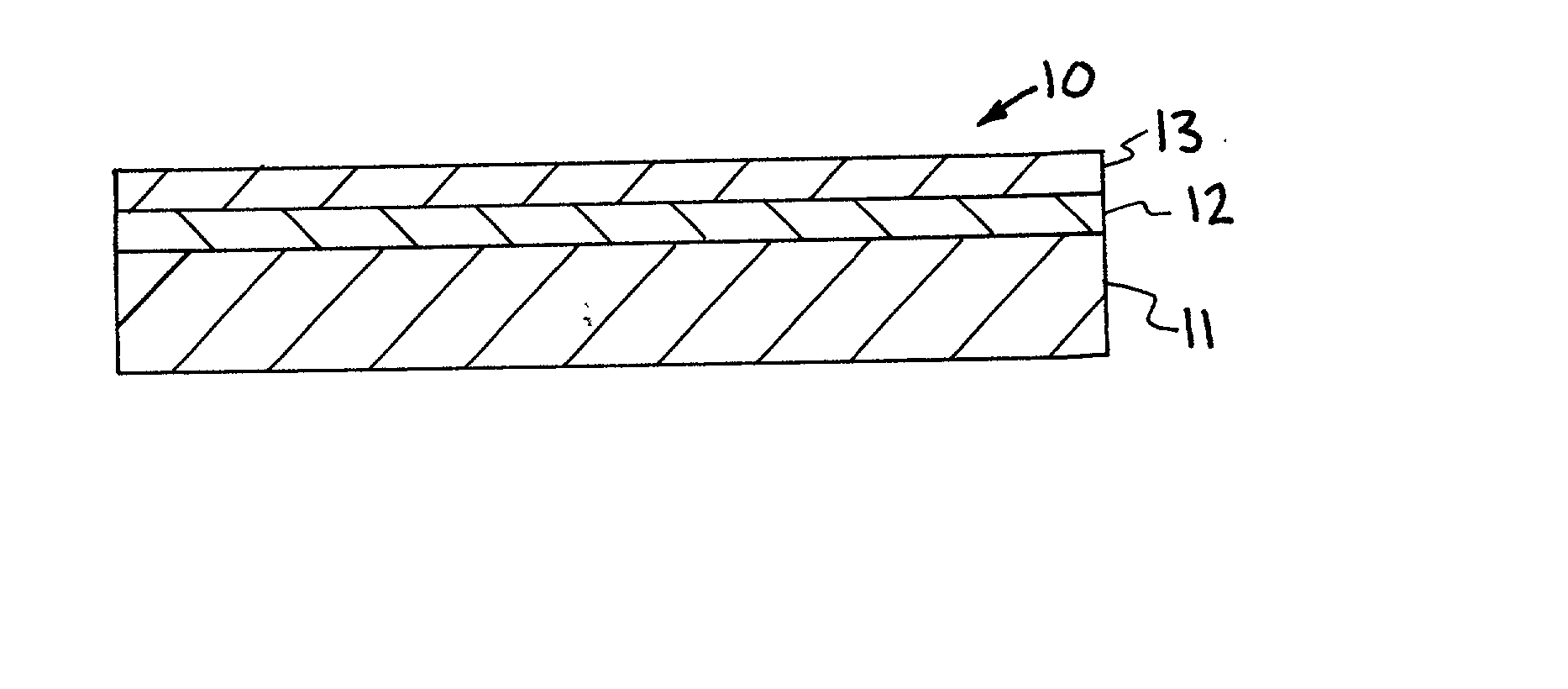
Figure 1 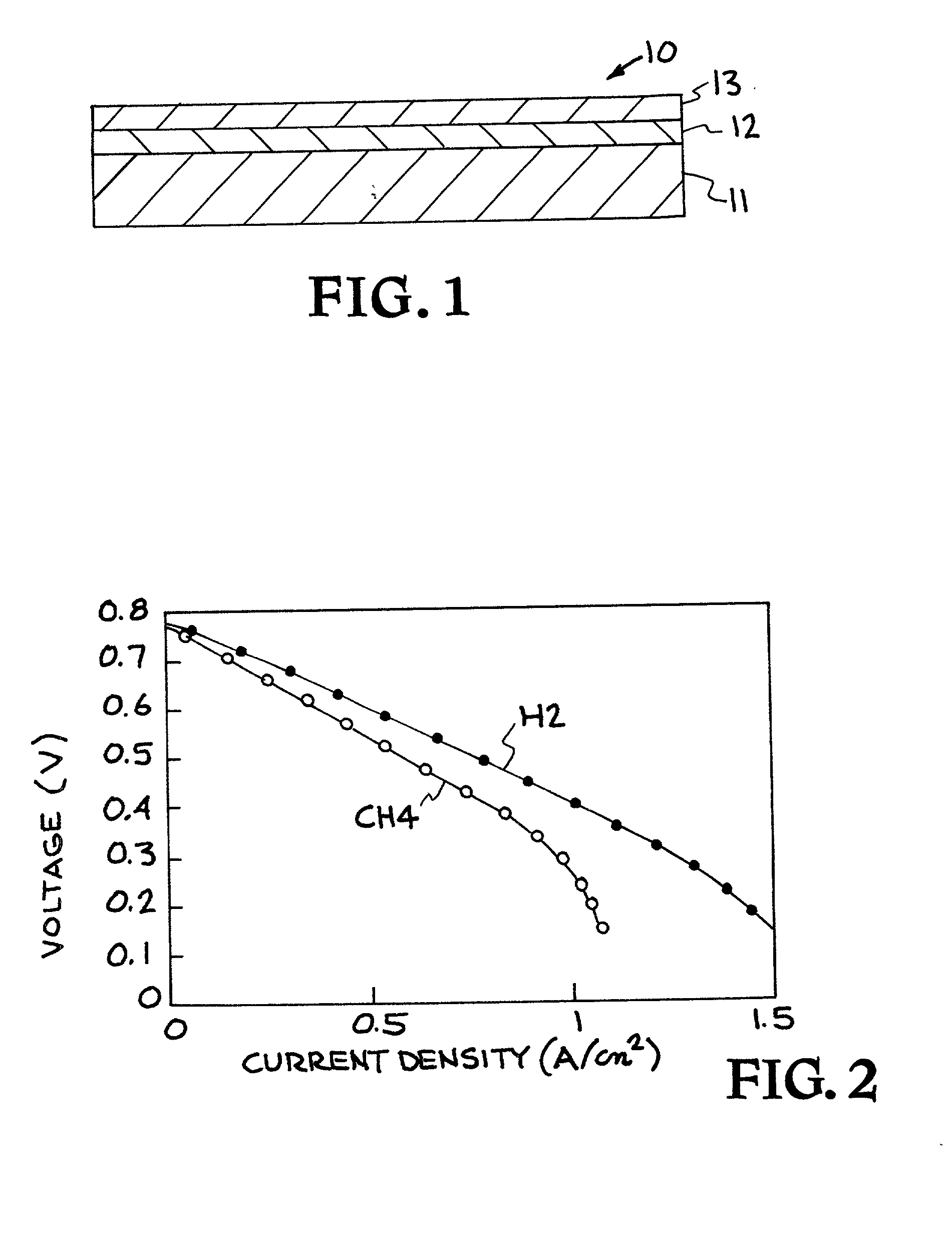
Figure 2 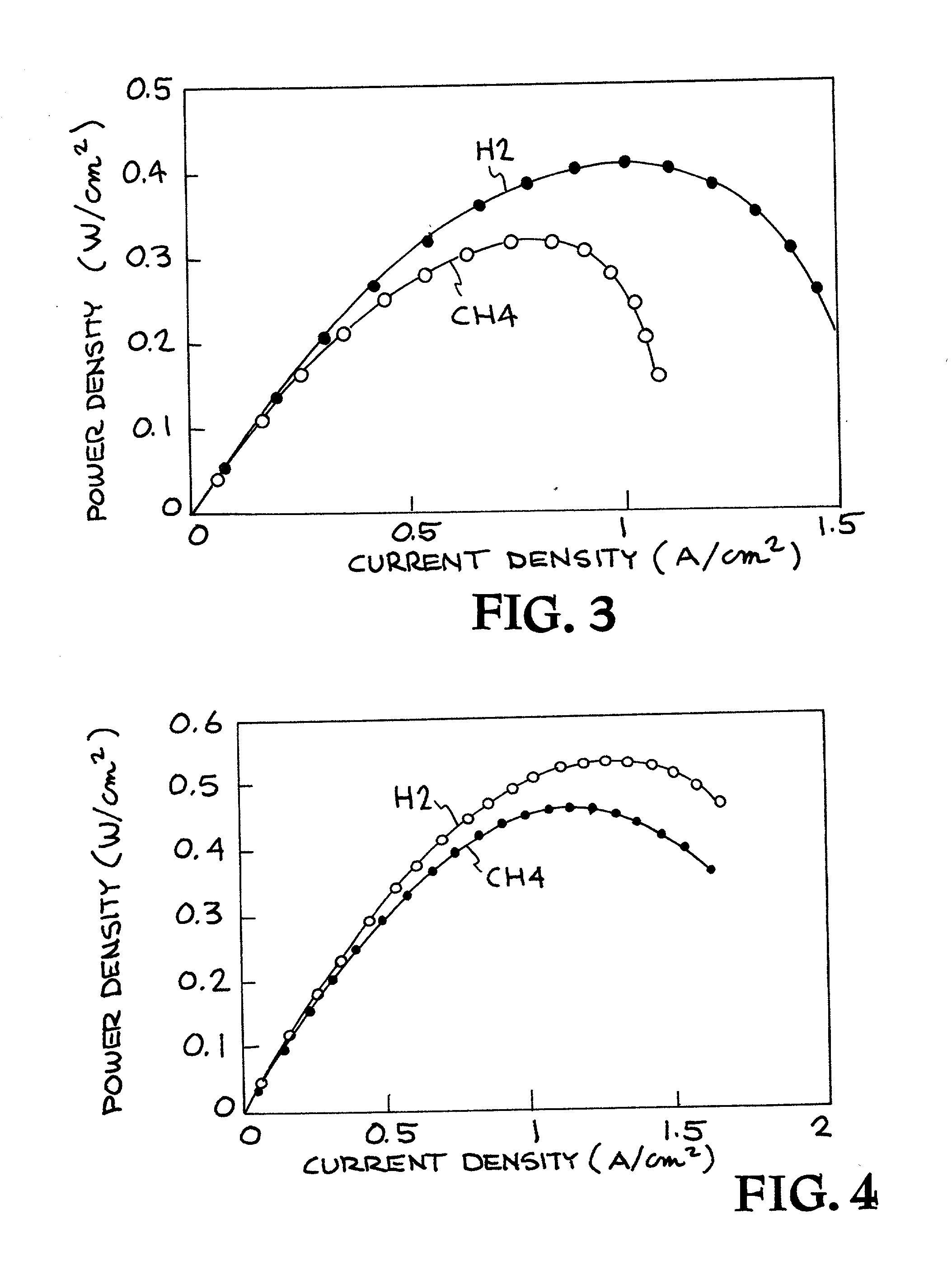
Figure 3
Abstract
Description
RELATED APPLICATION
[0001] The present invention relates to and claims priority under 35 USC 120 to Provisional Application No. 60 / 274200 filed Mar. 8, 2001, entitled "Ceria-Based Solid Oxide Fuel Cells".BACKGROUND OF THE INVENTION
[0003] This invention relates to solid oxide fuel cells (SOFCs), particularly high performance intermediate temperature SOFCs, and more particularly to ceria-based SOFCs with doped-ceria in the anode, and a thin film of doped-ceria as the electrolyte and a cathode composed of cobalt iron based materials, with at least the doped ceria being deposited by colloidal spray deposition.
[0004] SOFCs have attracted much interest because of their high efficiency and low emissions characteristics. However, despite several successful demonstrations by Siemens Westinghouse, the world leader in tubular SOFC technology, SOFCs are still not close to commercialization. This is because of the high cost and of the high complexity of the fuel cell systems.
[0005] Since hydrogen...
Examples
Embodiment Construction
[0022] The invention is directed to ceria-based solid oxide fuel cells operating at intermediate temperatures (400-700.degree. C.). The fuel cells of the present invention have the following advantages:
[0023] 1. The low operating temperature enables direct use of methane without pre-reforming and without risk of carbon deposition, which in turn has the advantages of: a) significant simplification of the fuel cell system, b) reduction of fuel cell system cost by about 30%, and c) higher thermodynamic efficiency.
[0024] 2. Other hydrocarbons can be considered as fuels with much more simplicity, especially methanol, propane, butane, although the direct use may result in some carbon deposition because these gases are less stable than methane, the low temperature will reduce the need for large excess of steam.
[0025] The fuel cell of this invention is illustrated in FIG. 1, wherein the basic structure of the cell, indicated generally at 10, comprises a thick anode 11, a thin film electroly...