
Container comprising edible manifold
a container and edible technology, applied in the field of edible containers, can solve the problems of limited overall shape and size of products, and achieve the effects of low density, small mass, and good tas
Patent Information
- Authority / Receiving Office
- US · United States
- Current Assignee / Owner
- Publication Date
- 2003-03-06
- Estimated Expiration
- Not applicable · inactive patent
Smart Images
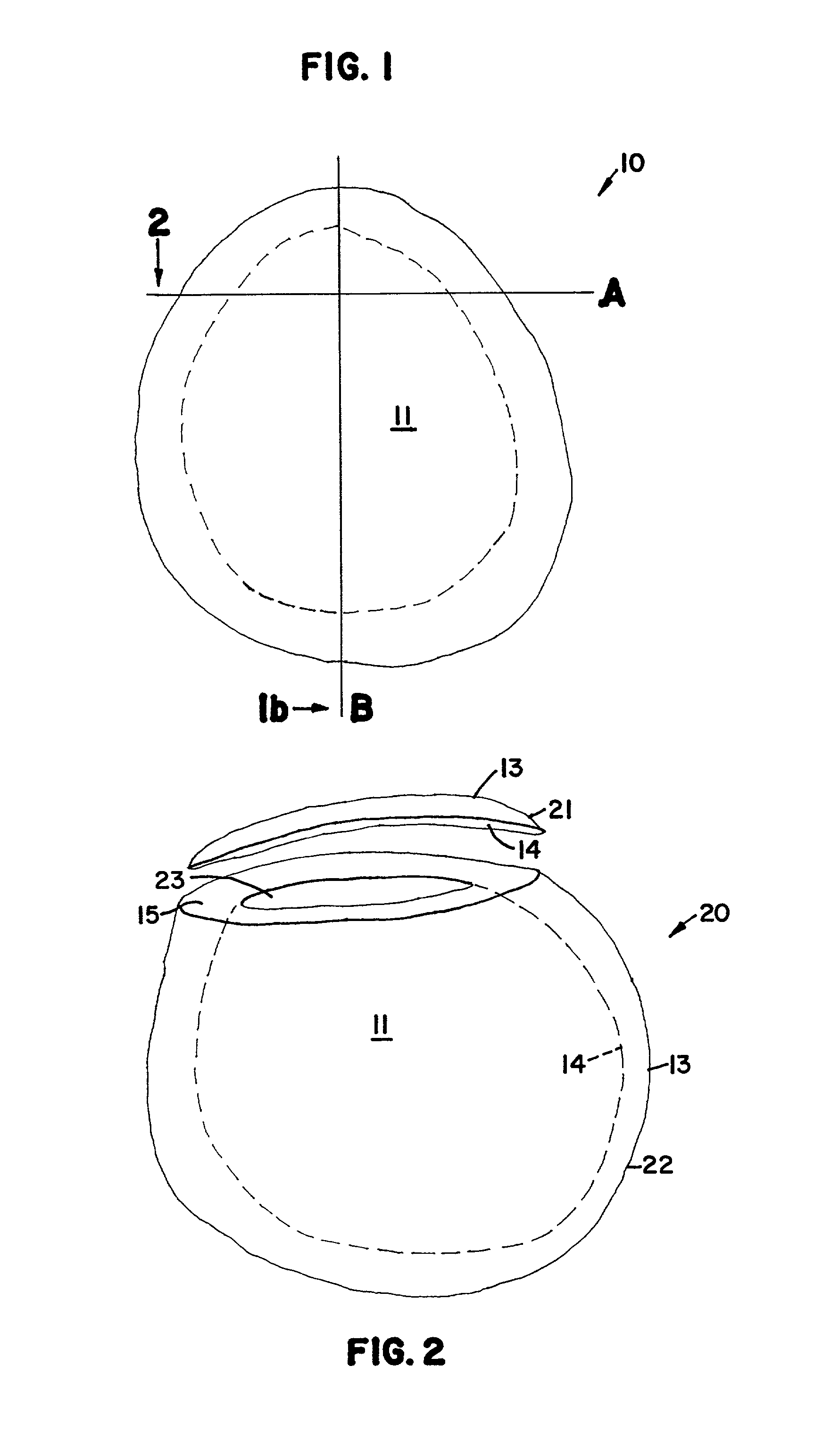
Figure 1 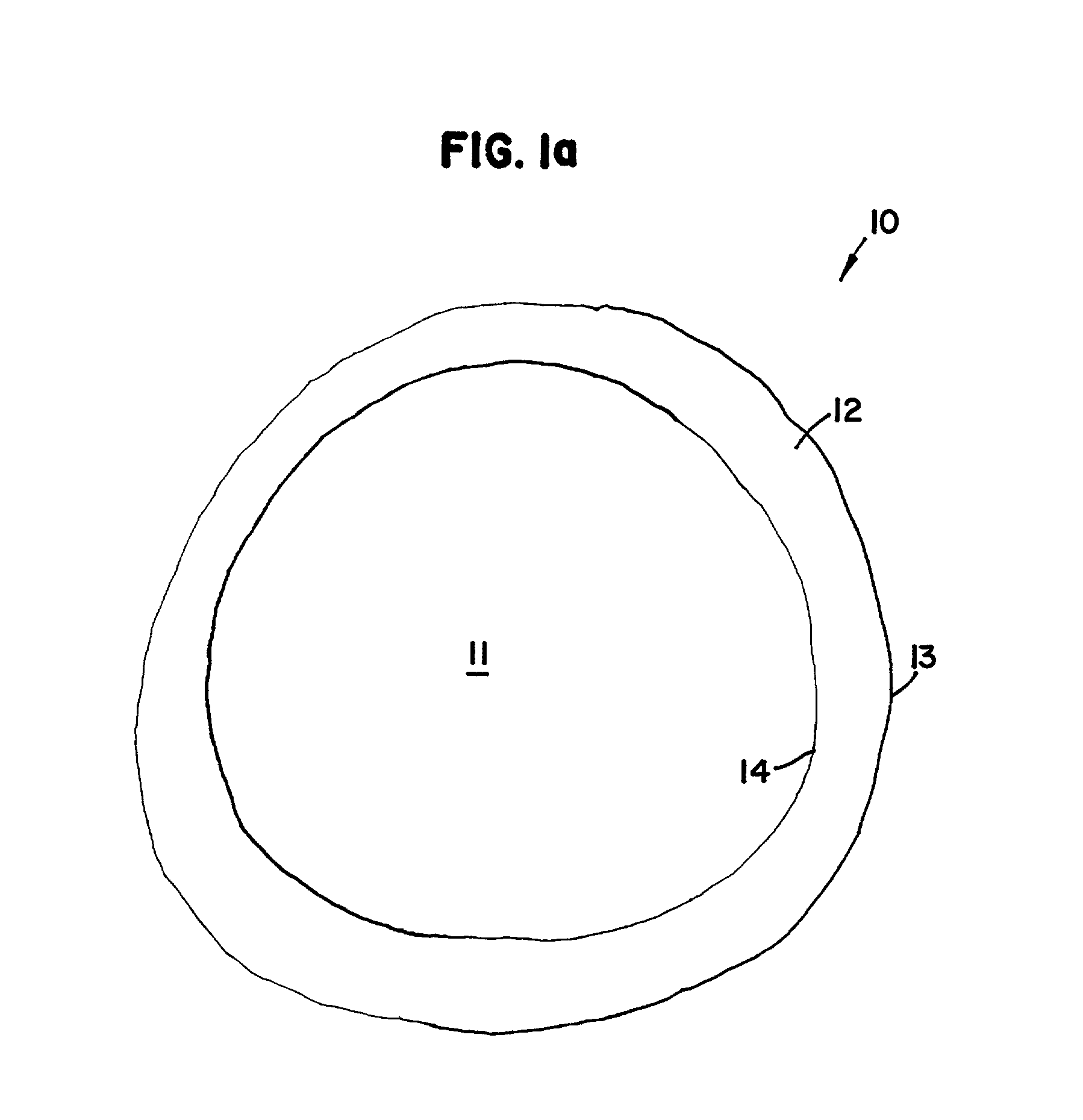
Figure 2 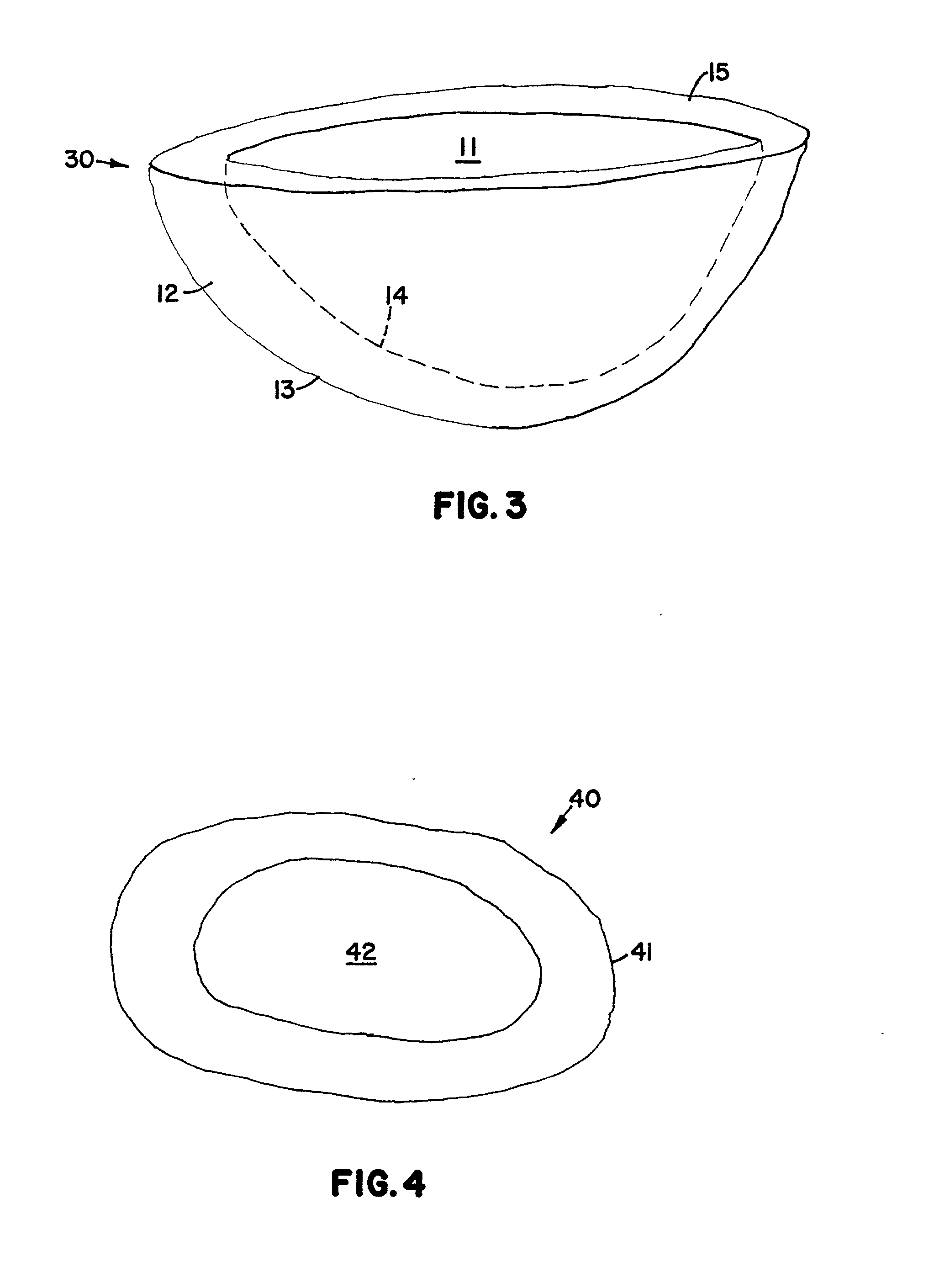
Figure 3
Abstract
Description
[0001] This application claims the benefit of provisional patent application Serial No. 60 / 301,645, filed on Jun. 28, 2001.
[0002] The invention relates to a consumable baked or parbaked manifold that can be formed into a enclosed edible form or shape surrounding a void space. The container can be opened and filled with a food. The shape or volume can be adapted for containing at least an appetizer, a single or individual serving-sized portion or two or more such portions of a food. Such foods can include breakfast, lunch, dinner, brunch, snacks, soups, stews, salads, chili, chicken salad, ham salad, poached eggs, scrambled eggs, desserts, fruit fillings, etc.
[0003] Cup or bowl shaped edible containers have become common over the last few years. One type of edible container, made from a dough forming a bread-like container has been used for containing salads, soups and other comestible materials. Such bread bowls can be made by forming dough into a bowl-shaped structure and then baki...
Examples
example 2
Chemical Leavening Method
[0067] 1. Pre-weigh ingredients.
2 Patent Flour 1300.0 g Salt 12.4 g Sugar 26.0 g Instant Dry Yeast 20.0 g Pastry Shortening 52.0 g Water 750.0 g
[0068] 2. Add ingredients into an 8 L stainless steel mixing bowl.
[0069] 3. Mix dough on low setting (100) for 2 minutes and medium setting (200) for 7 minutes in a Welbilt Varimixer (model W20A) with spiral mixing arm.
[0070] 4. Cut dough into 100 g samples (60 g-174 g).
[0071] 5. Round dough balls.
[0072] 6. Allow dough balls to rest for 5 minutes.
[0073] 7. Press dough into a thin sheet (about 6" diameter and .+-.2" thick).
[0074] 8. Shape dough sheet into shallow cup (about 2" diameter with 2" tall lips).
[0075] 9. Place thin layer of water around outer edge (to aid in sealing).
[0076] 10. Form slurry by mixing 3.0 g double action baking powder (DABP) and 3.0 g water.
[0077] 11. Add slurry into center of dough cup.
[0078] 12. Seal edges so no leaks occur.
[0079] 13. Optionally proof the dough balls for 0-45 minutes at 90.d...
example 3
Air Injection Method
[0083] 1. Pre-weigh ingredients.
3 Patent Flour 1300.0 g Salt 12.4 g Sugar 26.0 g Instant Dry Yeast 20.0 g Pastry Shortening 52.0 g Water 750.0 g
[0084] 2. Add ingredients into an 8 L stainless steel mixing bowl.
[0085] 3. Mix dough on low setting (100) for 2 minutes and medium setting (200) for 7 minutes in a Welbilt Varimixer (model W20A) with spiral mixing arm.
[0086] 4. Cut dough into 174 g samples.
[0087] 5. Round dough balls.
[0088] 6. Allow dough balls to rest for 5 minutes.
[0089] 7. Press dough into a thin sheet (about 6" diameter and 12" thick).
[0090] 8. Shape dough sheet into shallow cup (about 2" diameter with 2" tall lips).
[0091] 9. Insert a straw into center of cup. Wrap edges of dough tight around straw.
[0092] 10. Take a deep breath and blow air into the dough using the straw. Inflate to desired volume (about 6" diameter sphere).
[0093] 11. Remove straw and seal exit hole so no leaks occur.
[0094] 12. Place inflated dough balls on baking sheet.
[0095] 13. Ba...
example 4
Co-Extrusion Method
[0097] 1. Prepare Rheon KN400 encrusting machine by installing the 24 mm inner nozzle, 50 mm outer nozzle, and 4YD2 encrusting shutter. Remove all piping for the inner filling port and leave it open to the atmosphere.
[0098] 2. Pre-weigh ingredients.
4 Patent Flour 30.09 lb Salt 0.29 lb Sugar 0.60 lb Instant Dry Yeast 0.46 lb Pastry Shortening 1.20 lb Water 17.36 lb
[0099] 3. Add ingredients into an stainless steel mixing bowl.
[0100] 4. Mix dough on low setting for 200 sec and high setting for 600 see in a VMI SPI 120FE mixer with spiral mixing arm.
[0101] 5. Rest dough for 15 minutes.
[0102] 6. Add dough into the hopper on Rheon KN400 encrusting machine.
[0103] 7. Set Rheon controls to 40.0 / 0.0 / 3.0 / 20 (dough / filling / shutter / bel-t)
[0104] 8. Turn on the Rheon. The vane pump will fill with dough and it will start flowing through the outer nozzle.
[0105] 9. Hand dump 2.0 g of dry ice into the inner filling port. Time the addition to coincide with the encrusting shutter moti...