
Apparatus and method of treating fine powders
Patent Information
- Authority / Receiving Office
- US · United States
- Current Assignee / Owner
- Publication Date
- 2004-03-18
- Estimated Expiration
- Not applicable · inactive patent
Smart Images
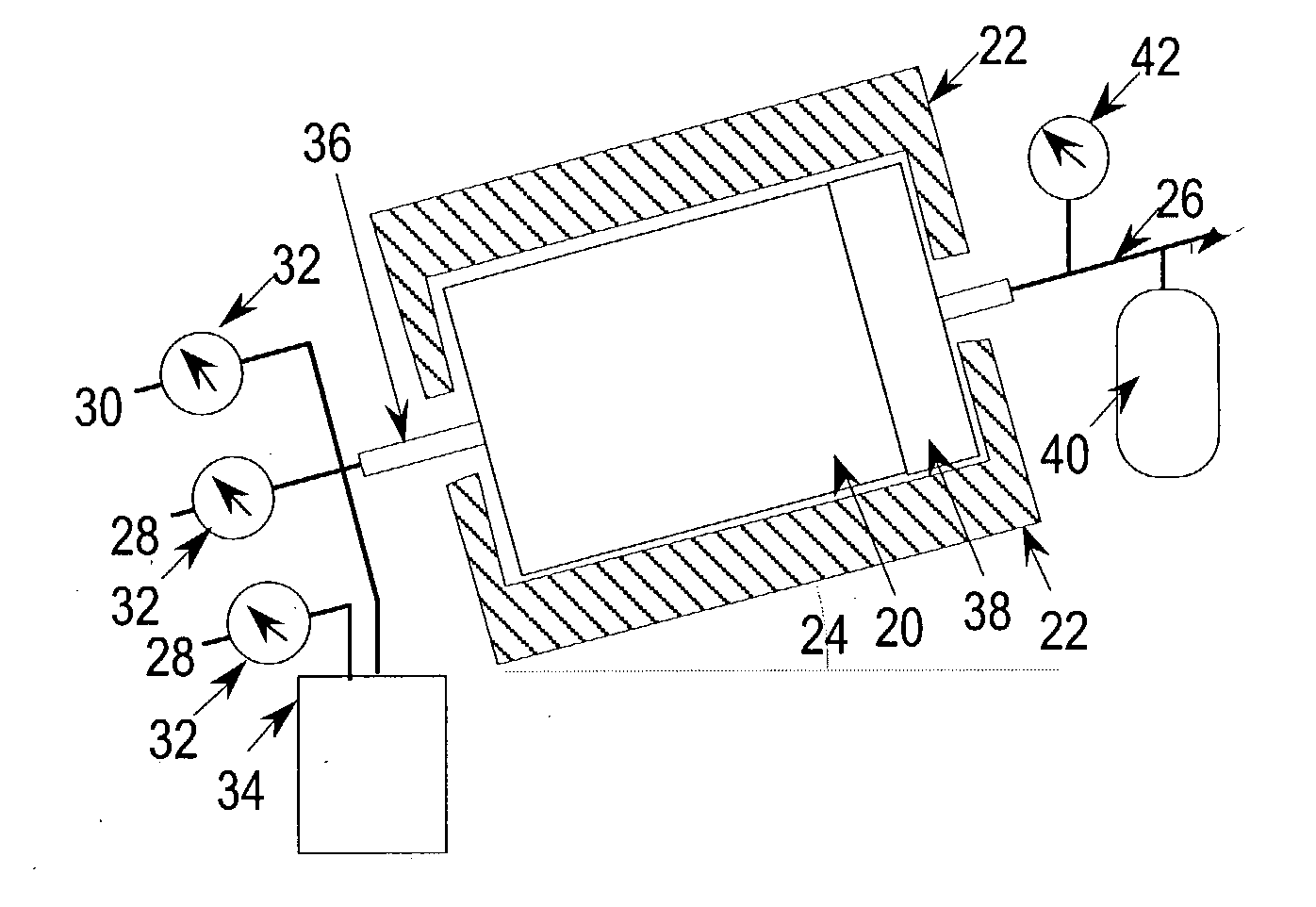
Figure 1 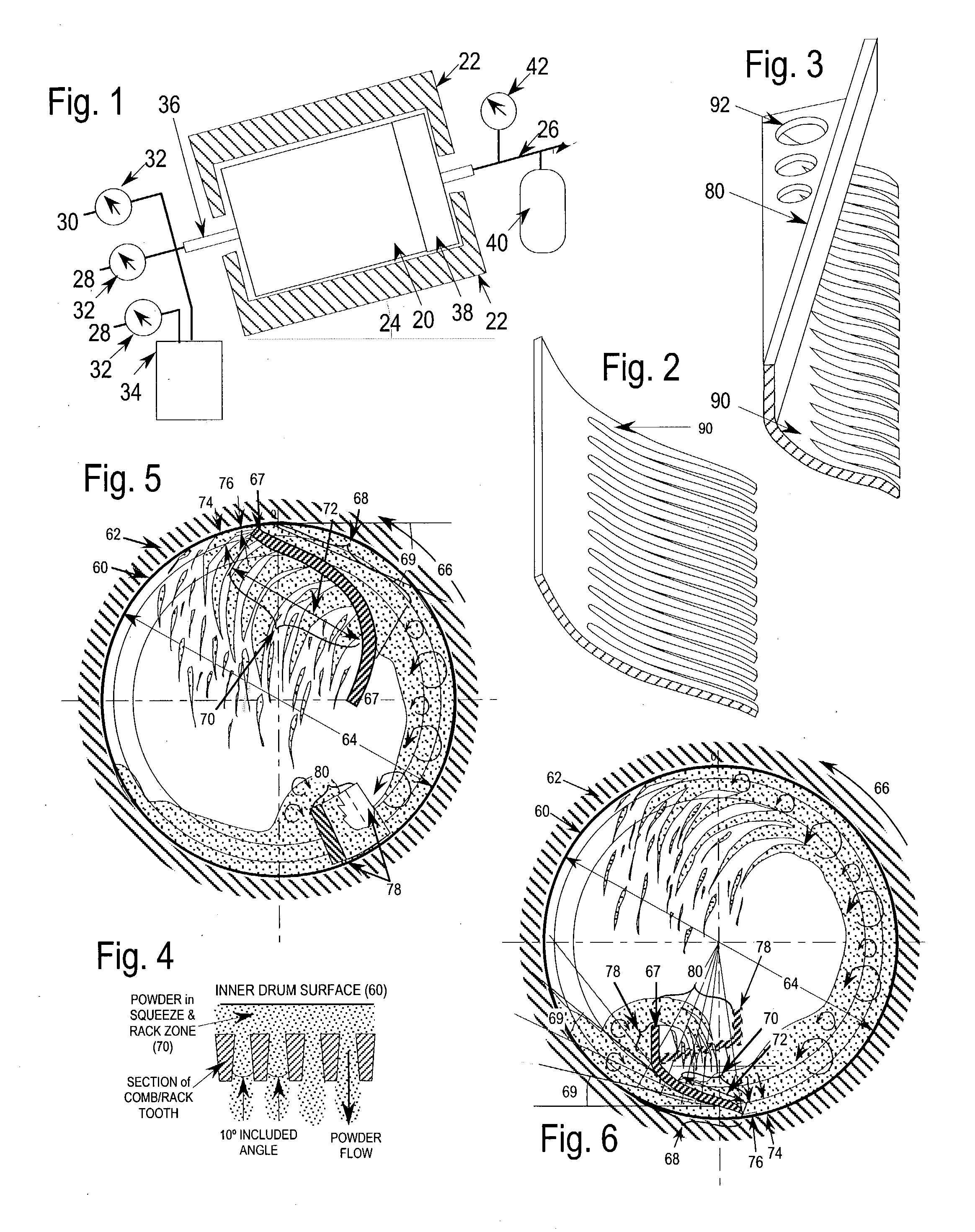
Figure 2
Abstract
Description
[0001] This application is a continuation-in-part of U.S. Application No. 10 / 079,504, filed on Feb. 22, 2002, which is a divisional application of U.S. application Ser. No. 09 / 423,229, filed on Feb. 29, 2000, now U.S. Pat. No. 6,372,346, which is the national stage filing of PCT / US98 / 09767, filed May 13, 1998, which claims priority under 35 U.S.C. .sctn.119(e) to U.S. provisional application number 60 / 046, 885 filed May 13, 1997, the subject matter of which is incorporated by reference herein.
[0002] 1. Field of the Invention
[0003] The invention relates to the treatment, and particularly the encapsulation and deagglomeration of particles previously difficult to coat in a fluidized bed, for example, because of the size and / or density of the particles. Such particles generally comprise metal, binder, ceramic, refractory, or polymer with a coating or coatings of metal, binder, ceramic, sintering aid, or polymer.
[0004] 2. Background Of The Invention
[0005] Encapsulated powders have been p...
Examples
Embodiment Construction
[0096] The apparatus hereinabove described was employed to effect CVD coating of W.sub.2C on TiN powder to create TCHP. The reactor was tilted on its rotational axis at 15 degrees and the combined rack and guide was operated with a 20.degree. helix angle and with the comb fixed at a squeeze angle of generally between about 13 and about 60 degrees. The final angle used was approximately 60 degrees. A suitable amount of TiN core powder was introduced into the chamber of the graphite reactor. The system was purged, hydrogen flow initiated, and the internal pressure adjusted to 11.25 Torr. Power was then supplied to the electric furnace to bring the drum of the reactor, rotating at 90 revolutions per minute, to a temperature of about 550.degree. C., for about one hour. The flow meters for the WF.sub.6 supply and the cumene bubbler were then opened to provide a molar ratio of the reactants suitable for the deposit of W.sub.2C on the TiN substrate powder. The bubbler operated at 20.degree...