
Information processing method for disease stratification and assessment of disease progressing
a technology of information processing and disease progress, applied in the field of disease stratification, can solve the problems of ambiguity in how to stage a particular patient, rare complete models are available, acute rejection and kidney loss, etc., and achieve the effect of reducing the time spent repetitively
Patent Information
- Authority / Receiving Office
- US · United States
- Patent Type
- Applications(United States)
- Current Assignee / Owner
- Publication Date
- 2004-12-02
- Estimated Expiration
- Not applicable · inactive patent
Smart Images
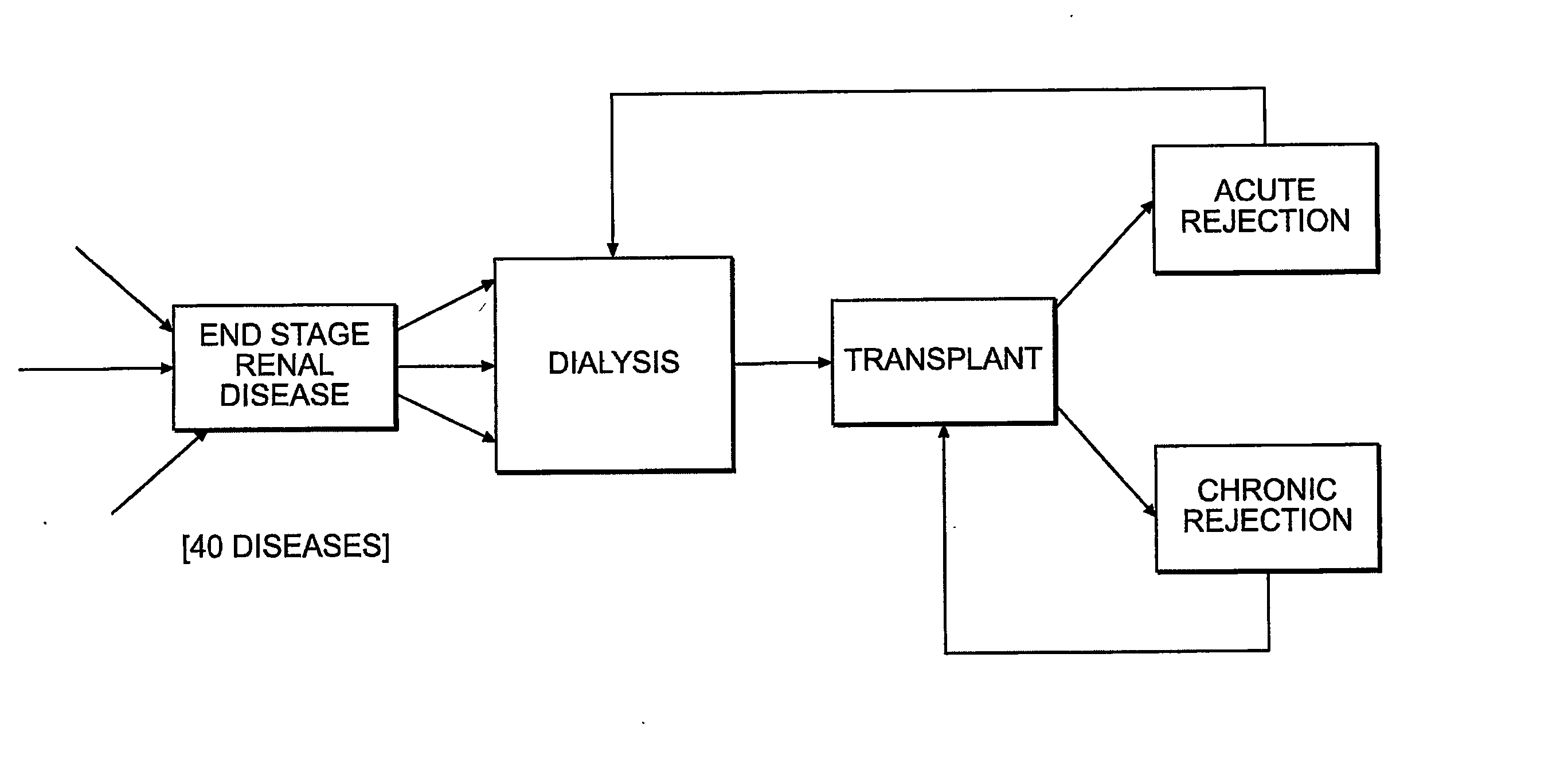
Figure 1 
Figure 2 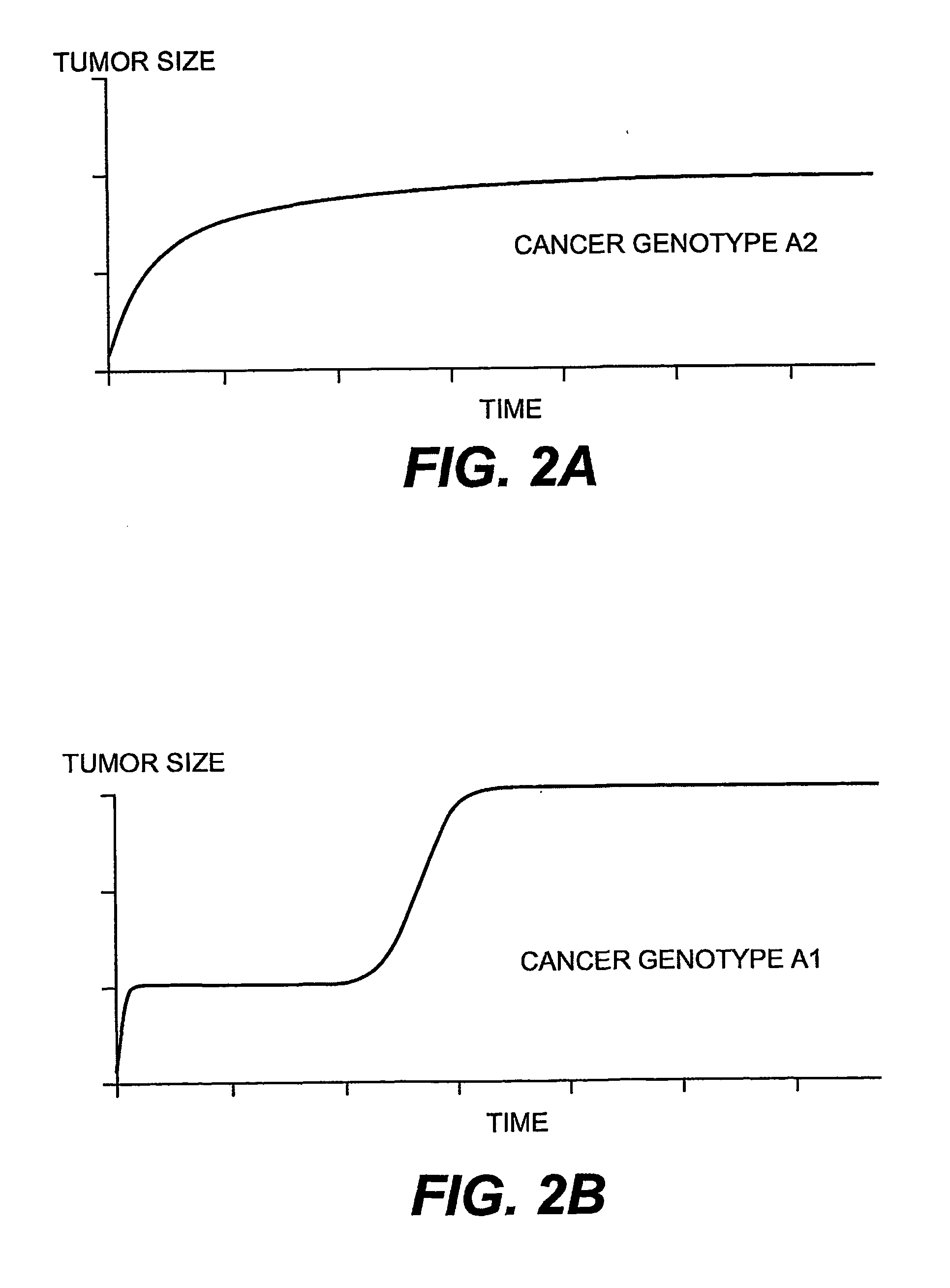
Figure 3
Abstract
Description
[0001] The application claims priority to U.S. Provisional Patent Application Ser. No. 60 / 294,638 filed on Jun. 1, 2001.
[0002] 1. Field of the Invention
[0003] This invention relates generally to the field of disease stratification which can be used in predictive medicine to assess disease progression in response to certain factors when taking into consideration a particular patient's biological and genetic background.
[0004] 2. Description of the Related Art
[0005] Modem medicine makes use of disease-specific knowledge to: (a) select the best and most cost-effective therapy for an individual patient; and (b) guide the development of: (i) the next generation of diagnostics, (ii) therapeutic drugs, (iii) health-care products, and (iv) lifestyle recommendations. Knowledge about a particular patient is derived from observations of that patient. These observations may include family history, findings from a physical examination, blood and urine test results, imaging studies such as MRI and...
Examples
Embodiment Construction
#1
[0084] Data for modeling were taken from public files for the Diabetes Control and Complications Trial, which are available via ftp on the Internet at gcrc.umn.edu / pub / dcct / . Records for 730 patients in the Standard treatment group were used, since the patients in the Experimental treatment group were artificially "synchronized" by the intervention of the trial. For each patient, ten annual measurements were extracted for four variables (i.e., I=1 . . . 730, j=1 . . . 4, k=1 . . . 10): (a) Hemoglobin A1C (a measure of blood-glucose control); (b) Retinopathy (ETDRS scale scores from fundus photographs, the fundus being the part of an eyeball); (c) Motor Nerve Velocity; and (d) Sensory Nerve Velocity. The latter two values are measures of peripheral neuropathy, another complication of diabetes. Missing values were filled from the most recent previous available value.
[0085] The algorithm previously described was used to cluster the patients into strata by employing time shifts to ali...