

Hydro-mechanically coupled electric power steering system
a technology of electric power steering and mechanical coupling, which is applied in the direction of power steering, vehicle components, fluid steering, etc., can solve the problems of fluid pressure spike that is transmitted to the steering wheel, undesirable impulse to the steering wheel of the host vehicle, etc., and achieve the effect of improving the steering feel
Patent Information
- Authority / Receiving Office
- US · United States
- Patent Type
- Applications(United States)
- Current Assignee / Owner
- Publication Date
- 2006-02-16
- Estimated Expiration
- Not applicable · inactive patent
Smart Images
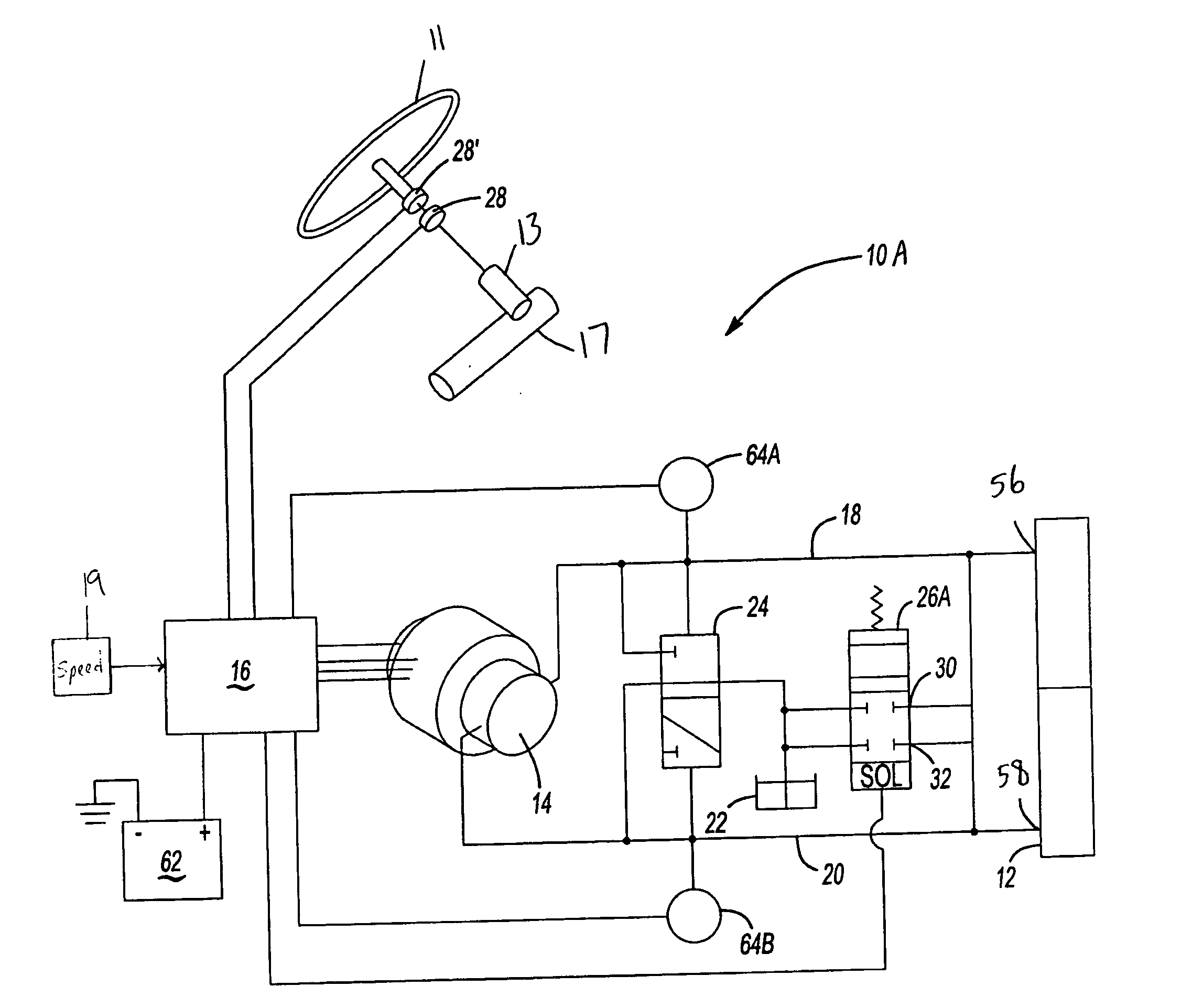
Figure 1 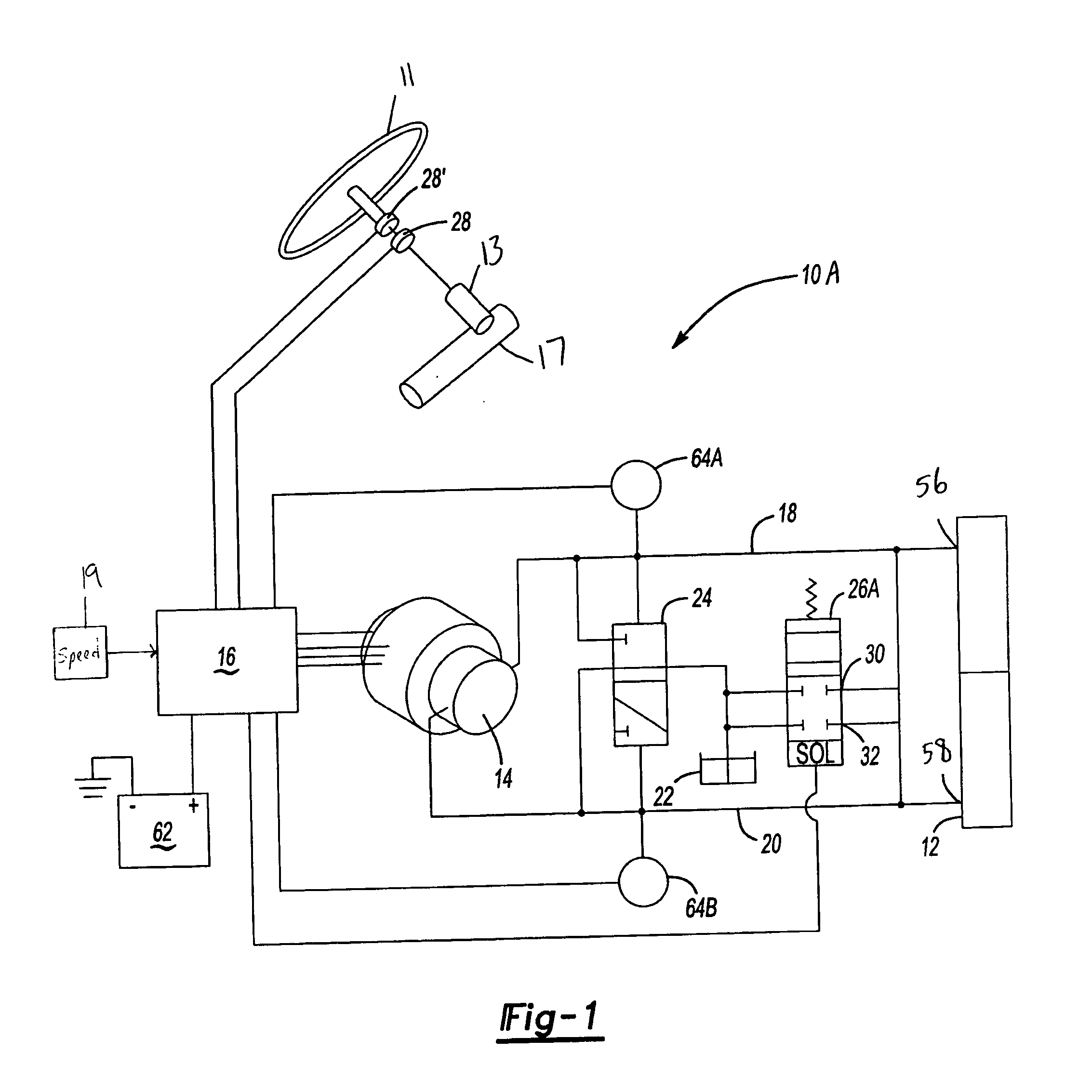
Figure 2 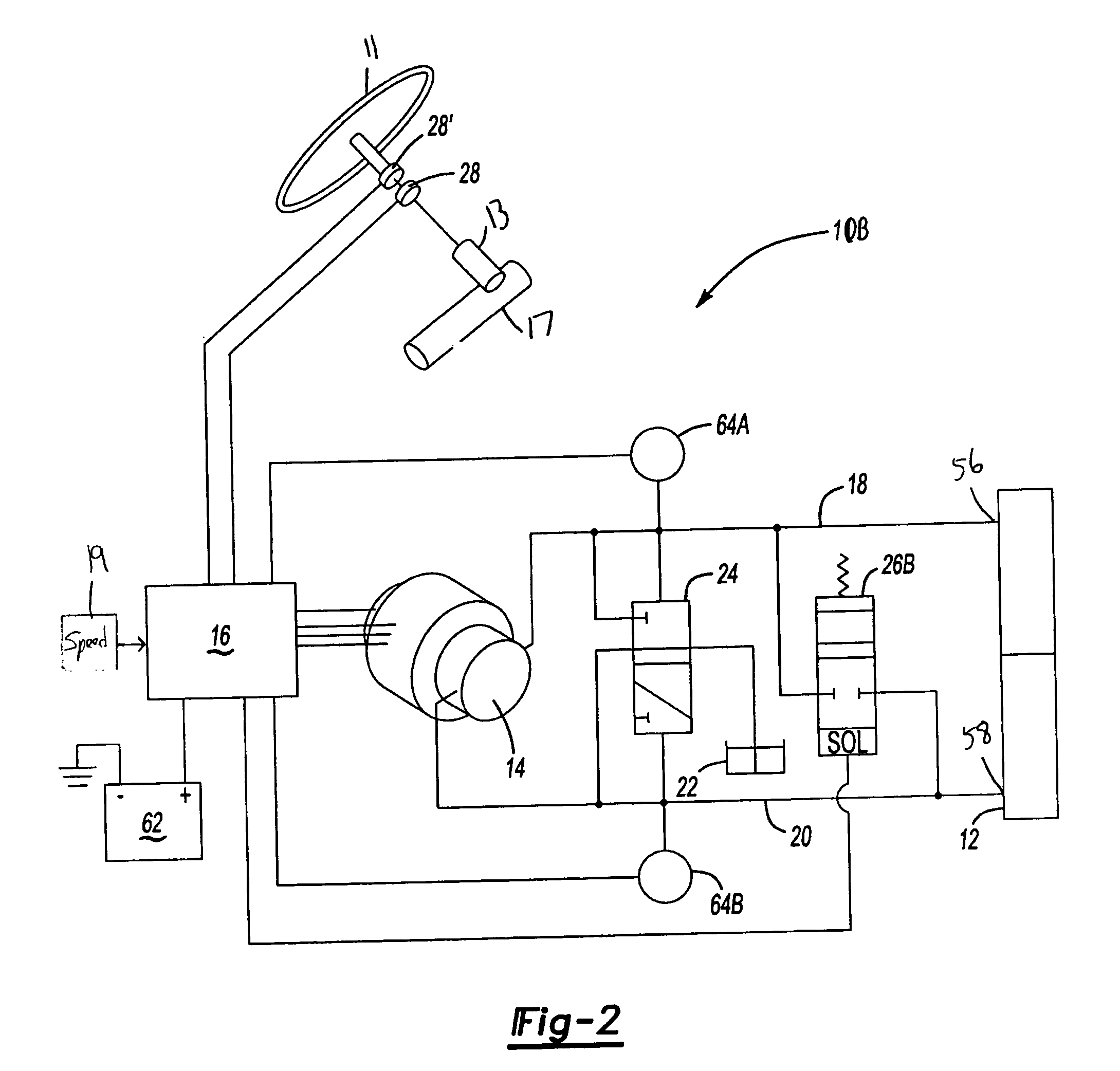
Figure 3
Abstract
Description
[0001] This application claims priority to U.S. Provisional Application Ser. Nos. 60 / 602,027, filed Aug. 16, 2004 and 60 / 672,387, filed Apr. 18, 2005.BACKGROUND OF THE INVENTION
[0002] The present invention relates generally to power steering systems for vehicles, and more particularly to hydro-mechanically coupled electrically powered steering systems.
[0003] Currently it is anticipated that an overwhelming majority of vehicular power steering systems will be electrically powered in the future. Most common will be electric power steering systems (hereinafter “EPS systems”) wherein motors deliver torque as a function of current applied to them by a controller. One example is described in U.S. Pat. No. 6,152,254, entitled “Feedback and Servo Control for Electric Power Steering System with Hydraulic Transmission,” issued Nov. 28, 2000, which is hereby incorporated by reference in its entirety. In that EPS system differential pressure is directly delivered to a double-acting power cyli...
Examples
Embodiment Construction
[0016] One example of a hydro-mechanically coupled power steering system 10A is shown schematically in FIG. 1. FIG. 1 depicts most of the elements of the hydro-mechanically coupled power steering system of the '254 patent. A steering wheel 11 is connected to the steerable wheels (not shown) by a suitable steering gear 13 engaged (directly or indirectly) with a gear rack 17. A torque sensor 28 is connected to the steering wheel 11 and generates an electrical or electronic signal representative of the magnitude and direction of a steering torque applied to the steering wheel 11. A secondary torque sensor 28′ provides a redundant torque signal utilized in a fail-safe function for the power steering system 10A. The application of an applied steering torque to the steering wheel 11, as sensed by the torque sensor 28, results in the application by the power steering system 10A of an assisted steering force to the steerable wheels.
[0017] The power steering system 10A includes a power cyli...