
Serverless peer-to-peer multi-party real-time audio communication system and method
Patent Information
- Authority / Receiving Office
- US · United States
- Current Assignee / Owner
- Publication Date
- 2006-08-24
Smart Images
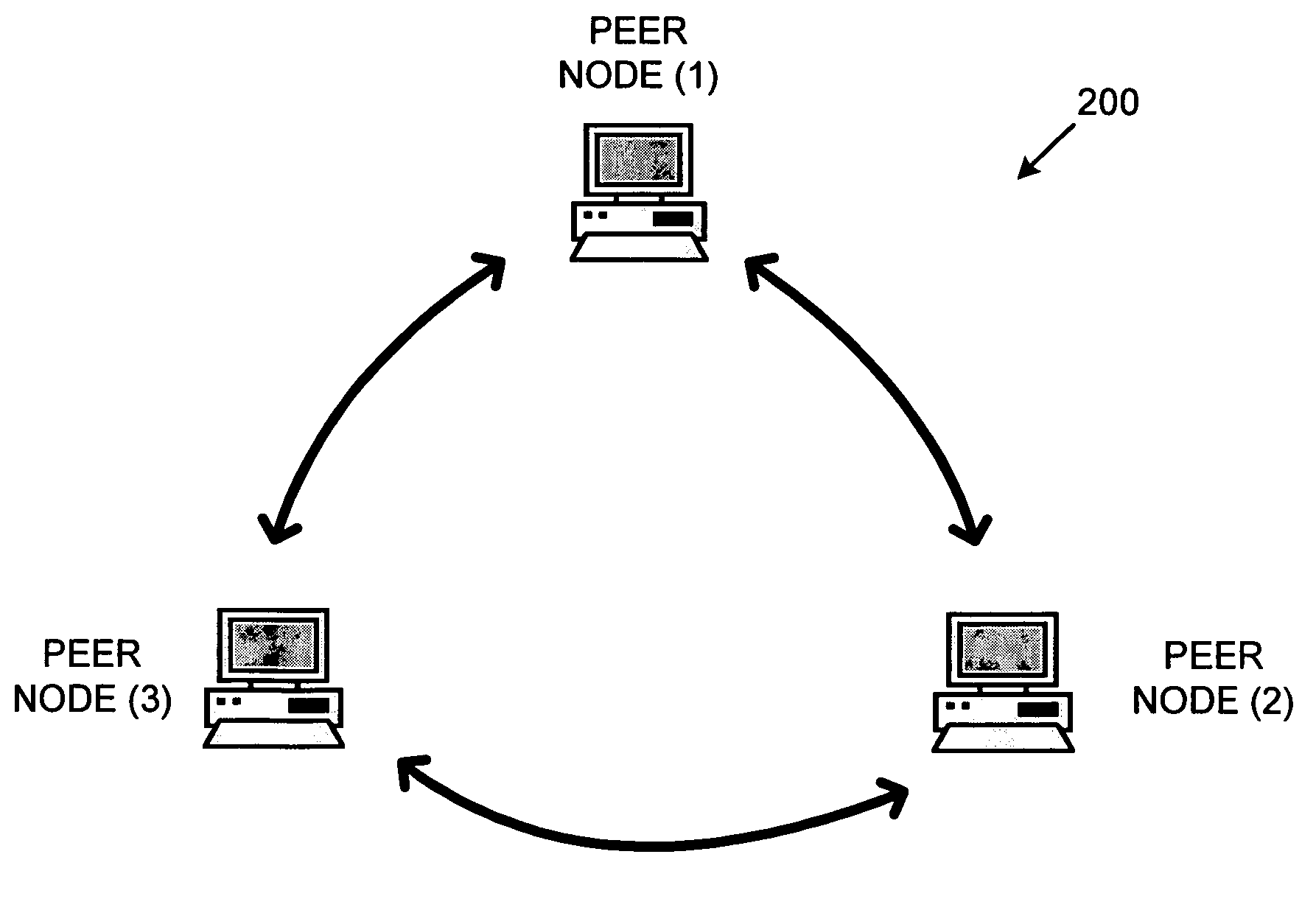
Figure 1 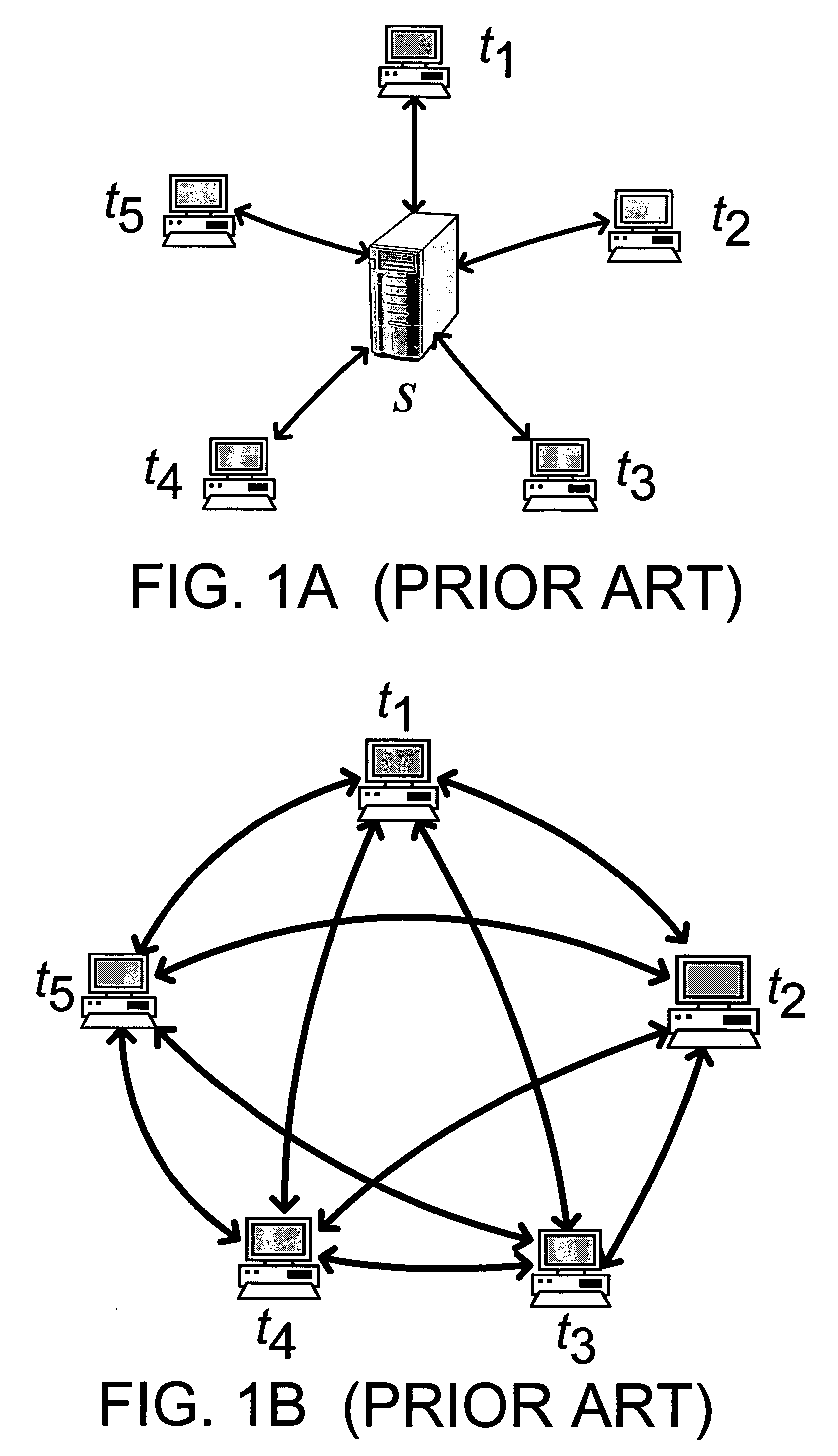
Figure 2 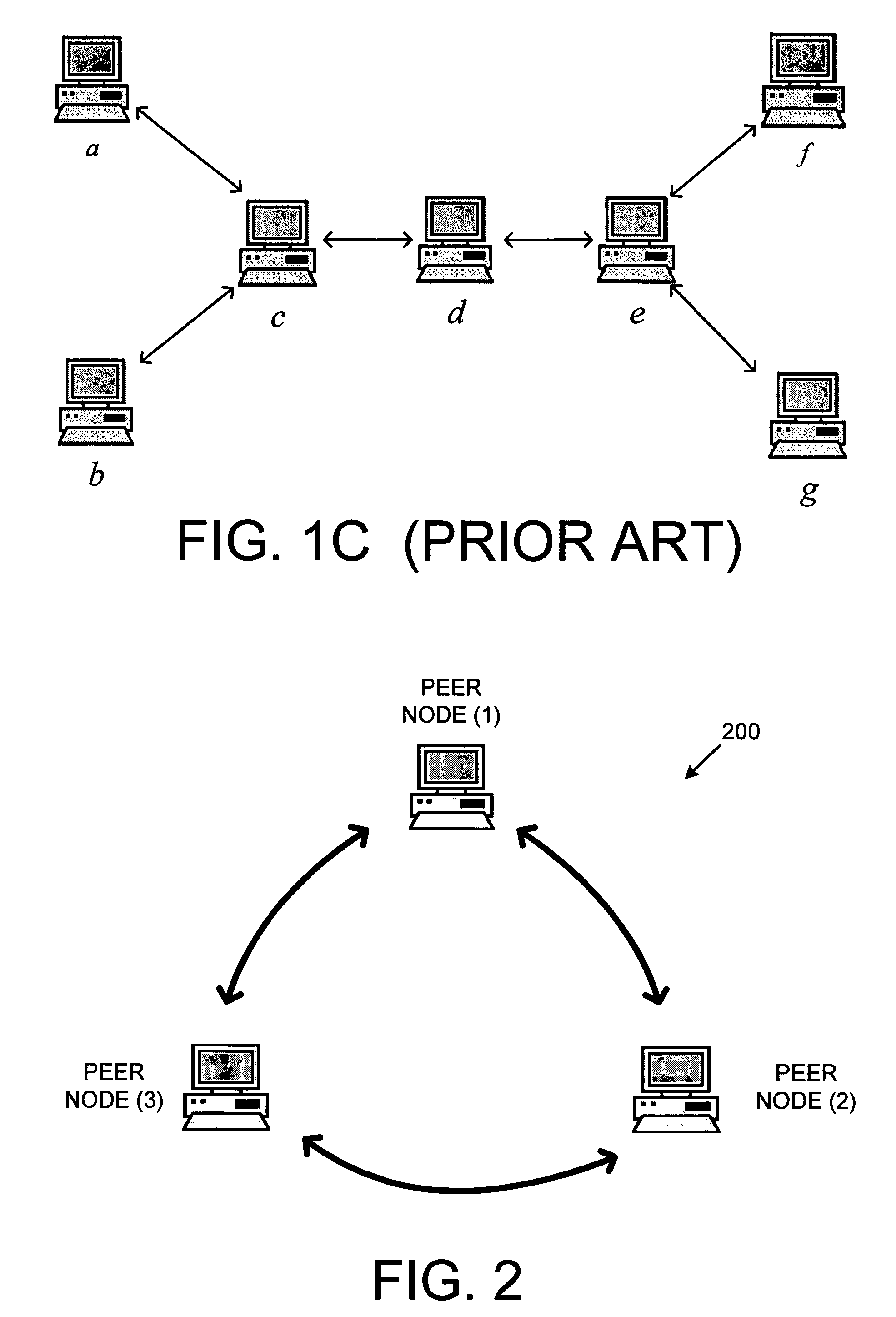
Figure 3
Abstract
Description
TECHNICAL FIELD
[0001] The present invention relates in general to computer networking and more particularly to a serverless peer-to-peer (P2P) multi-party real-time audio communication system and method in which each of the peers takes a turn mixing the audio and redelivering the compressed audio, wherein the number of audio frames mixed and redelivered by a certain peer is proportional to its available resources (such as the upload bandwidth or computational power). BACKGROUND OF THE INVENTION
[0002] A multi-party audio communication system enables a group of people to engage in a real-time audio communication session. In addition, the system allows multiple people to be speaking at the same time. Besides the audio components of the two-party audio communication system (such as audio capture, acoustic echo cancellation (AEC), automatic gain control (AGC), and audio / speech compression), the multi-party audio communication system poses unique challenges in audio mixing and network d...
Examples
working example
IV. Operational Details and Working Example
[0041] The details of the operation of the P2P audio communication system and method shown in FIGS. 3 and 4 now will be discussed. In order to more fully understand the P2P audio communication system and method disclosed herein, the operational details of an exemplary working example are presented. It should be noted that this working example is only one way in which the P2P audio communication system and method may be implemented.
Audio Content
Mixing of Waveform Coded Audio
[0042] In this working example, the audio of the P2P audio communication system and method was encoded with a waveform codec. Such a waveform codec is Siren / G.722.1, described in G.722.1, “Coding at 24 and 32 kbit / s for hands-free operation in systems with low frame loss.” An alternative codec is MP3, described in Scot Hacker press, “MP3: The definitive Guide”. A further alternative codec is Windows Media Audio, in Microsoft Press, “Inside Windows Media”. FIG. 5 is a...