
Ruggedized apparatus for analysis of nucleic acid and proteins
a nucleic acid and protein technology, applied in the field ofruggedized apparatuses, can solve problems such as data collection disturbances, achieve the effects of reducing the amount of sample and reagent, and fast and rugged nucleic acid sequencing and separation devices
Patent Information
- Authority / Receiving Office
- US · United States
- Current Assignee / Owner
- Publication Date
- 2006-11-23
Smart Images
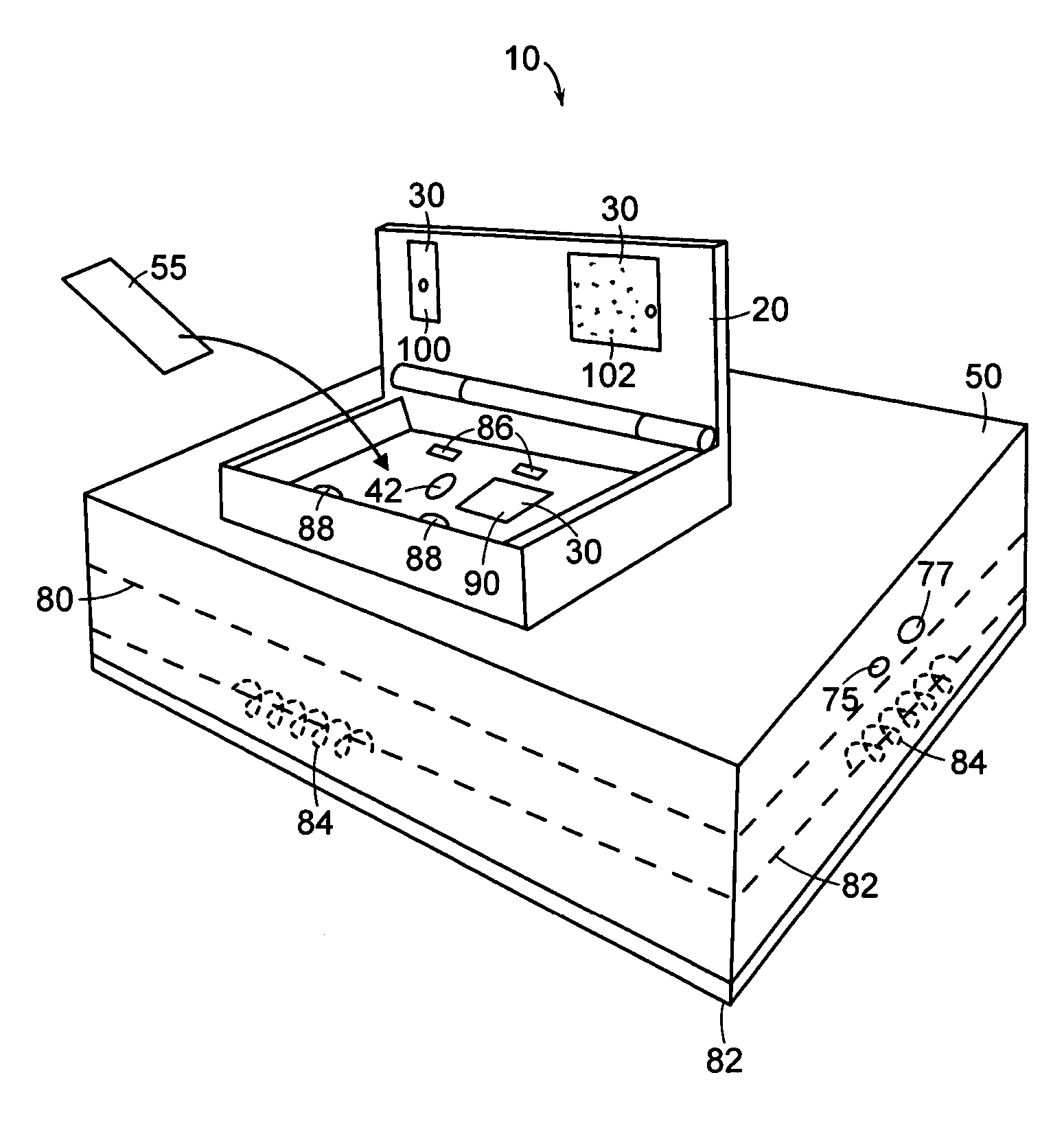
Figure 1 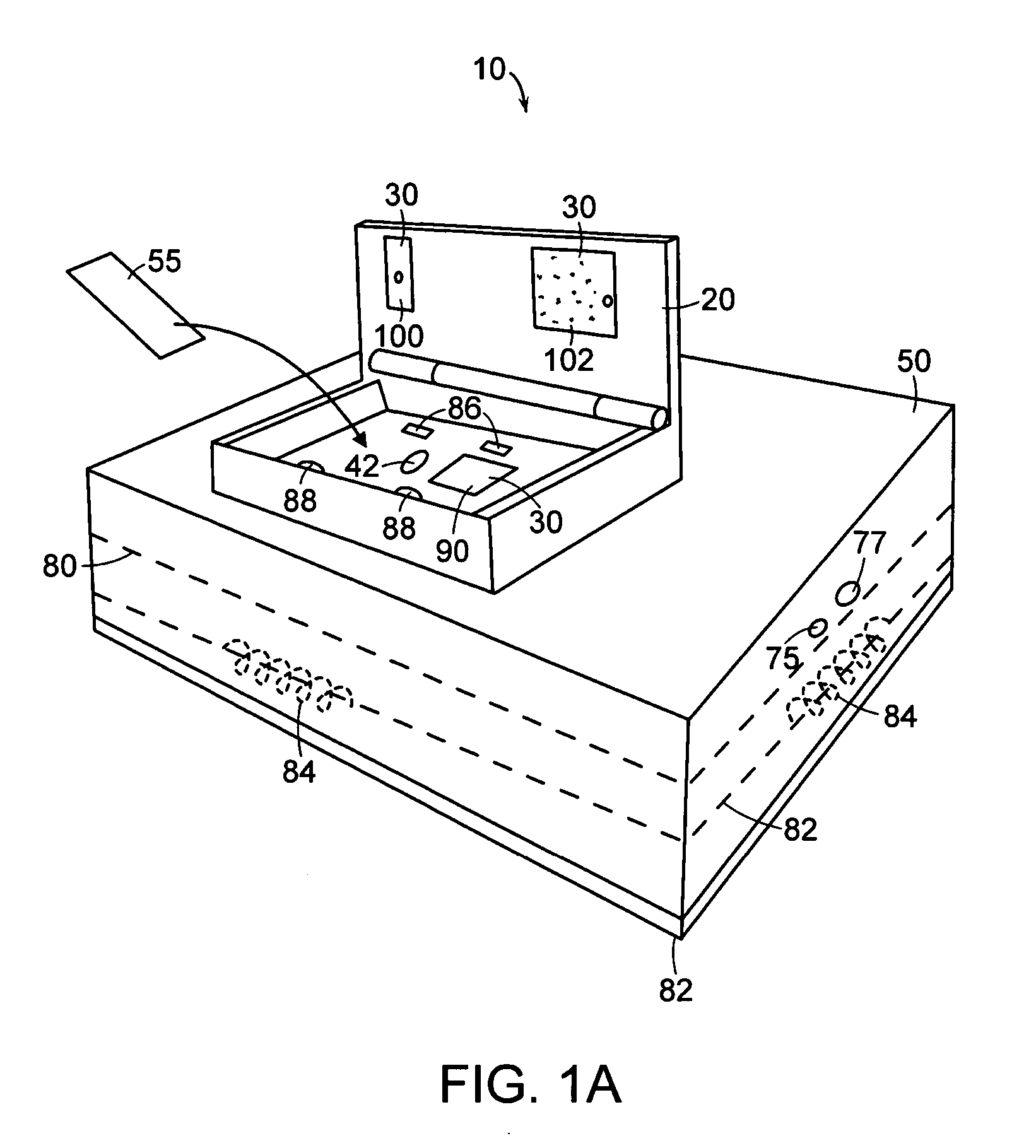
Figure 2 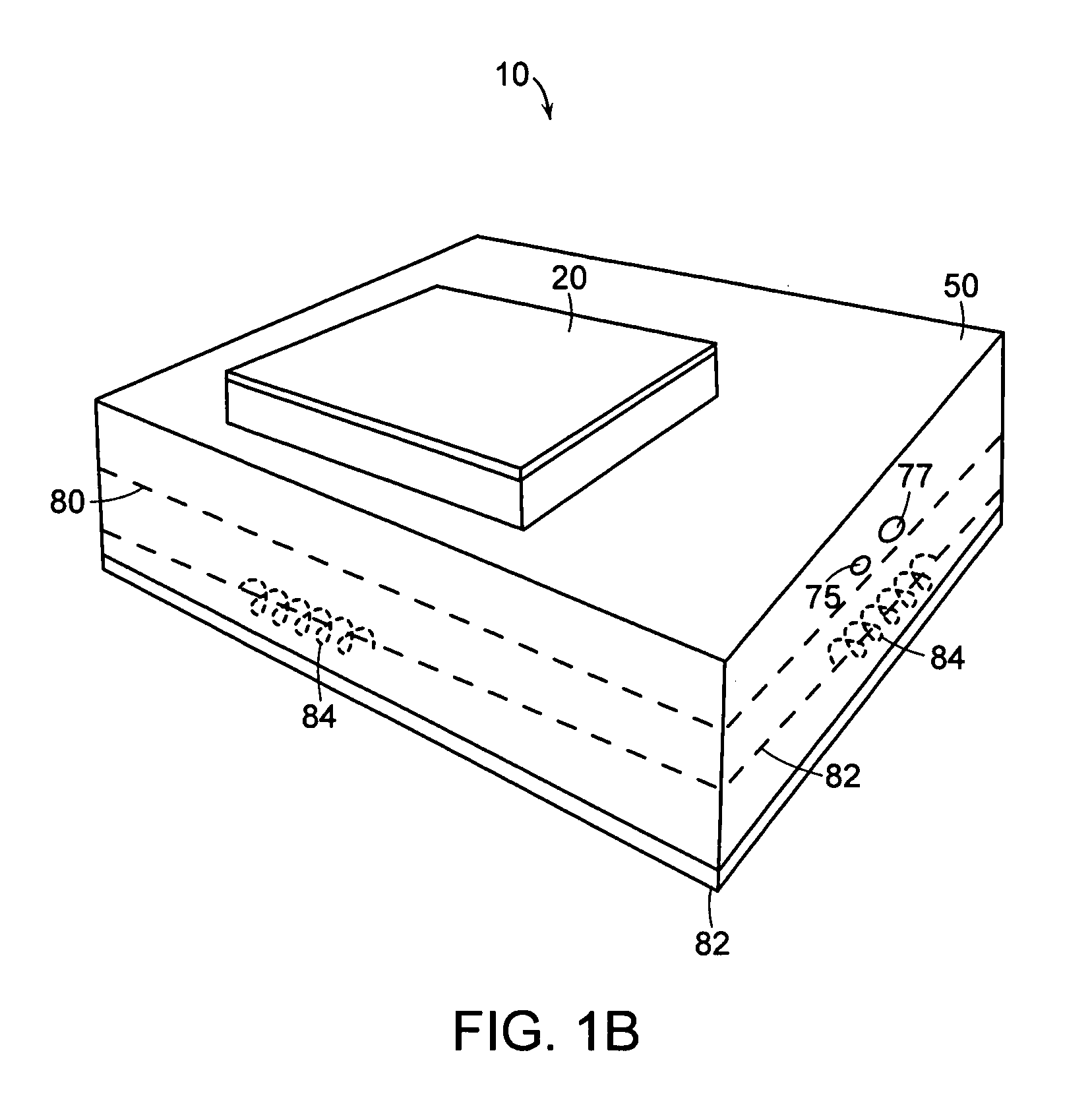
Figure 3
Abstract
Description
FIELD OF THE INVENTION
[0001] The invention generally relates to nucleic acid and / or protein analysis devices, and more particularly to ruggedized devices with low power consumption requirements that can be used for nucleic acid and protein sequencing or separation in uncontrolled or semi-controlled environments including mobile labs, physician's offices, hospital labs and other human, veterinary or environmental clinical and / or testing labs and points of care locations. BACKGROUND
[0002] The human genome includes stretches of DNA composed of short tandem repeats (STRs). To date, hundreds of STR loci have been mapped in the human genome. The analysis of such STR loci and STRs is an important tool for genetic linkage studies, forensics, and new clinical diagnostics. For example, forensic case work typically involves separation and analysis of multiple loci. Some tests use the 6 loci test known as the “Second Generation Multiplex” (SGM), together with amelogenin (gender determining ma...
Examples
example 1
[0091] The following example illustrates a forensic use of a ruggedized nucleic acid analysis device in accordance with the present invention. In this example, a ruggedized nucleic acid analysis apparatus similar to the one shown in FIGS. 1A, 1B, and 1C was used to analyze a reference sample.
[0092] The reference sample consisted of an allelic ladder from a commercially available STR kit (AmpFlSTR SGM Plus, from Applied Biosystems, Foster City, Calif.) and size standard (GeneScan 400 HD (ROX) Size Standard, from Applied Biosystems, Foster City, Calif.). The sample was prepared using 2 microliters of allelic ladder, 0.5 microliters of size standard, and 10.5 microliters of deionized water. The sample was denatured prior to analysis by heating the sample to about 90 degrees C. for about 3 minutes followed by rapidly cooling the sample on ice. The sample was then injected into a cleaned microfluidic chip.
[0093] Prior to sample injection, the microfluidic chip was cleaned and condition...
example 2
[0099] The following example illustrates a DNA sequencing use of a ruggedized nucleic acid analysis device in accordance with the present invention. In this example, a ruggedized nucleic acid analysis device similar to the one shown in FIGS. 1A, 1B, and 1C was used to analyze a sample including a DNA template from an HIV amplicon B.FR.HXB2, with primer GB107. The sample was amplified and labeled with a commercially available cycle sequencing kit (Thermo Sequenase II Dye Terminator Cycle Sequencing Premix Kit) available from Amersham Biosciences, now part of GE Healthcare (Waukesha, Wis.). A cycle sequencing reaction was performed following the manufacturer's recommended procedure. The total sequencing reaction consisted of 750 nanograms of DNA template, 1 microliter of 5 micromolar primer, two microliters of Thermo Sequenase II reagent mix A, 2 microliters of Thermo Sequenase II reagent mix B, and water to bring the total volume to 20 microliters. The reaction was cycled with the fo...