
Method for operating a medical examination apparatus and an examination apparatus associated therewith
Patent Information
- Authority / Receiving Office
- US · United States
- Current Assignee / Owner
- Publication Date
- 2007-07-05
- Estimated Expiration
- Not applicable · inactive patent
Smart Images
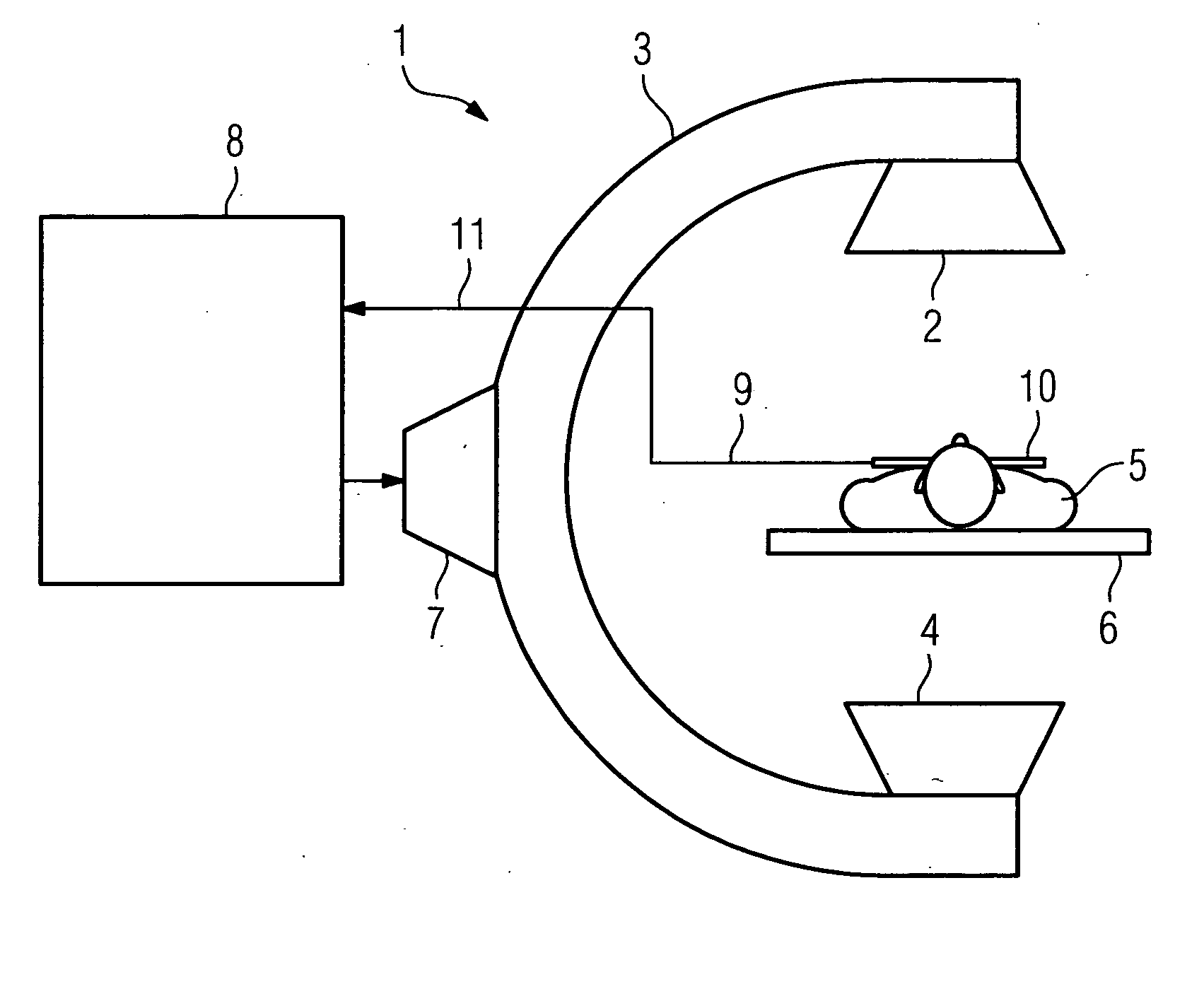
Figure 1 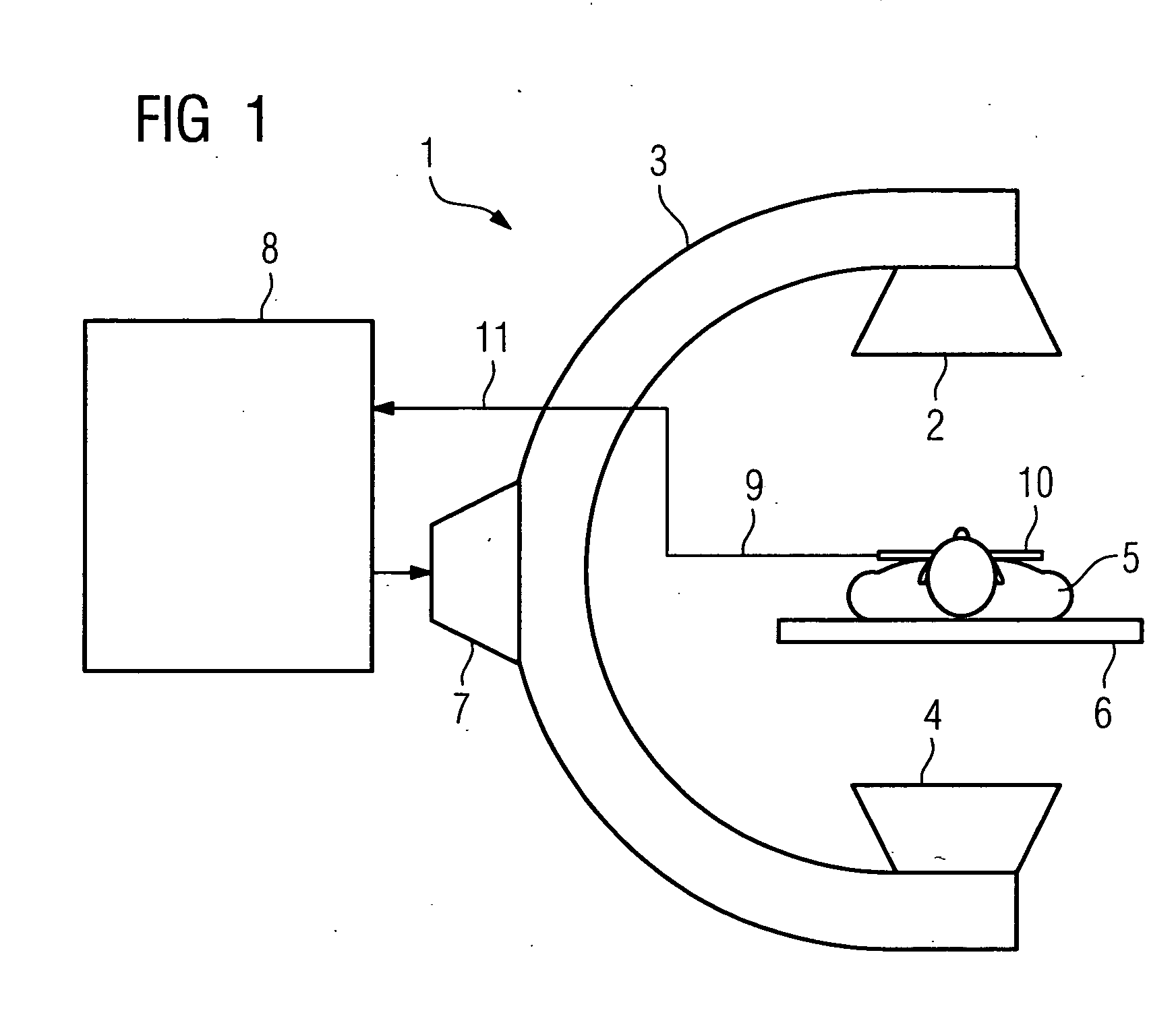
Figure 2 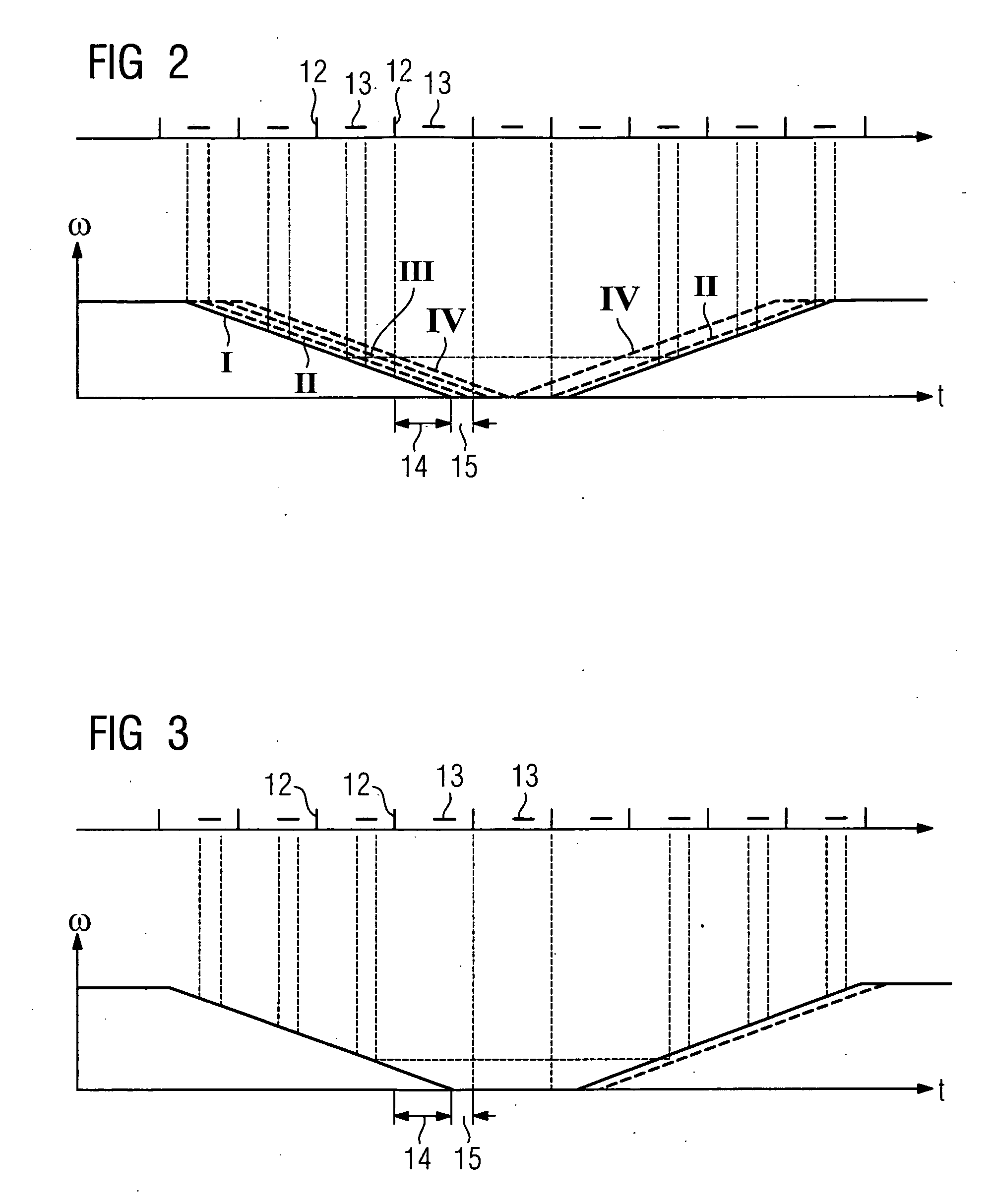
Figure 3
Abstract
Description
CROSS REFERENCE TO RELATED APPLICATIONS
[0001] This application claims priority of German application No. 10 2005 061 005.6 DE filed Dec. 20, 2005, which is incorporated by reference herein in its entirety. FIELD OF INVENTION
[0002] The invention relates to a method for operating a medical examination apparatus, having an image recording device, which is moved in a rotary motion through a defined angular range around a patient in order to produce image recordings of a periodically moving organ. BACKGROUND OF INVENTION
[0003] Recent medical technology is focusing more and more on producing 3D reconstructions of the organs of the body of a human or animal patient, since spatial representation substantially improves diagnosis possibilities. One condition for a corresponding high-quality three-dimensional representation is however that the organs do not move during the image recording. To be able to produce a 3D reconstruction of a periodically moving object, the image recording must be...
Examples
Embodiment Construction
[0020]FIG. 1 shows an inventive medical examination apparatus 1 with an image recording device comprising an x-ray source 2, which is affixed to a C-arm 3, with the x-rays being detected by an x-ray detector 4, after having been attenuated by the body 5 of a patient. During the examination the patient is positioned on a patient support 6.
[0021] During the examination and image recording the C-arm 3 can be rotated around the body 5 of the patient in order to be able to produce image recordings at different angles. The C-arm 3 is moved by way of drive unit 7 (illustrated schematically), which is controlled by a control device 8.
[0022] The individual runs of the rotatable C-arm 3 are controlled as a function of the reference signal 9; in the exemplary embodiment shown, the reference signal 9 is an ECG signal, which is detected by a measuring device 10 and is transmitted to the control unit 8 by means of a data line 11.
[0023]FIGS. 2 and 3 clarify how the starting point is calculated ...