
Method for Transferring Data Packets
Patent Information
- Authority / Receiving Office
- US · United States
- Current Assignee / Owner
- Publication Date
- 2008-07-17
- Estimated Expiration
- Not applicable · inactive patent
Smart Images
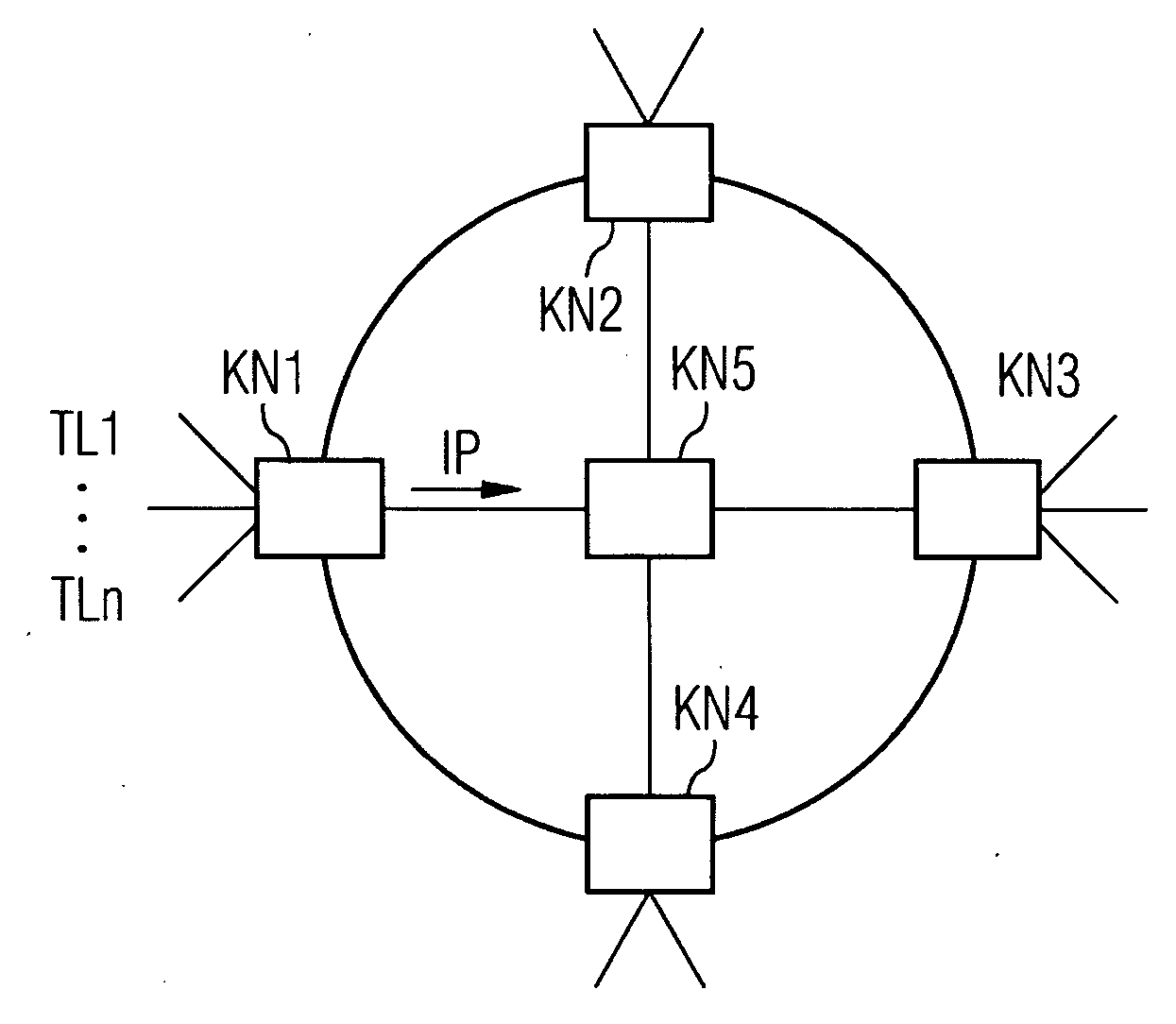
Figure 1 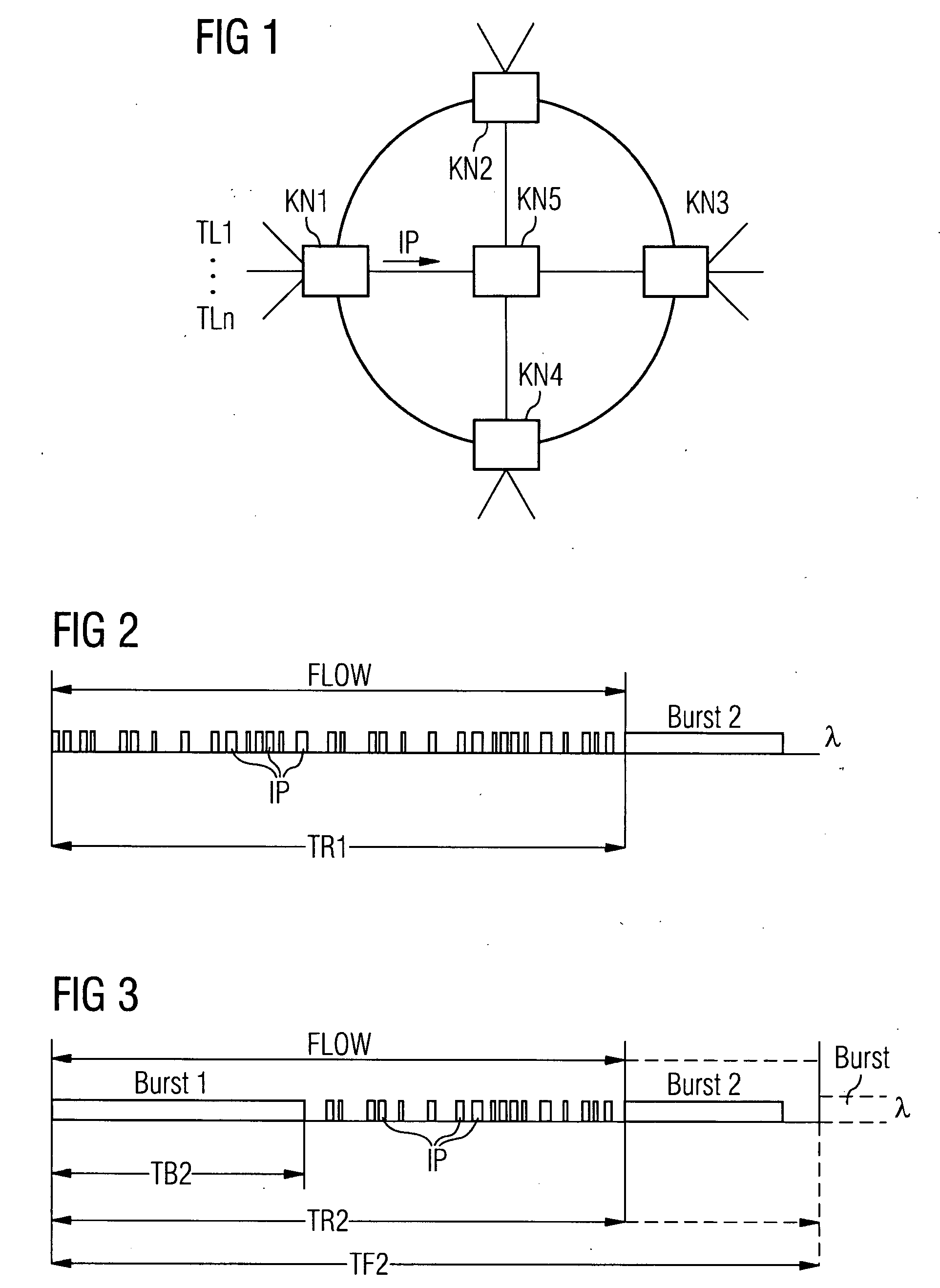
Figure 2 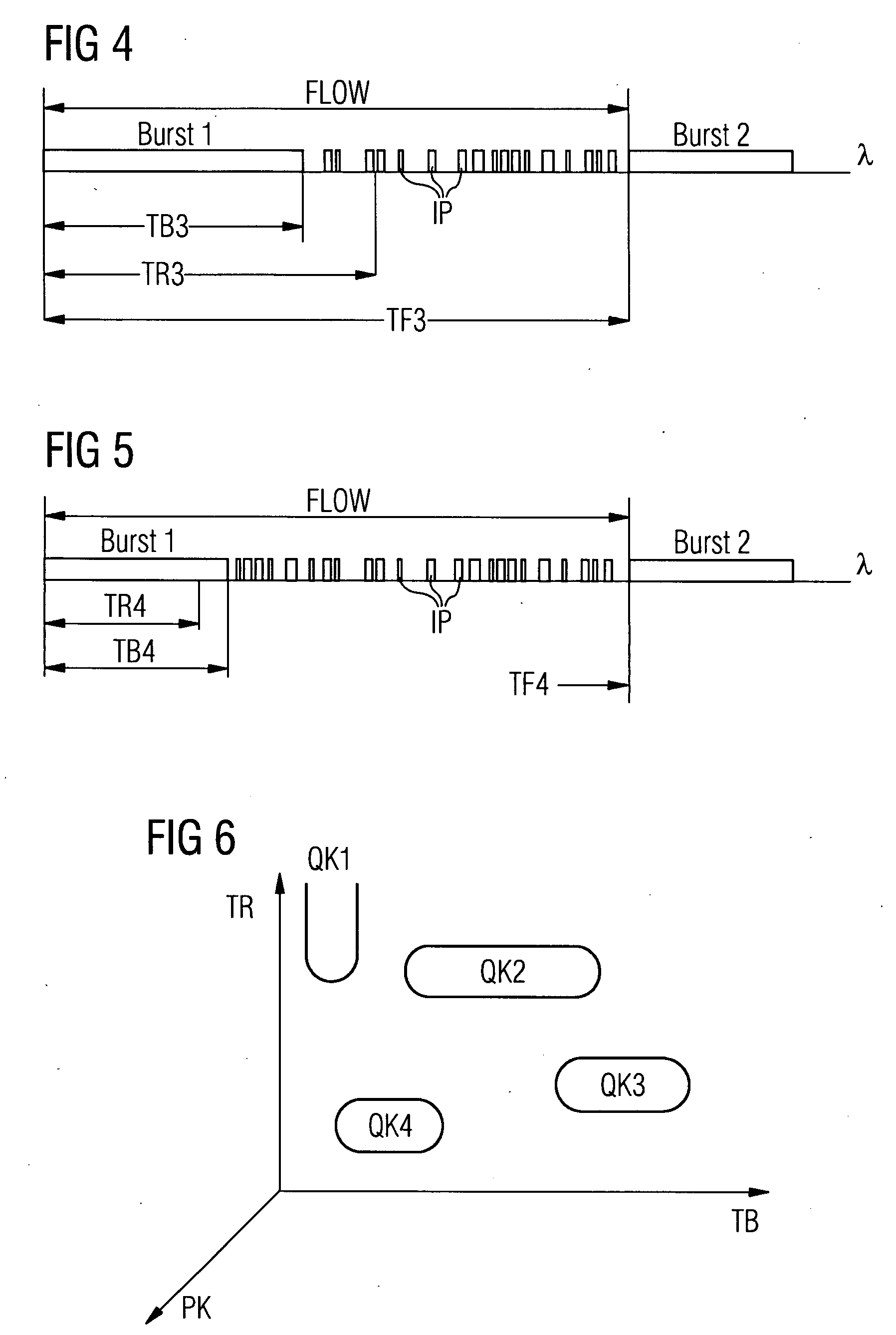
Figure 3
Abstract
Description
CROSS REFERENCE TO RELATED APPLICATIONS
[0001] This application is the U.S. National Stage of International Application No. PCT / EP2006 / 060230, filed Feb. 23, 2006 and claims the benefit thereof. The International Application claims the benefits of German application No. 102005010918.7 DE filed Mar. 9, 2005, both of the applications are incorporated by reference herein in their entirety.FIELD OF INVENTION
[0002] The invention relates to a method for transferring data packets between network nodes of an optical network, according to the independent claims.BACKGROUND OF INVENTION
[0003] Data transmission via future optical networks can take place by means of so-called “optical burst switching (OBS)”. Here multiple data packets (e.g. IP packets) can be accumulated into so-called data bursts, and then sent via a data channel of a correspondingly designed optical network. The data channel corresponds to a specified wavelength of a wavelength multiplex signal (WDM / DWDM), which transmits multiple...
Examples
Embodiment Construction
[0025]In FIG. 1, a transmission network with multiple network nodes NK1 to NK5 is shown. From subscribers who are connected at any one time to a network node NK1, data is transmitted in the form of data packets (IP packets) to the network node, combined there into data bursts, and then transmitted to a target network node, e.g. network node NK3. For simplicity, it is assumed that the data of all subscribers who are connected to network node NK1 is to be transmitted in the same quality class.
[0026]FIG. 2 shows the transmission of the data packets IP from network node NK1 in the highest (first) quality class QK1 (FIG. 6). Practically a complete transmission channel is reserved for the transmission, so that all data packets IP are sent on from network node NK1 directly, without previously being combined into data bursts. The transmission FLOW is ended only when the sending network node NK1 so determines.
[0027]In the case of multiple transmissions in the highest quality class, an attemp...