

Composite material part with a silicon-containing ceramic matrix protected against corrosion
a ceramic matrix and composite material technology, applied in the direction of climate sustainability, electrical equipment, lighting and heating apparatus, etc., can solve the problems of rapid separation of environmental barriers, and increasing the number of environmental barrier deposits, so as to avoid generating strong internal stresses, increase the thickness of the anti-corrosion layer, and increase the thickness and total weight
Patent Information
- Authority / Receiving Office
- US · United States
- Patent Type
- Applications(United States)
- Current Assignee / Owner
- Publication Date
- 2010-01-07
Smart Images
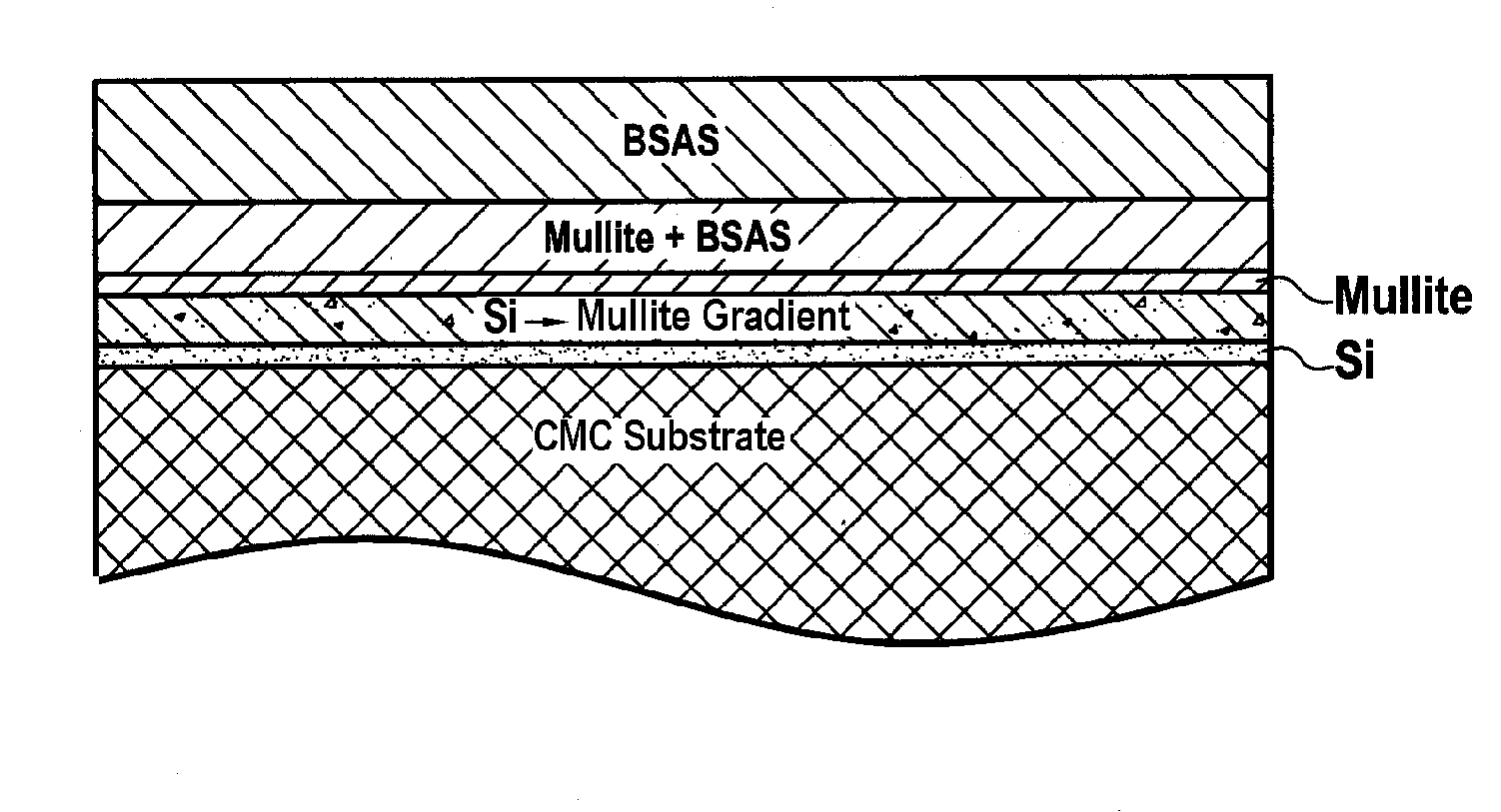
Figure 1 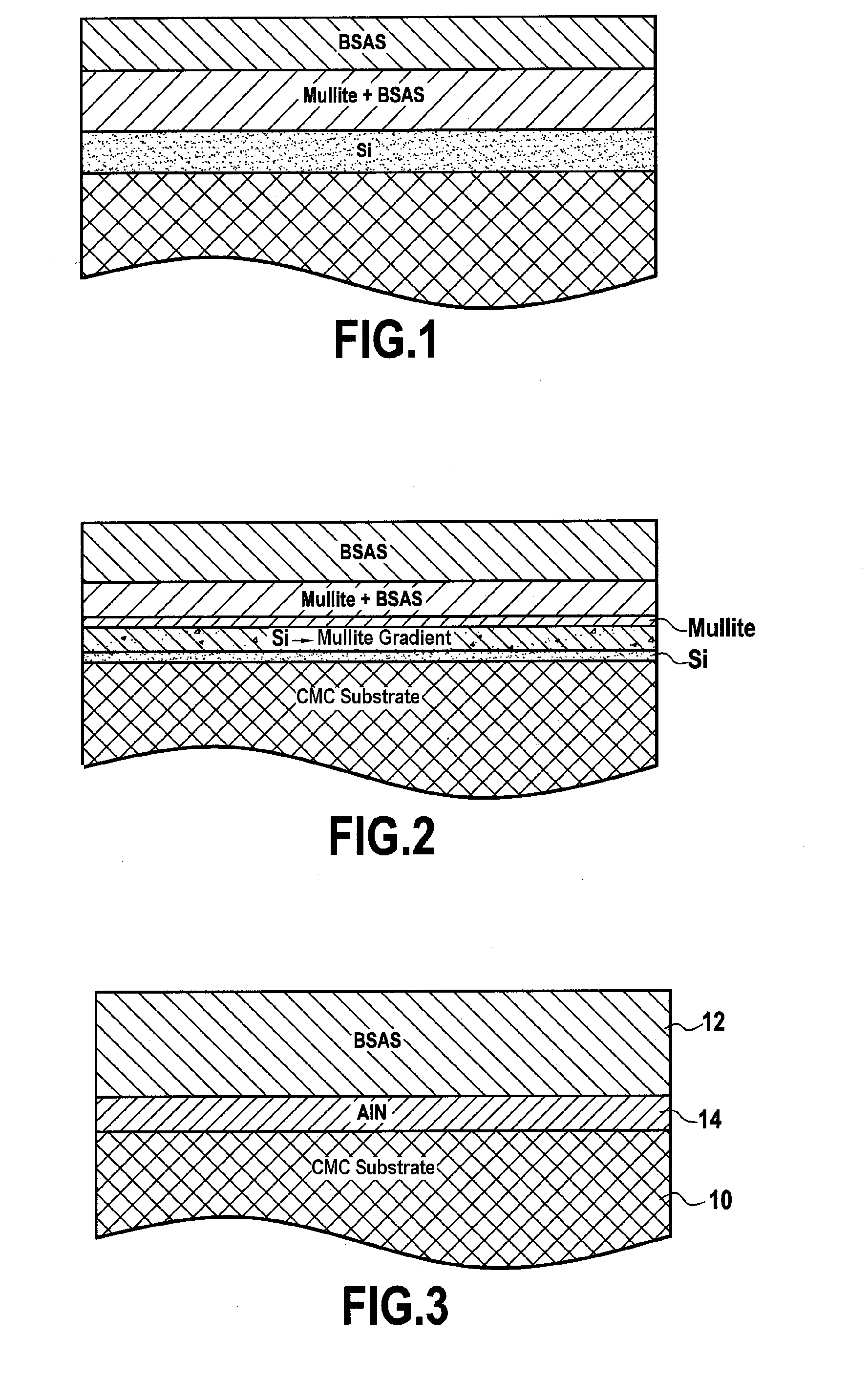
Figure 2 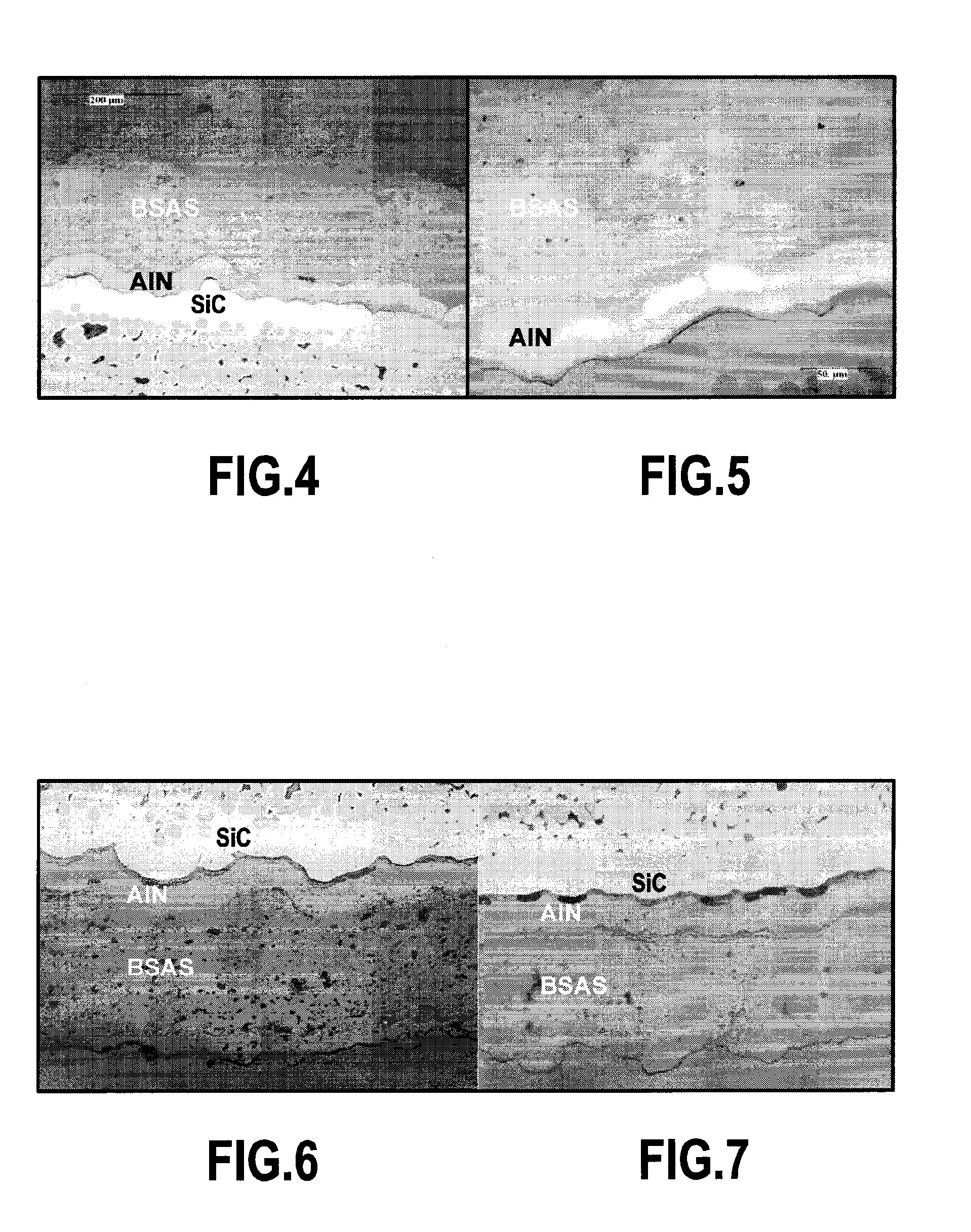
Figure 3
Abstract
Description
BACKGROUND OF THE INVENTION
[0001] The present invention relates to providing corrosion protection to ceramic matrix composite (CMC) material parts that contain silicon, in particular CMC material parts with a matrix constituted at least in part by silicon carbide (SiC). A particular field of application of the invention is that of parts for hot portions of gas turbines, such as combustion chamber walls, turbine rings, or turbine nozzles, for aeroengines or for industrial turbines.
[0002] For such gas turbines, the desire to improve efficiency and to reduce polluting emissions leads to envisaging ever higher temperatures in the combustion chambers.
[0003] Proposals have therefore been made to replace metal materials by CMC materials, in particular for the walls of combustion chambers or for turbine rings. CMC materials are known to possess both mechanical properties that enable them to be used for structural elements and also the ability to conserve those properties at high temperatures. ...
Examples
example
[0044]Test pieces or substrates of CMC material were made by forming multilayer fiber reinforcement out of SiC fibers as sold by the Japanese supplier Nippon Carbon under the name “Hi-Nicalon”, and by densifying the fiber reinforcement with an SiC matrix obtained by chemical vapor infiltration (CVI). A method of forming such a material with CVI deposition of a thin interphase layer of PyC between the fibers and the matrix is well known.
[0045]An AlN layer having thickness of about 30 μm was deposited by plasma-assisted CVD onto the CMC material test pieces, enabling a layer of uniform composition to be formed that adhered well to the substrate.
[0046]A BSAS layer having a thickness of about 150 μm was then formed by thermal plasma, thereby obtaining a layer that adhered well to the AlN layer.
[0047]Annealing heat treatment under air at about 1300° C. was then performed to transform the BSAS layer into the celsian crystalline form that presents good structural stability and a coefficien...