
Methylene blue - curcumin analog for the treatment of alzheimer's disease
a curcumin and bluecurcumin technology, applied in the field of methylene bluecurcumin analog for the treatment of alzheimer's disease, can solve the problems of many bioavailability problems, small amount of curcumin that enters the bloodstream is rapidly metabolized, headache, rash and diarrhea, etc., to improve curcumin brain bioavailability, reduce the dose required, and high lipophilic
Patent Information
- Authority / Receiving Office
- US · United States
- Patent Type
- Applications(United States)
- Current Assignee / Owner
- Publication Date
- 2010-07-29
- Estimated Expiration
- Not applicable · inactive patent
Smart Images
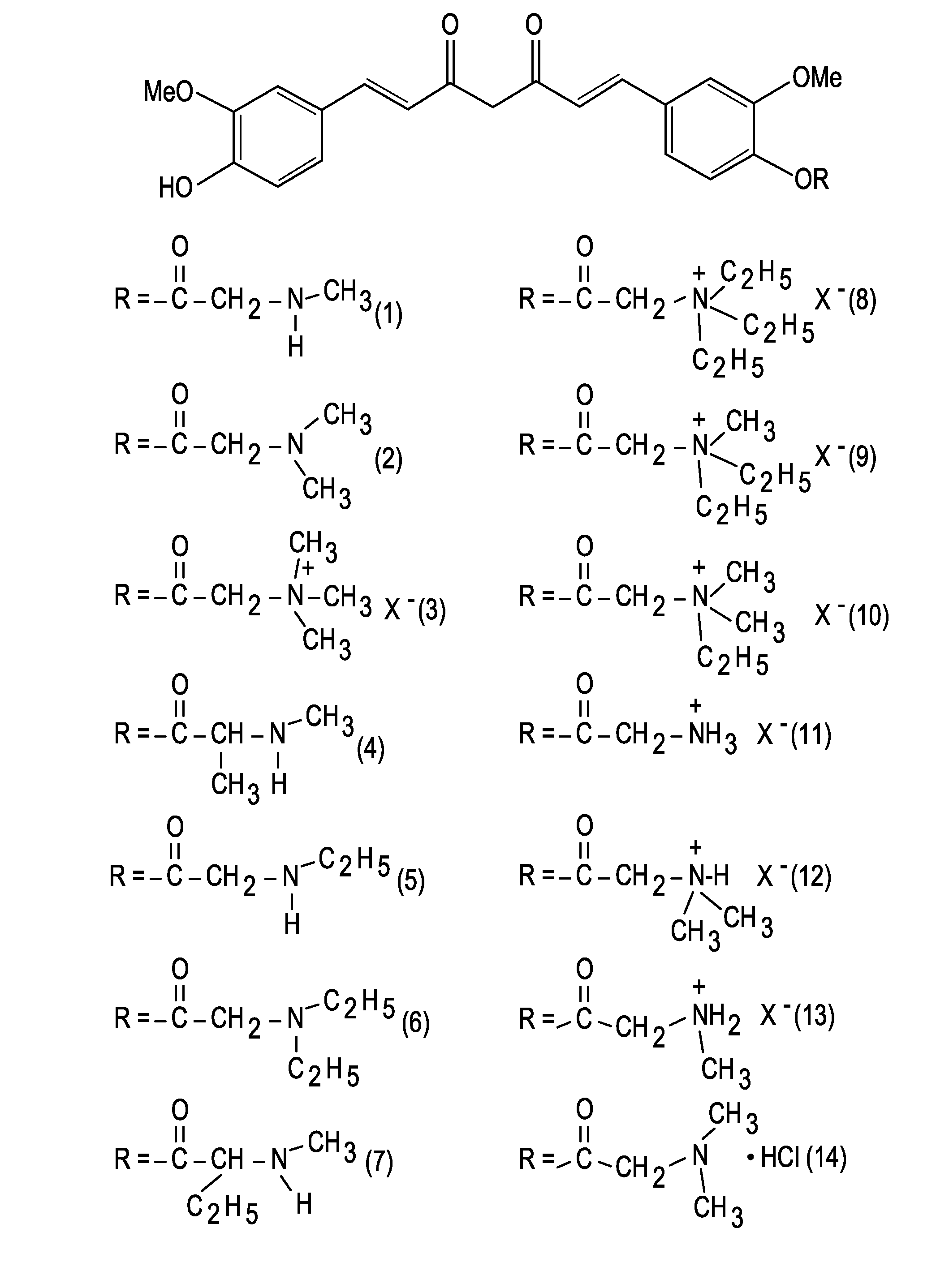
Figure 1 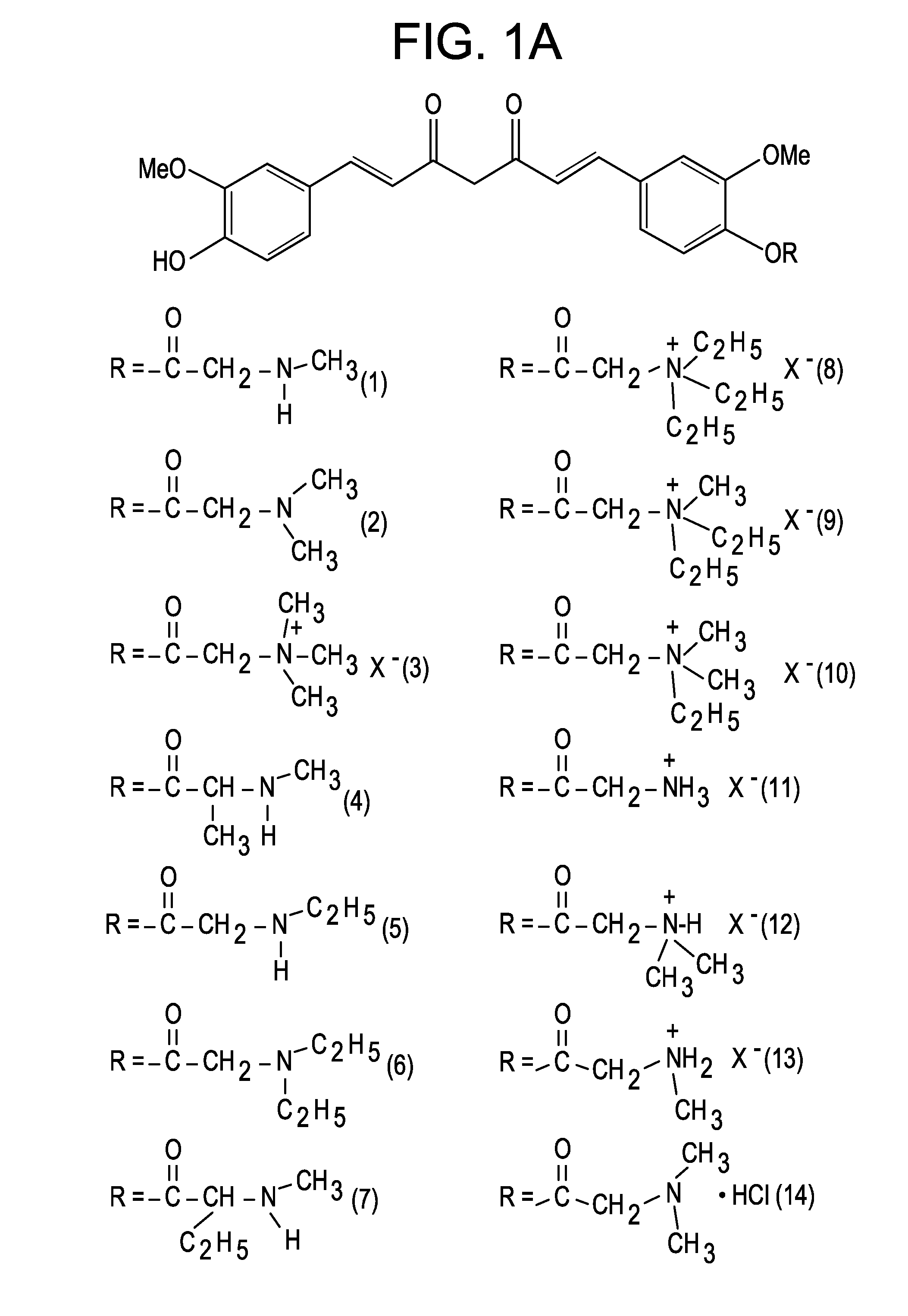
Figure 2 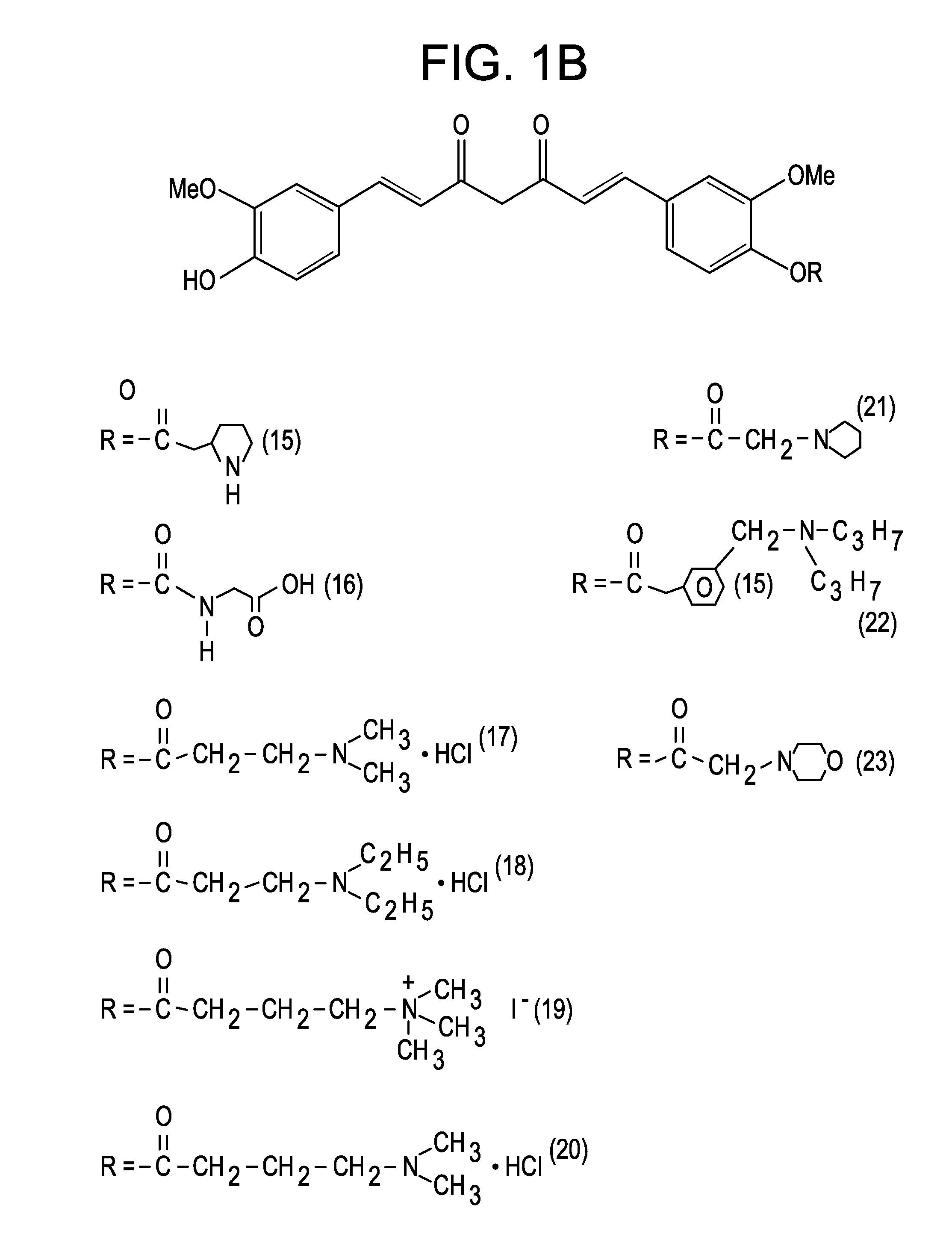
Figure 3
Abstract
Description
CONTINUING DATA
[0001] This divisional patent application claims priority from co-pending U.S. Ser. No. 12 / 359,713, filed Jan. 26, 2009, entitled “.Methylene Blue-Curcumin Analog for the Treatment of Alzheimer's Disease.BACKGROUND OF THE INVENTION
[0002] In Alzheimer's Disease (AD), the abnormal cleavage of beta amyloid protein precursor from the intracellular membrane often produces a protein Aβ 1-42 which is incompletely removed by normal clearance processes. It has been reported that soluble beta amyloid oligomers are highly neurotoxic. Moreover, over time, this soluble protein assemblage is deposited as a beta amyloid protein Aβ plaque within brain tissue, leading to the local destruction of neurons. The Aβ plaque deposition is also believed to provoke an inflammatory response by microglia and macrophages, which recognize the plaque as a foreign body. These cells are believed to respond to the plaque deposition by releasing pro-inflammatory cytokines and reactive oxygen species (ROS...
Examples
Embodiment Construction
[0053]As used herein curcumin is also known as diferuloylmethane or (E,E)-1,7-bis(4-hydroxy-3-methoxyphenyl)-1,6-heptadiene-3,5-dione. Curcumin may be derived from a natural source, the perennial herb Curcuma longa L., which is a member of the Zingiberaceae family. The spice turmeric is extracted from the rhizomes of Curcuma longa L. and has long been associated with traditional-medicine treatments used in Hindu and Chinese medicine. Turmeric was administered orally or topically in these traditional treatment methods.
[0054]In some embodiments, curcumin is intranasally administered so that it produces a brain tissue concentration of at least 0.1 μM, more preferably at least 1 μM, more preferably at least 5 μM, more preferably at least 20 μM.
[0055]Without wishing to be tied to a theory, it is believed that a daily intranasal dose of at least about 0.2 mg / kg would be sufficient to produce the above-cited brain tissue concentrations. More preferably, the dose is at least 1 mg / kg, more p...