
Material for filling bone defects and production method thereof
a technology of bone defects and biodegradable polymers, applied in the field of bioactive materials, can solve the problems of low strength and toughness, difficult machined, and inability to show osteogenic ability of biodegradable polymers, and achieve the effects of low viscosity, high viscosity, and low viscosity
Patent Information
- Authority / Receiving Office
- US · United States
- Patent Type
- Applications(United States)
- Current Assignee / Owner
- Publication Date
- 2011-01-13
- Estimated Expiration
- Not applicable · inactive patent
Smart Images
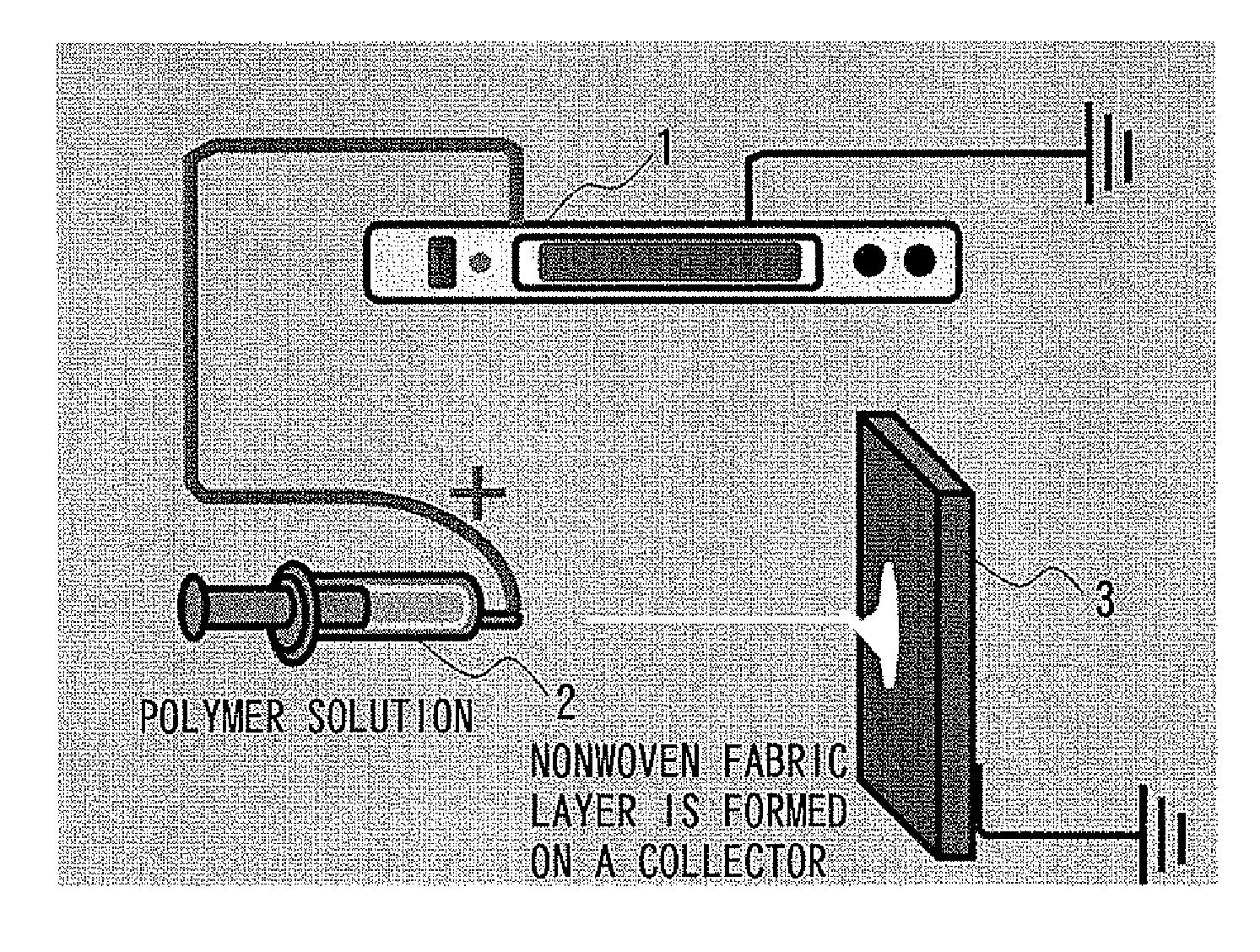
Figure 1 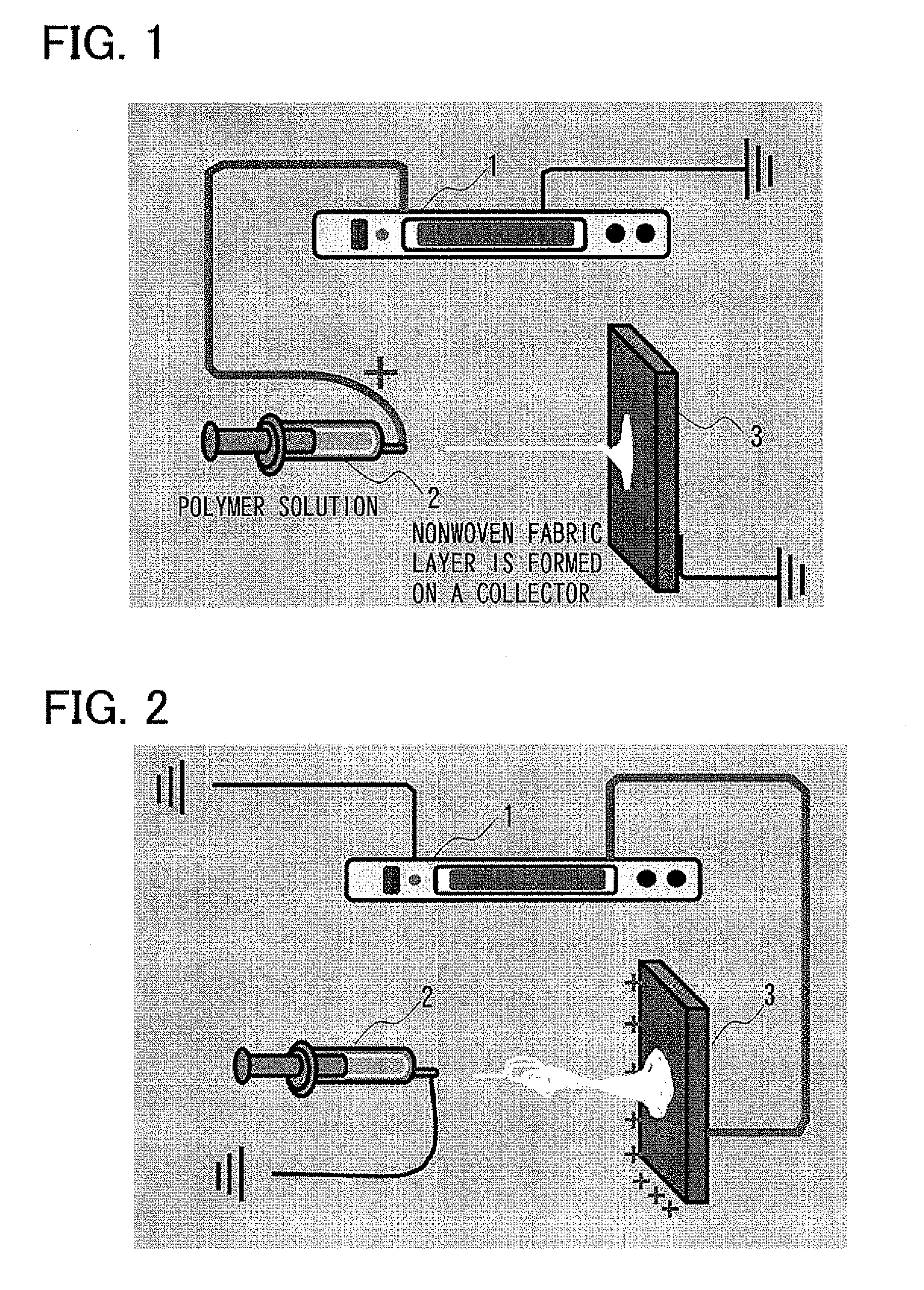
Figure 2 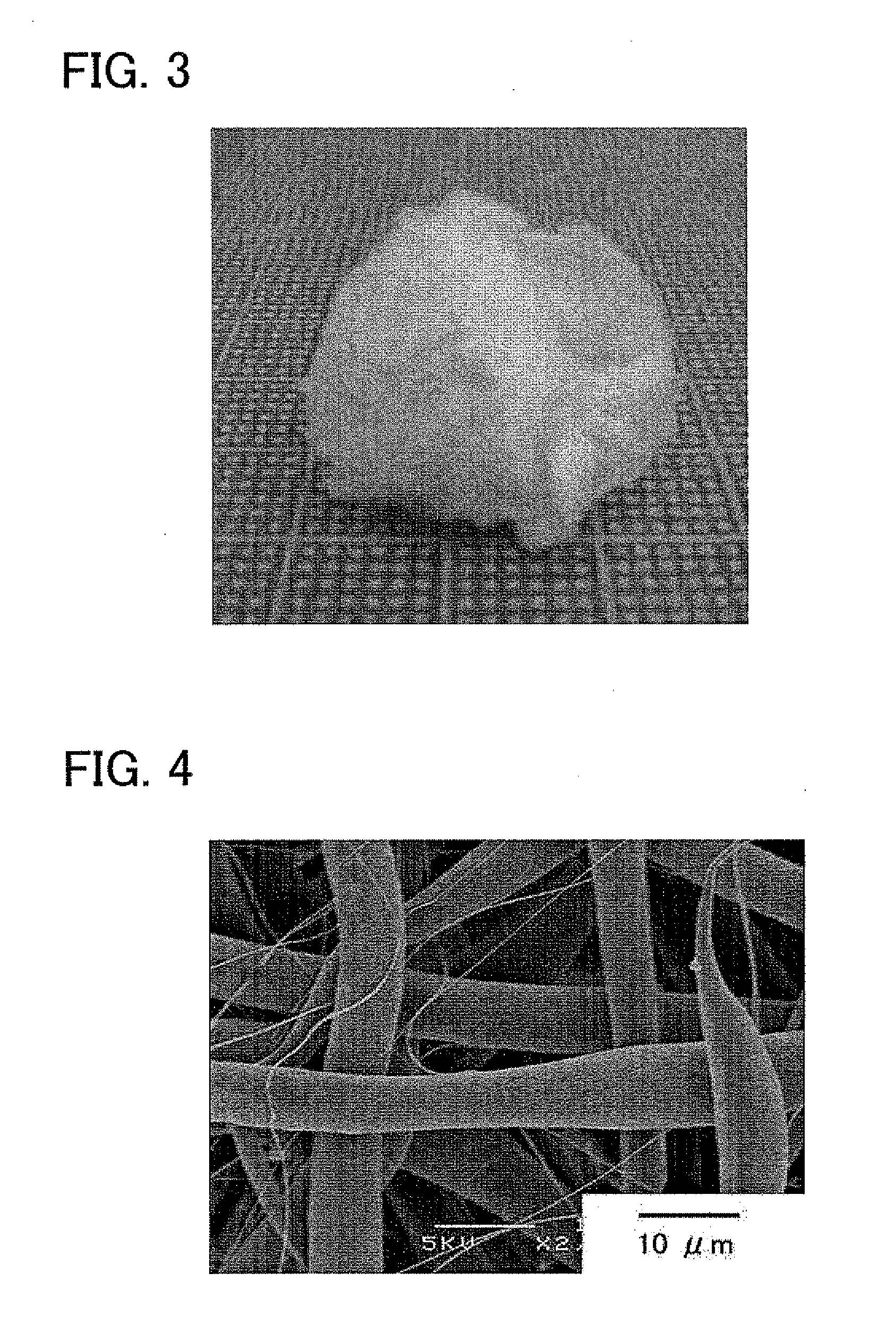
Figure 3
Abstract
Description
CROSS REFERENCE TO RELATED APPLICATION
[0001] This application is based upon and claims the benefit of Japanese Patent Application No. 2009-163320 filed on Jul. 10, 2009, the content of which are incorporated herein by reference.FIELD OF THE INVENTION
[0002] The present invention relates to bioactive materials which are useful as bone-repairing materials for filling bone defects and are used in the fields of oral or maxillofacial surgery and orthopedic surgery. More specifically, the present invention relates to a material for filling bone defects, which material has a three-dimensional steric structure including, as its skeleton, a composite fiber with a bioresorbable-biodegradable resin. Such a bioresorbable-biodegradable resin helps to improve the affinity for the bone and can be absorbed in vivo. The present invention also relates to a method for producing the material for filling bone defects.RELATED ART OF THE INVENTION
[0003] Some materials, when buried or implanted in bone defects...
Examples
example 1
[0050]APTES (1 g) was added to ultrapure water (0.5 g) with stirring to give a solution. The solution was added dropwise to a 8 percent by weight PLA solution in CHCl3 so as to give APTES contents of 0.015 g and 0.050 g, respectively, followed by stirring. During this procedure, APTES was condensed to give a siloxane. To the resulting mixtures were added 1.5 g of ethanol and 1 g of ultrapure water to give spinning solutions. These spinning solutions were subjected to electrospinning and thereby yielded three-dimensional steric structures each including a fibrous substance containing a biodegradable resin as a principal component and containing or bearing a siloxane (hereinafter these steric structures are referred to as Si-PLA15 and Si-PLA50, respectively).
[0051]FIG. 3 depicts the appearance of the resulting three-dimensional steric structure (Si-PLA15). FIG. 4 is a scanning electron micrograph (SEM) of this steric structure, demonstrating that the steric structure is a flocculent s...
example 2
[0053]A Si—CaCO3 / PLA three-dimensional steric structure was prepared by kneading PLA and Si—CaCO3 in a heating kneader at 200° C. for 15 minutes to give a Si—CaCO3 / PLA composite containing 40 percent by weight of Si—CaCO3; mixing 1.67 g of the Si—CaCO3 / PLA composite with 8.33 g of CHCl3 to give a solution; adding 1.5 g of ethanol and 1 g of ultrapure water to the solution to give a spinning solution; and subjecting the spinning solution to electrospinning under the above-mentioned conditions.
[0054]The prepared three-dimensional static structure has a flocculant appearance substantially the same as that shown in FIG. 3 and had superior flexibility and elasticity. FIG. 7 is a scanning electron micrograph (SEM) of the Si—CaCO3 / PLA three-dimensional steric structure, demonstrating that this steric structure is a structure including fine fibers having diameters of about 0.1 to about 3 μm, and spherical calcium carbonate particles having diameters of about 1 μm embedded between the fibers...